Last winter, a guy in Fishers called us because his heat pump ran all day but the house stuck at 68 even though he set the thermostat to 70. He'd already changed the filter and double-checked the batteries, but nothing. Sound familiar? If your thermostat says one thing and your living room says another, you're not crazy. It’s a common problem around Indianapolis, from Carmel to Greenwood, and it usually has one of a few simple explanations.
Check the Easy Stuff First
Before you start thinking the worst, run through this list. You'd be surprised how often a simple fix solves the mystery.
- Mode and schedule: Make sure your thermostat is actually set to Heat or Cool, not off. And if you use a schedule or hold, confirm the setpoint is what you think it is. Sometimes a temporary override gets stuck.
- Batteries: Even hardwired thermostats have backup batteries that can cause weird behavior when they die.
- Breaker: Check your furnace or air handler breaker. If it tripped, the thermostat may still light up but the system won’t run.
- Filter: A dirty filter is public enemy number one. We have a whole guide on how often to change your HVAC filter in Indiana, but in spring when cottonwood fluff blows around Fishers and Noblesville, you might need to check monthly.
- Vents and returns: Walk around and make sure all supply registers are open and not blocked by furniture or rugs. Check return grilles too. If you close too many vents to save money, you can starve the system of airflow and the house never reaches temperature.
Your Thermostat Might Be Lying to You
The thermostat is the brain, but it can be wrong. Here's where things get interesting.
Calibration and Offset
Most thermostats have a temperature offset setting. If your wall sensor reads 2–3°F off from a reliable room thermometer, you can adjust it. Open your thermostat's manual and look for “calibration” or “temperature offset.” But if the error is huge, the sensor itself might be failing. Some older Honeywell round thermostats had a little mercury bulb that would get knocked out of level and give bad readings.
Placement Problems
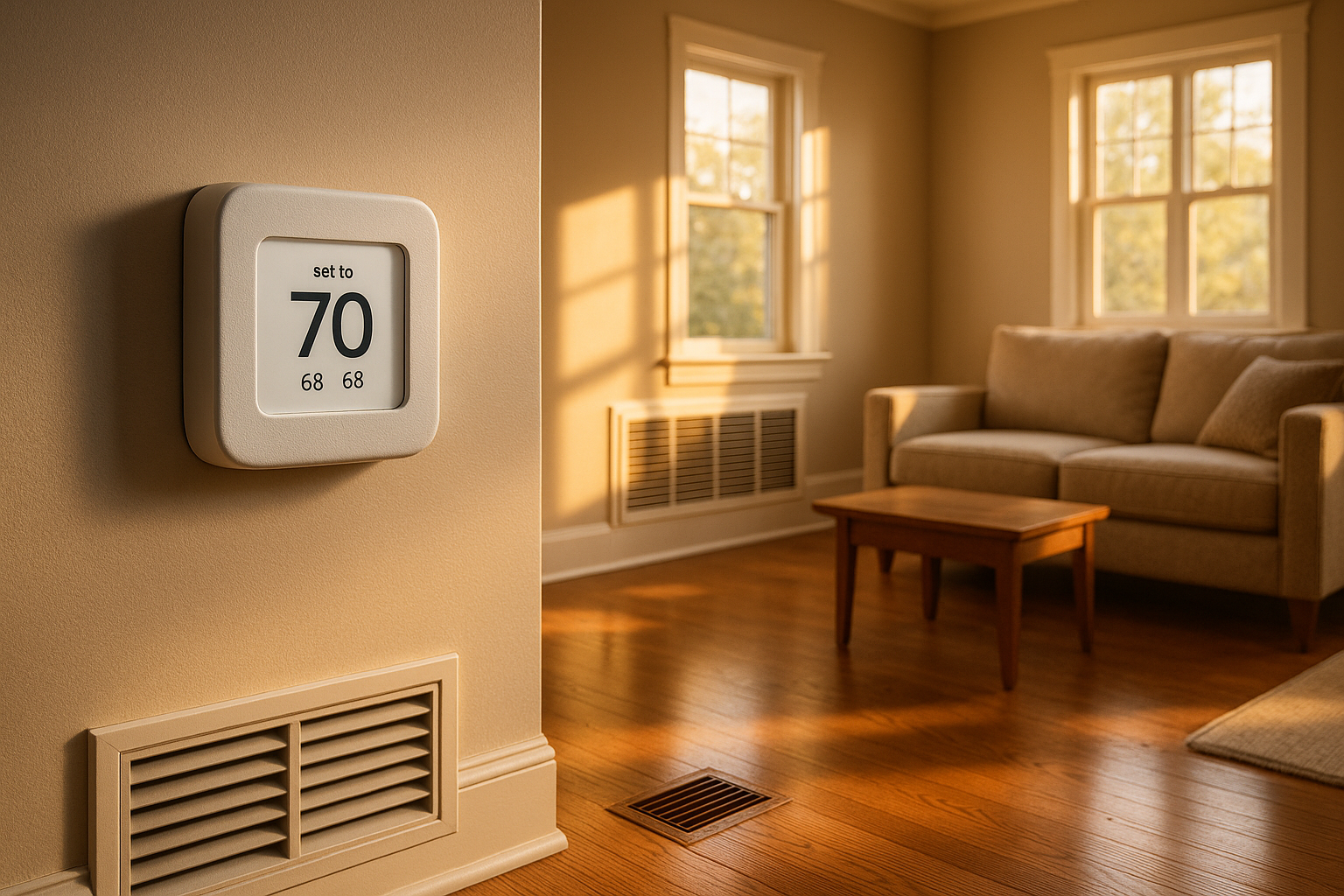
Where your thermostat sits matters more than you think. Put it in the wrong spot, and you'll chase your tail. Ideal placement is on an interior wall, about 5 feet high, away from supply vents, sunny windows, exterior doors, and kitchens. If it's in a hallway with a heat register blasting right at it, the thermostat will think the house is warm when the rest of the home is freezing. Same in summer: if the sun hits it in the afternoon, it'll read too high and shut the AC off early.
Temperature Differential (Hysteresis)
That's the swing between when the system turns on and off. Most thermostats have about a 0.5–1.0°F differential. If by some setting it's too wide—say 3°F—the house will feel like it never quite catches up because the system waits too long to start. If it's too tight, the system short cycles and doesn't run long enough to move enough air. Some smart thermostats let you adjust this. If you're seeing big temperature swings, that's likely the culprit.
When the System Itself Can't Keep Up
Sometimes the thermostat is fine and the problem is under the hood.
Airflow Limitation
Airflow is the lifeblood of your HVAC. Dirty filter? Blocked returns? Closed vents? That's a recipe for a house that won't reach setpoint. In older Indianapolis homes with basements or crawlspaces, duct leaks are depressingly common. You can have a perfectly good furnace but if 20% of your heated air is dumping into the crawlspace, the living room stays cold. We wrote more about fixing uneven airflow between rooms if you want to dig deeper.
Furnace Short Cycling
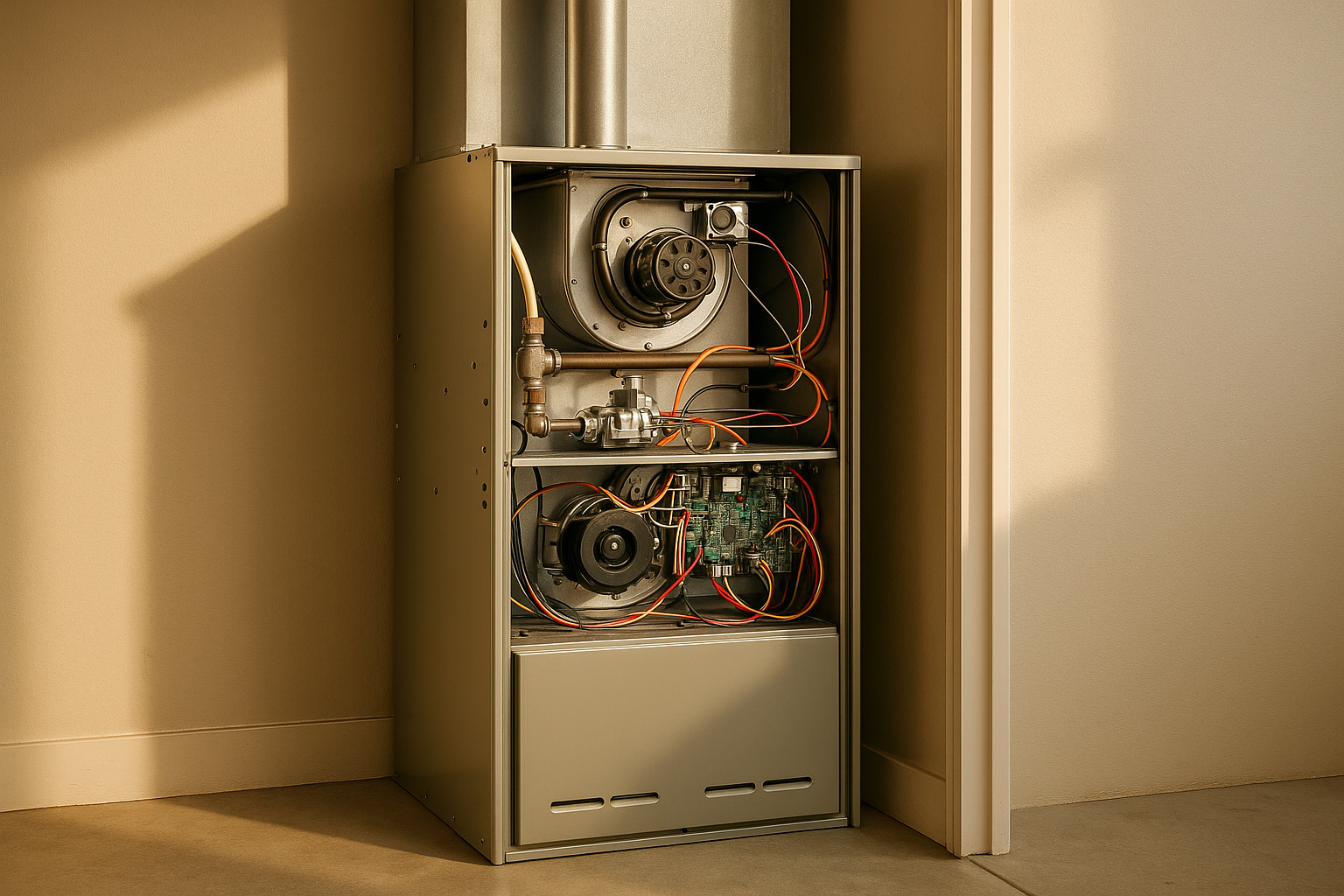
A gas furnace has a high-limit switch that shuts it down if it gets too hot, which usually happens when airflow is poor. If the furnace fires up, runs for a few minutes, then shuts off before the house is warm, that's short cycling. It will never reach the set temperature. This can be a dirty filter, but it can also be a failing blower motor or a control board issue.
Heat Pump Issues in Deep Cold
If you have a heat pump (very common in central Indiana), it works great down to a certain outdoor temperature. When it gets close to 0°F—like those bitter nights in Westfield and Zionsville—your heat pump needs backup heat. That's either electric heat strips or a gas furnace. If that auxiliary heat doesn't engage, the heat pump will run forever but the house hovers a few degrees below setpoint. You'll see the thermostat say "aux heat" or "emergency heat" when it's working. If you never see that indicator and it's 5°F outside, call a pro.
AC Not Keeping Up in Summer
In the summer, the same problem shows up as an air conditioner that can't get below 75°F when it's 92°F and humid outside. That often means the outdoor condenser coil is covered in cottonwood fuzz, or the refrigerant charge is off. A frosted indoor coil or ice on the copper line is a big red flag—shut the system down and let it thaw, then read our post on why AC units freeze up.
Two-Story Homes and Older Indy Houses
If you live in a two-story built in the 1990s or early 2000s, you probably know the drill: upstairs is 10 degrees warmer than downstairs in summer, and the opposite in winter. This is partly due to stack effect—warm air rises and escapes through the attic, pulling cold air in downstairs. It's not just a thermostat problem; it's a house problem. You can adjust dampers in your ductwork, but a real fix for many Indianapolis homes is a zoning system with multiple thermostats. That way you set different temperatures for upstairs and downstairs.
And if your home is older—think 1920s to 1950s near Broad Ripple or Irvington—the ductwork was often added decades after the house was built, and it may be undersized. Combined with poor insulation and air leaks, your system could be perfectly fine but simply not big enough to overcome the home's load. That's where a Manual J load calculation comes in. We also see homes where the attic is barely insulated; adding attic insulation and air sealing can make a bigger difference than a new HVAC unit.
Smart Thermostat Problems
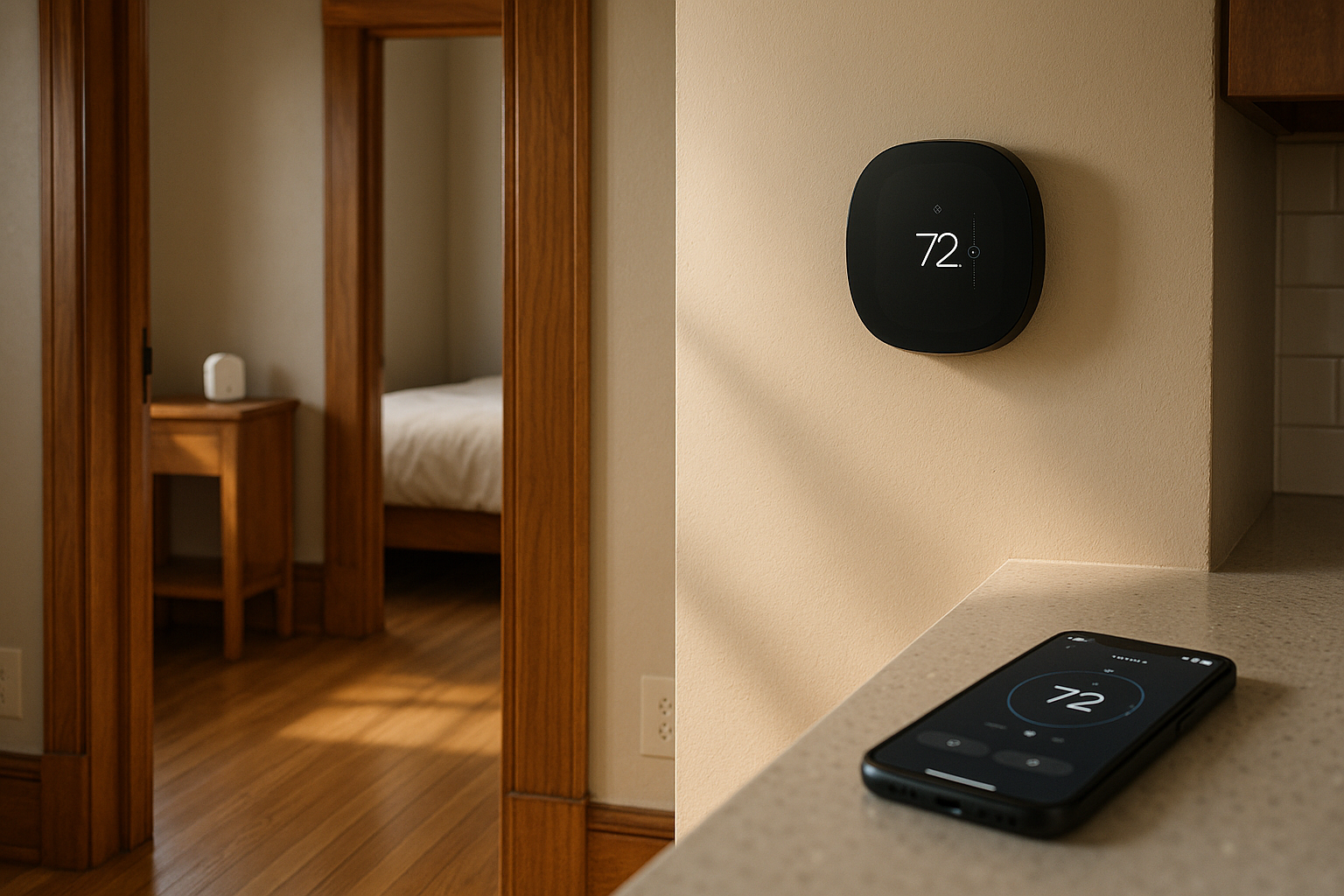
Smart thermostats are great, but they introduce a whole new set of possible issues. If you installed one and suddenly the house won't reach temperature, check these:
- Missing C-wire: Some smart thermostats need a common wire (C-wire) for power. Without it, they can't charge the battery and may behave erratically—turning off early, losing connection, showing wrong temps.
- Equipment type: Did you tell the thermostat whether you have a heat pump, a gas furnace, or electric heat? If it's set wrong, it will call for the wrong kind of heat or cooling.
- Aux heat settings: Some smart stats have settings for how aggressive the auxiliary heat is. If it's disabled or set to only come on at extreme temperatures, your heat pump might struggle in moderate cold.
- Energy-saving schedules: Those "eco" modes and adaptive recovery features sometimes let the temperature drop further than you expect, then take forever to catch up.
If you recently put in a smart thermostat and now the house is always a couple degrees off, double-check those settings before blaming the HVAC.
When to Call a Pro (and What We'll Check)
You've done the easy stuff and still nothing? That's when you bring in someone who can look at the whole picture. At HVACPros, we start with a planning-first diagnostic. That means we don't just start swapping parts. We check:
- Thermostat calibration and placement
- Control board and wiring
- Airflow (static pressure, filter, duct leaks)
- System capacity vs. the home's actual load
- Refrigerant charge and coil condition (in summer)
- Auxiliary heat operation (in winter)
We're not here to upsell you on a new system if a $200 repair fixes it. But if the system is genuinely undersized or the ductwork is a mess, we'll show you the numbers and give you options. That's what a good Indianapolis HVAC contractor should do.
If your furnace is short cycling, your heat pump won't engage aux heat in a cold snap, or your AC has ice on the lines, don't keep waiting. Those symptoms won't fix themselves. Request a diagnostic visit and we'll give you a clear, scoped plan before any work starts. No vague windows, no mystery charges.
Bottom line: a thermostat not reaching set temperature is rarely just the thermostat. It's usually a combination of small issues—airflow, placement, or a setting—but sometimes it's a sign of a bigger problem. Either way, the fix starts with looking at the right things.
Ready for HVAC service or an upgrade?
NATE-certified techs, flat-rate diagnostics, and a free in-home assessment for any replacement — no pressure.