Last winter, a homeowner in Meridian-Kessler called us with a weird problem. She said her house felt stuffy, but every time she ran the bath fan, it got worse. The air felt dry, the windows were dripping with condensation, and her allergies were acting up. She had a brand new high-efficiency furnace, but it didn’t help. Turns out, her house was too tight. Modern homes trap moisture, odors, and pollutants. You need a way to exchange stale indoor air for fresh outdoor air without losing all your heat or AC. That’s exactly what ERV and HRV systems do. They give you balanced, controlled ventilation.
What’s the Difference Between ERV and HRV?
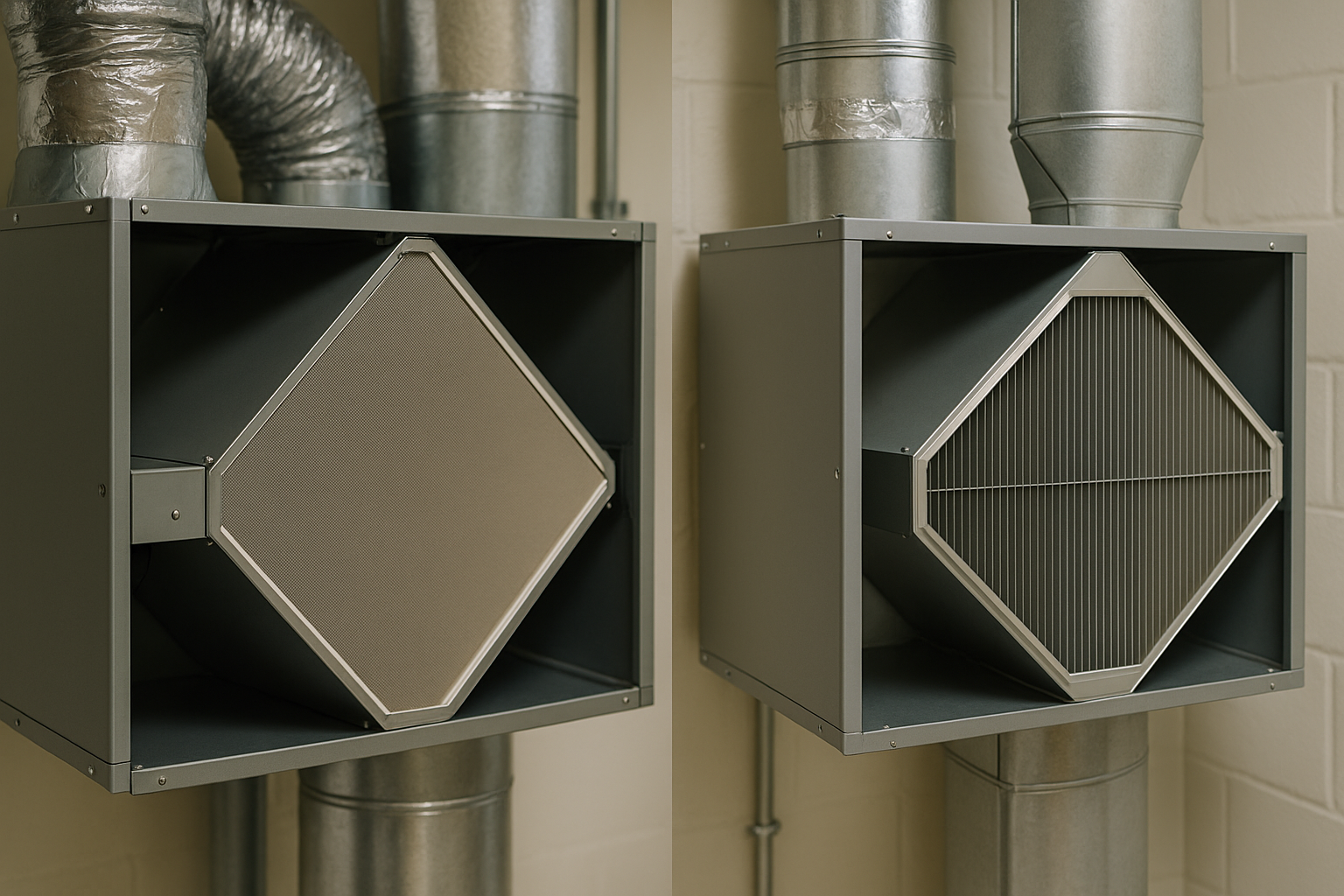
ERV stands for energy recovery ventilator, HRV is heat recovery ventilator. Both bring in fresh air and exhaust stale air. But how they handle humidity is different.
An HRV just transfers heat. So in the summer, it recovers some of your cool indoor air temperature before exhausting it. But it doesn’t do much about humidity. In the winter, it preheats incoming cold air using the heat from outgoing air. But it doesn’t transfer moisture.
An ERV does heat transfer and some moisture transfer. That matters in a mixed-humid climate like ours. In Indianapolis, we get hot, humid summers and cold, dry winters. An ERV helps keep indoor humidity in check—moderate in summer, less dry in winter. It doesn’t dehumidify like a dedicated dehumidifier, but it helps maintain balance.
For most homes around Indianapolis, Carmel, Fishers, and Zionsville, we recommend an ERV. But sometimes an HRV fits better, like in homes with very low humidity issues. We always do a full assessment before deciding.
How Balanced Ventilation Fixes Common Problems
Think of your house like a sealed box. Without a balanced ventilation system, you rely on natural leaks to get fresh air. That’s unpredictable and inefficient. Bath fans only exhaust air; they don’t bring fresh air in. So when you run the bath fan, it pulls air through cracks around windows and doors. That air is unfiltered and can be humid or cold.
An ERV/HRV solves this by controlling both supply and exhaust. It keeps the house at a slight neutral pressure so you don’t drag in air through the attic or crawlspace. That means fewer drafts, better comfort, and cleaner air.
We recently installed an ERV in a Greenwood home that had terrible musty smells in the basement. The homeowners thought it was mold, but it was just a lack of ventilation. After the install, the smells disappeared, and the humidity levels dropped too. Plus, they noticed less dust and their allergies improved.
The Right Way to Plan and Install
You can’t just slap a unit on the wall and call it done. Proper ERV or HRV installation starts with a room-by-room evaluation. We figure out how much fresh air each bedroom, living area, and basement needs. We follow ASHRAE 62.2 guidelines and local Indianapolis code.
Then we decide where to put the unit. Common spots: basements, utility rooms, or attics. Attic installs need extra insulation and freeze protection. We always run dedicated insulated ductwork, sealed with mastic, to each supply and exhaust point. And we use exterior hoods with backdraft dampers and insect screens, placed above snow lines and away from driveways.
Integration with your existing HVAC can be done two ways: either a standalone system with its own ducts, or a supply-air tie-in to the furnace or air handler. We use interlock controls to make sure they work together properly.
For homes near high-traffic areas like I-465, we recommend upgrading to MERV 13 filters to capture more pollutants. And all our units use ECM motors—they’re quiet and efficient.
Cold Weather Defrost
Indianapolis winters get below freezing. A standard HRV or ERV can frost up. That’s why we use models with automatic defrost controls and insulated cores. The system periodically reverses airflow or recirculates indoor air to warm the core. That keeps air flowing even on the coldest nights.
Commissioning and Balancing
After installation, we test everything. We measure airflow at every register and adjust dampers to make sure the whole house gets the right amount. We also test for pressure imbalances. Then we set the controls and show you how to use them. We document everything so you have a record for future maintenance.
Installation Timeline and Cost
Most retrofits can be done in a single day. If we have to run long duct chases through an attic or crawlspace, maybe two or three days. We give you a clear scope and timeline upfront.
Cost depends on the size of your home, the type of unit (ERV vs HRV), ductwork complexity, and features like enhanced filtration or smart controls. After our in-home assessment, we provide a detailed written quote with all options so you can decide what fits your budget.
Maintenance Made Simple
Your ERV/HRV needs filter changes every 3–6 months and a core cleaning about once a year. We design the installation so filters and cores are easy to access. We’ll even show you how to do it yourself. It takes about 15 minutes.
Ready for Fresher, Healthier Indoor Air?
If your home feels stuffy, drafty, or you’re dealing with condensation, allergies, or odors, a balanced ventilation system could be the fix. We’d be happy to come out, take a look at your home, and give you honest advice. Schedule your in-home ventilation assessment today and get a written proposal. No pressure.
We serve all of metro Indianapolis, including Carmel, Fishers, Zionsville, Westfield, Noblesville, Greenwood, Brownsburg, Avon, and Plainfield. And yes, we handle permits and inspections where needed.
Ready for HVAC service or an upgrade?
NATE-certified techs, flat-rate diagnostics, and a free in-home assessment for any replacement — no pressure.