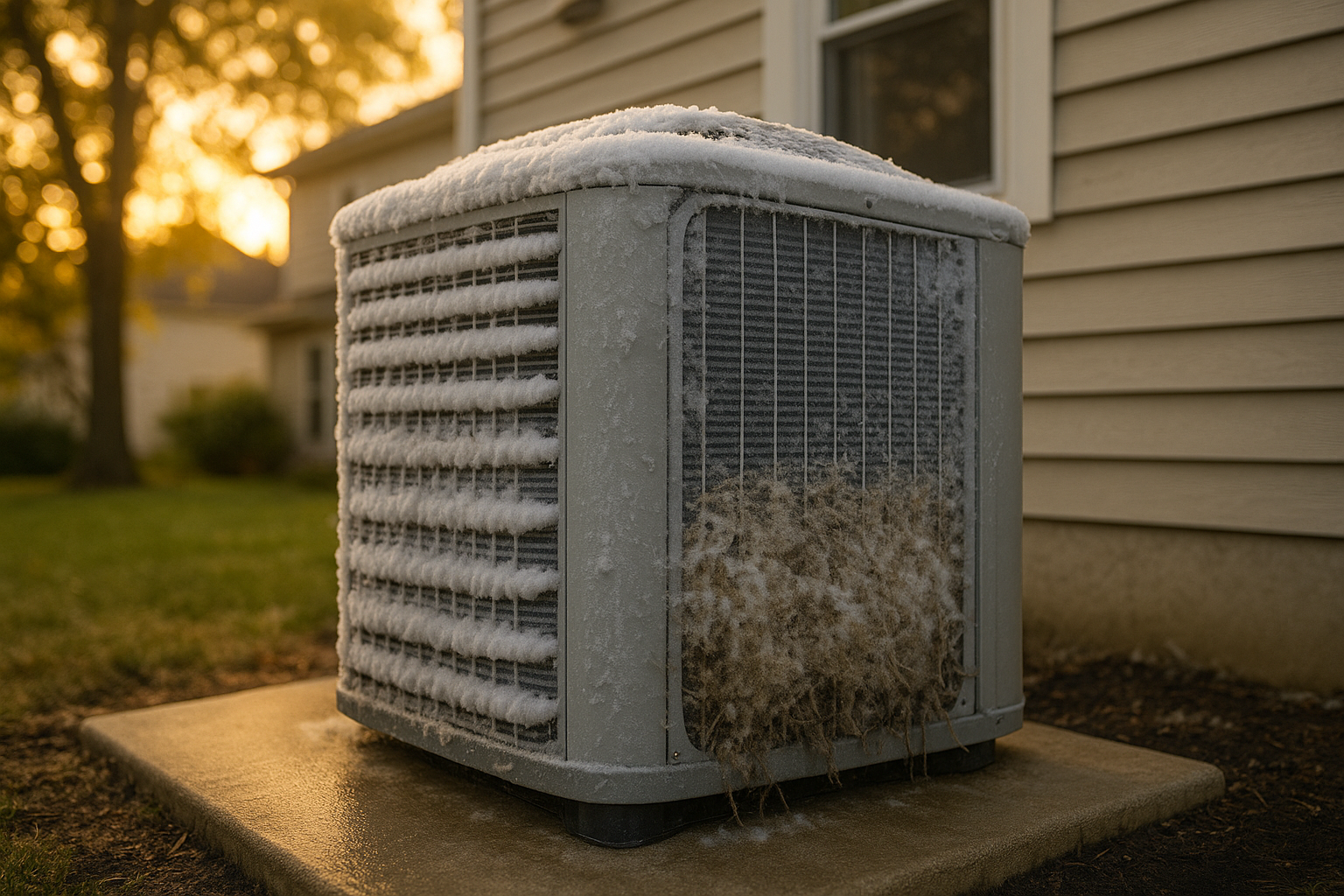
Last July, a guy in Carmel called me in a semi-panic. His AC was running but the air coming out felt warm and muggy. He went outside and saw ice on the copper line going into the house. The whole outdoor unit looked like it had been hit with a frost bomb. He thought the AC was done for good. Actually, it was ac freezing up — and it's one of the most common cooling problems we see all summer long around Indianapolis.
This is not normal. When your AC freezes, the indoor coil (the part that gets cold) drops below 32°F. Any moisture in the air turns to ice on that coil. Then airflow gets blocked, the system can't move heat, and if you keep running it, you risk burning out the compressor. That's the expensive part.
First, turn the cooling off and the fan on
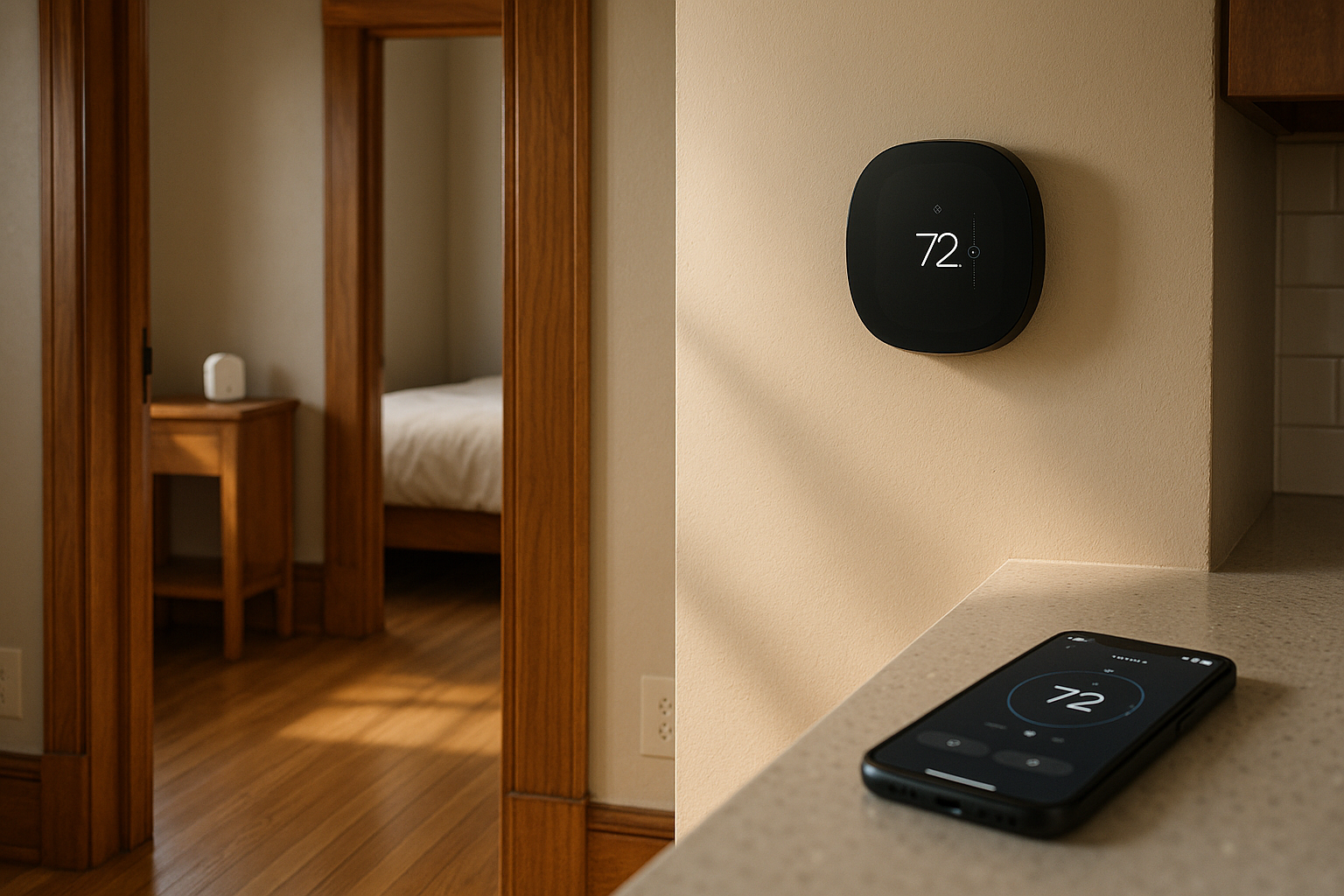
Before you do anything else, go to your thermostat and switch it from COOL to OFF. Then set the fan to ON. This blows warm indoor air across the frozen coil and helps it thaw. Do not try to chip the ice off — you'll damage the fins and make things worse.
While it's thawing, check the air filter. If it's caked with dust, replace it with a fresh one. Make sure all your supply vents are open and no furniture or rugs are blocking the return grilles. Let the system thaw fully. That can take anywhere from 4 to 24 hours depending on how much ice built up. Don't turn the cooling back on until the ice is gone and the airflow feels strong.
The big reasons your AC turns into an ice block
There are a handful of usual suspects when it comes to AC freezing up. Some are easy to fix, some need a pro.
A dirty air filter
This is the #1 cause we see. A filter clogged with dog hair and dust cuts airflow across the indoor coil. Less warm air moving over the coil means the coil gets too cold and ice starts to form.
Closed or blocked vents
If you close more than a couple of supply registers, you strangle the airflow through the whole system. Same thing if a return grille is buried behind a couch or curtain. Your AC needs to breathe.
Low refrigerant
This one's a bigger deal. When refrigerant charge is low (usually because of a leak), the pressure drops and the coil temperature plummets below freezing. Topping off refrigerant without fixing the leak is like putting air in a tire with a nail still in it. It'll just leak out again.
Dirty evaporator coil
The indoor coil can get coated in years of dust and pet hair. That layer acts like a blanket, so the coil can't absorb heat efficiently. The result? Ice.
Blower motor not moving enough air
If your blower motor is weak, or a capacitor is failing, the fan might spin slower than it should. That reduces airflow and leads to freezing.
Thermostat set too low
Running your AC at 65°F when it's 95°F outside pushes the coil below freezing, especially overnight when the outdoor temperature drops. The system just can't keep up.
Clogged condensate drain
When the drain line backs up, water sits around the coil and raises the humidity right where the cold happens. That extra moisture makes ice form faster.
Outdoor coil fouled
Cottonwood fluff, grass clippings, and dirt can mat down the outdoor coil. If the system can't reject heat outside, the indoor coil gets colder than it should.
Why Indy homes get hit harder
If you live in Indianapolis, Carmel, Fishers, Zionsville, Westfield, Noblesville, Greenwood, Brownsburg, Avon, or Plainfield, you already know our summers are hot and sticky. High humidity means there's always lots of moisture in the air ready to freeze the second a coil dips below 32°F.
Cottonwood season is another local pain. Late May through June, those fluffy seeds float around just about every neighborhood in the metro. They stick to outdoor coils like glue, especially in places like Greenwood and Brownsburg with lots of mature trees. That blocks airflow and makes freeze-ups way more likely.
Older Indy homes often have undersized return air ducts. If your house was built in the 1950s or 60s, the return might be too small for a modern AC. That restricts airflow from the start. Two-story layouts make it worse — upstairs rooms get hot, so people crank the thermostat down, and the coil freezes trying to satisfy the call for more cold.
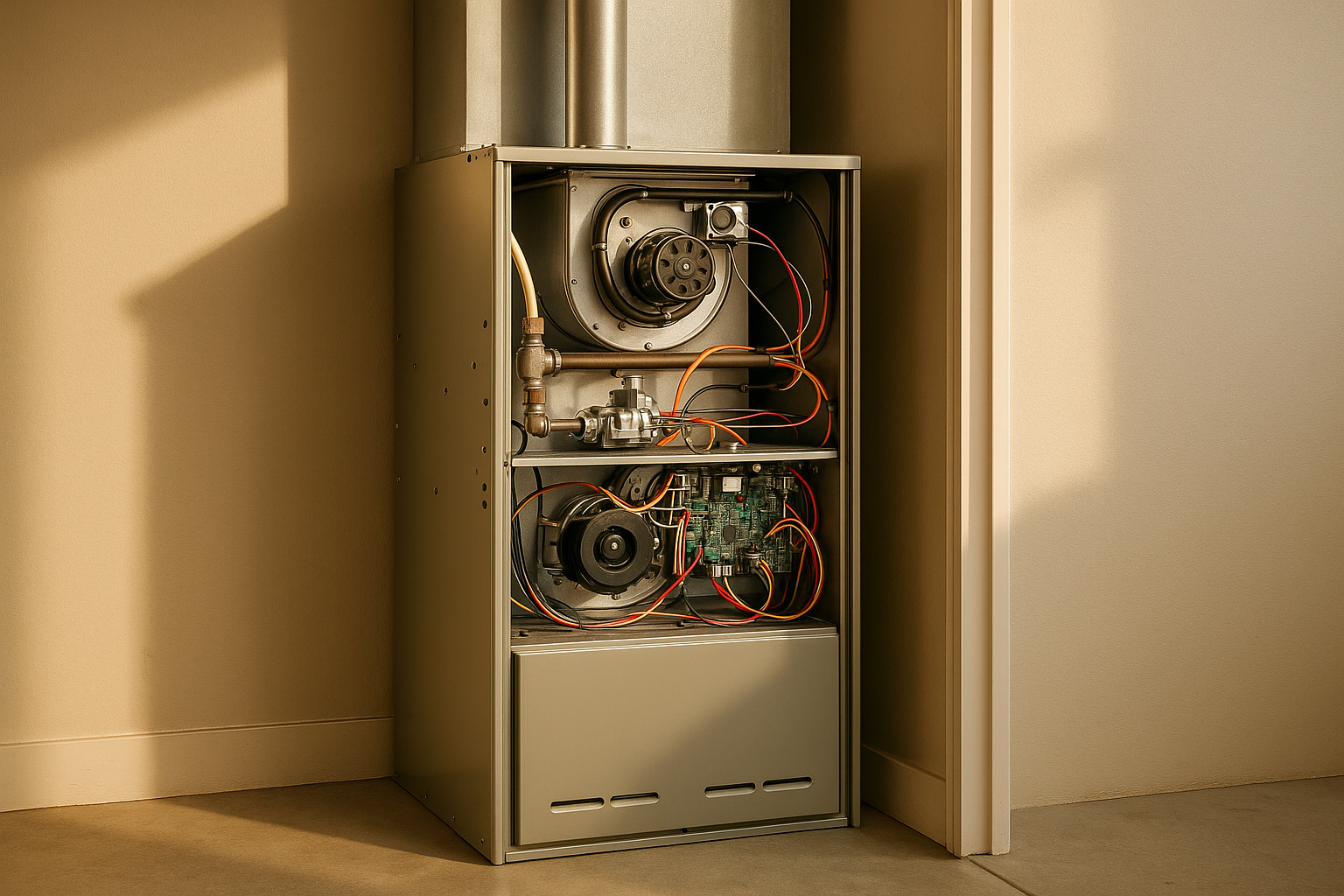
If your furnace or air handler is in the basement (very common in Indy), the condensate drain line can clog with gunk from floor drains. That backs up water and adds to the problem.
What you can safely check right now
You don't need to be a technician to do a few simple things.
- Change the filter. Get the right size — check the old one. MERV 8 to 11 is fine for most homes. Don't go too high; a MERV 13 can actually restrict airflow in older systems.
- Open all supply vents. Closing more than one or two can cause trouble. If you need to balance temperatures, that's a job for airflow balancing, not closed registers.
- Clear around the outdoor unit. Give it 18–24 inches of space on all sides. Trim back bushes and pull weeds.
- Rinse the outdoor coil. Turn the power off at the disconnect box first. Then use a garden hose and spray from the inside out to push dirt and cottonwood fuzz off the fins. Don't use a pressure washer.
- Check the condensate drain. Find the drain line near your indoor unit and make sure water can flow freely. If you have a wet/dry vac, you can gently suction the end of the line to clear a clog.
For more on what's safe to do yourself versus what needs a pro, check out this guide.
When to call a pro (and what we won't do)
If you've replaced the filter, opened the vents, and the ice comes back after a full thaw, it's time to bring in someone who can find the real cause. Also call if you see ice on the outdoor refrigerant line, hear a weak or noisy blower, see water around the furnace, or suspect a refrigerant leak.
At HVACPros, we don't just squirt in some refrigerant and leave. We measure static pressure and airflow, check the blower speed and capacitors, inspect and clean both coils, verify the charge with superheat and subcooling, and test the drain and sensors. Then we explain what we found and give you a clear scope with options before any work starts. No hidden fees, no upsells, no pressure to replace a unit that can be fixed.
If your AC is freezing up and you're in the Indianapolis area, give us a call. We'll figure out why and tell you straight what it'll take to fix it. Get a fast quote here — and we'll treat you like a neighbor, not a sales target.
Ready for HVAC service or an upgrade?
NATE-certified techs, flat-rate diagnostics, and a free in-home assessment for any replacement — no pressure.