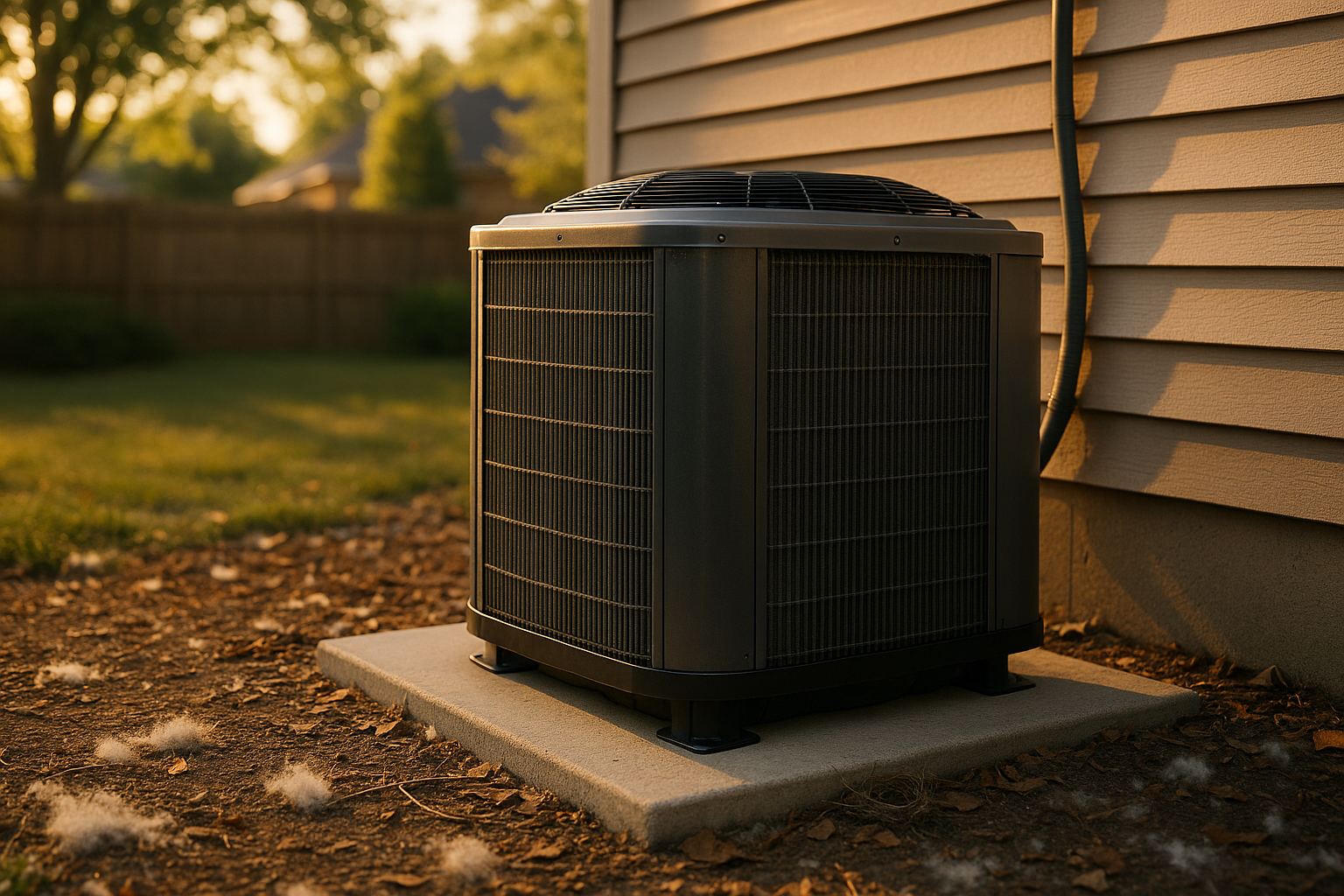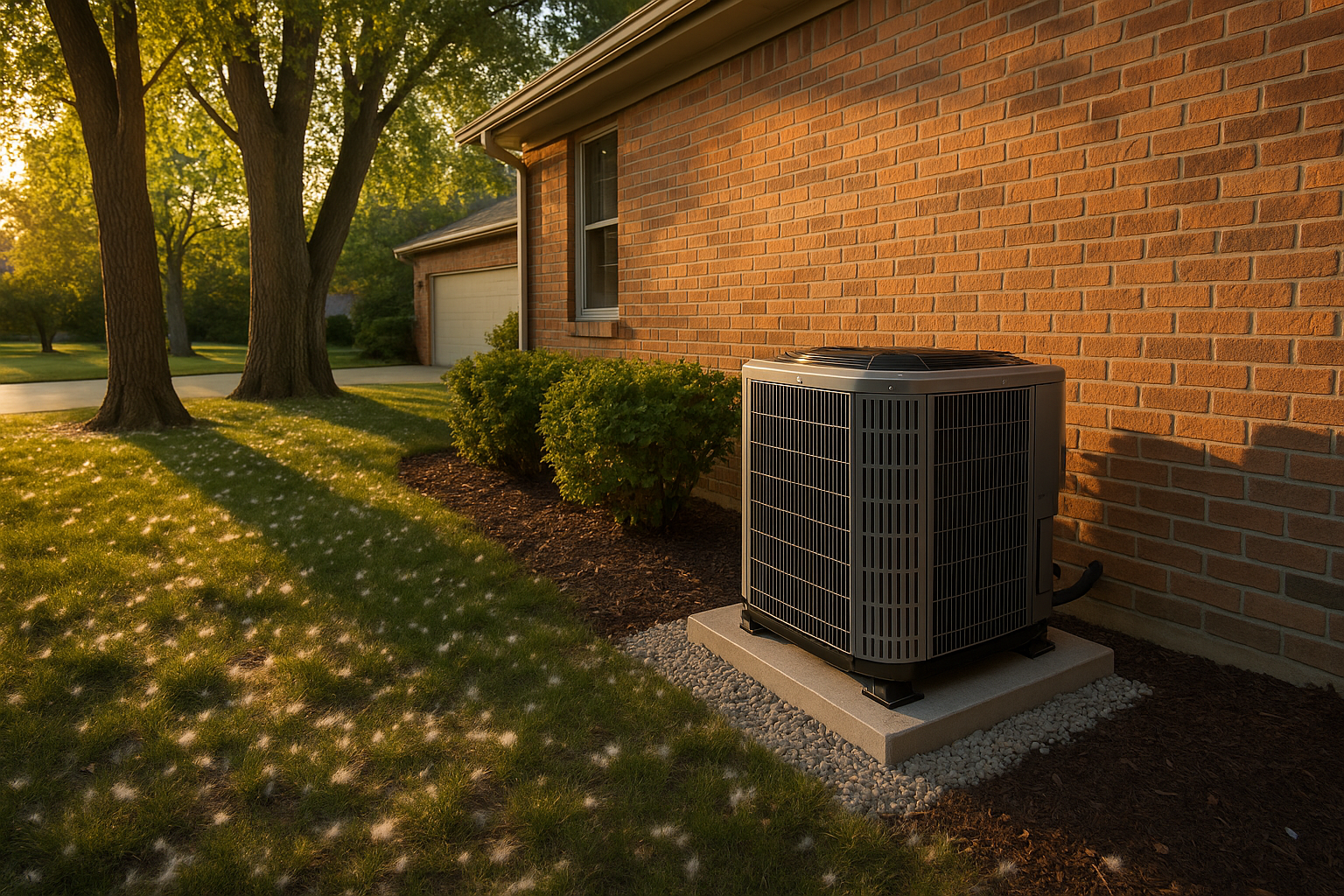
Last July, my neighbor in Meridian-Kessler called me over looking defeated. His AC had quit right when Indy hit that sticky 90-degree stretch. The outdoor unit was humming but no cool air. I walked around the side yard—and there it was. Cottonwood fluff had blanketed the coil like a thick gray sweater. Thirty minutes with a hose (gently, no high pressure) and the system kicked back on. He’d never thought to rinse the unit. That’s what got me thinking: most homeowners can tackle simple DIY HVAC maintenance without getting in over their heads. And knowing when to stop is just as important.
The Easy Stuff You Can Do Without Touching Anything Dangerous
DIY HVAC maintenance is really about tasks that don’t require removing service panels, messing with gas or refrigerant, or using electrical testers. Think of it like taking care of your car—check the oil, change the air filter, but leave the engine rebuild to a mechanic.
Changing your furnace filter is the number one DIY task. In Indianapolis, with our pollen (especially ragweed in late summer) and the dust from older homes, you probably need to swap filters more often than the package says. I tell folks around here: check it monthly. If it looks gray or you can’t see light through it, replace it. And don’t go crazy with high MERV ratings. A MERV 8 to 11 is usually the sweet spot. Anything higher, and you risk choking airflow in systems that aren’t designed for it—especially in older neighborhoods like Broad Ripple where ductwork might already be undersized. (We’ve seen homeowners put in MERV 13 filters because of allergies, only to find their AC struggling to push air. There’s a balance.)
Your thermostat schedule can save you a bundle. For Indy’s swings—hot days, cool nights in spring and fall—try setting the AC to 78 when you’re home and 82 away, or the heat to 68 and 62. Don’t make big jumps; gradual changes keep humidity in check. A friend in Zionsville swore by the ‘hold’ button until her summer bill hit $400. After setting a simple schedule, she cut it by 15%.
Walk through your house and make sure supply and return registers aren’t blocked by furniture, rugs, or curtains. Vacuum the grilles. If you see bent fins on floor registers, you can straighten them with a pair of needle-nose pliers—gently. But a word of caution: don’t close more than a couple of vents in unused rooms. It can unbalance the system and cause the coil to freeze.
Giving the Outdoor Unit Some Love (Safely)
Your outdoor condenser or heat pump needs to breathe. Leaves, grass clippings, and especially cottonwood fluff are the enemies. In late May through June, Indianapolis gets a major cottonwood bloom. I’ve seen units in Fishers and Greenwood completely coated. Here’s how to clean it: First, turn off the power at the disconnect box near the unit. Not just the thermostat—the actual switch. Then take a garden hose with a gentle spray nozzle and rinse the fins from the inside out. No pressure washer, no chemicals—just water. If the fins are really gunked up, a soft brush can help, but be careful not to bend them. You want at least two feet of clearance around the unit. Trim back bushes, pull weeds. In tight city lots in places like downtown Indy or Fountain Square, that might mean some landscaping.
The other outdoor-related chore is the condensate drain. That’s the PVC pipe that drips water when the AC runs. If it clogs, you might find a puddle by the indoor unit or even a shut-down system. The fix? Find the drain line—often in the basement near the air handler—and pour a cup of white vinegar down it at the start of cooling season. It kills algae and keeps things flowing. If you suspect a clog, you can try a wet/dry vac, but if water’s backing up and you can’t clear it, that’s a sign to call. We’ve got a whole post on fixing condensate drain clogs.
If you have a heat pump, you might notice frost on the outdoor unit in winter. A light coating is normal during the defrost cycle—it’ll melt off on its own. But if the frost stays for hours or the whole unit turns into an ice block, shut it down and call a pro. That’s not something you can fix with a hose. (More on that in our heat pump defrost article.)
What’s Definitely NOT DIY (And Why You’ll Want Backup)
Okay, here’s the line. Don’t open the electrical panel. Don’t touch capacitors—they can hold a dangerous charge even when power is off. Don’t add refrigerant; it’s not a DIY thing and it’s heavily regulated. Don’t mess with gas valves or burners on a furnace. And don’t try to fix ductwork hidden in walls or attics. These jobs require tools, training, and sometimes licenses. One homeowner in Carmel tried to replace his own capacitor after watching a video and ended up with a fried control board. The $15 part became a $600 repair. (Read more about capacitor failure symptoms.)
If your system short cycles (turns on and off frequently), if you smell something burning or electrical, if you see ice on the refrigerant lines (not just the outdoor coil in winter), or if your breaker trips more than once—stop and call. Also, if you’ve changed the filter and the airflow is still weak, or your energy bills are climbing without explanation, it’s time for a professional eye.
A Simple Seasonal Rhythm (And When to Call For Backup)
I work on a simple checklist with Indy homeowners. Spring: clean the outdoor coil, flush the condensate drain, change the filter, and test the AC. Fall: swap the filter, check vents, and gently vacuum the furnace burner area if you’re comfortable (without opening sealed compartments). Winter: after heavy snow or ice, check that the exhaust and intake pipes outside aren’t buried—high-efficiency furnaces can shut down if blocked. Summer: watch humidity; if it feels sticky inside despite the AC running, something’s up.
Even with good DIY habits, your system still needs a pro tune-up once a year. HVACPros can measure refrigerant pressures, test capacitors, inspect heat exchangers for cracks, and catch issues before they strand you on the hottest day. If you’re around Greenwood or Avon, we’re a short drive away. And honestly, the cost of a maintenance plan often pays for itself in avoided breakdowns and better efficiency. Grab a seasonal tune-up quote and we’ll make sure your DIY care is holding up.
Ready for HVAC service or an upgrade?
NATE-certified techs, flat-rate diagnostics, and a free in-home assessment for any replacement — no pressure.