Last spring, my neighbor Dan finished a sunroom off the back of his house in Brownsburg. The first sunny afternoon, it felt like a greenhouse — sticky, pushing 90 degrees. He tried running a portable AC unit from the big-box store, but it basically just made noise and leaked condensate on his new floor. That winter, the same room turned into an icebox, and the space heater he plugged in tripped the breaker twice. When he finally called us out, the answer was simple: a single-zone ductless mini-split designed exactly for that space. Three days later, his sunroom was the most comfortable room in the house. That’s the kind of fix a mini-split for room addition delivers — and it’s way smarter than fighting with your existing HVAC system.
Why a Mini-Split Just Makes Sense
When you add a room — whether it’s a sunroom, a bonus room over the garage, or a finished basement — your current furnace and air conditioner were never sized for that extra square footage. Tapping into existing ductwork can starve the rest of the house of airflow, especially if your system is already near its limit. And if the new room sits far from the air handler, you’ll lose efficiency just trying to push conditioned air that far. A ductless mini-split for addition solves all that. It’s its own zone, so you’re not messing with the balance of the rest of your home. Plus, installation takes about a day with very little disruption — no tearing open walls to run ducts.
We see a lot of above-garage bonus rooms in Brownsburg that turn into saunas in July and freezers in January. That’s because they’re surrounded by unconditioned attic space, and the existing HVAC just can’t keep up. A single-zone mini-split Indianapolis area homeowners love for these spaces gives you total control. You set the temperature for that room alone, and the system ramps up or down to match, using barely any energy when it’s not needed.
Getting the Size Right (Without Guesswork)
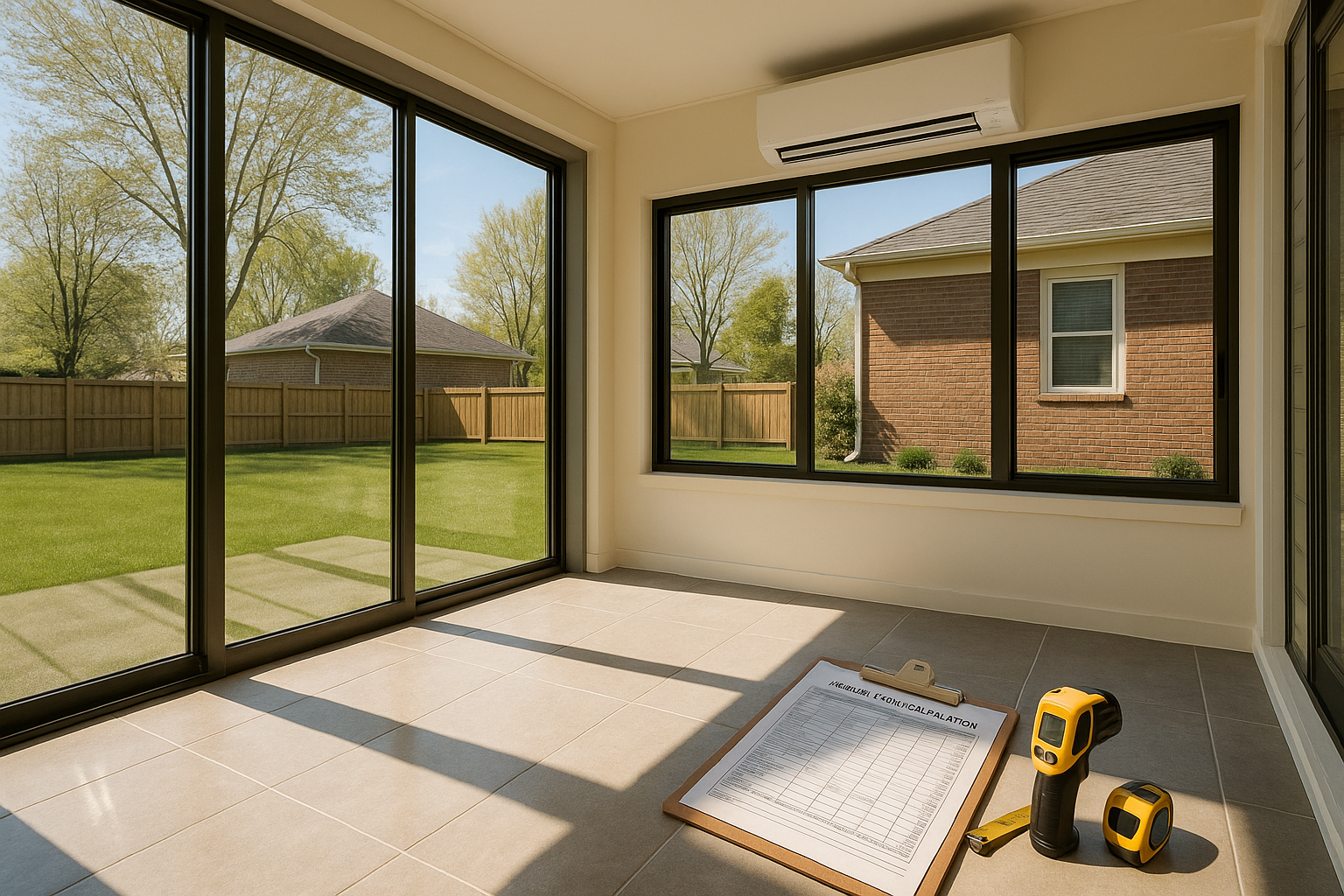
I’ve had people tell me, “Just throw a 12,000 BTU unit in there, it’s a 300-square-foot room, right?” But sizing a mini-split for room addition isn’t that simple. You need to account for windows, insulation, which way the room faces, and how much sun it gets. A west-facing sunroom with floor-to-ceiling glass might need 15,000 BTUs, while a well-insulated interior office could be fine with 9,000. We do a Manual J load calculation on every job — it’s the only way to avoid short cycling in summer or lukewarm heat in winter. Most small additions around here land in the 9k–12k BTU range, but don’t guess. A room that’s too hot or too cold costs more to fix later than getting it right up front.
Indiana Winters? No Sweat
I remember a call from a customer in Avon who’d read online that heat pumps don’t work below 40 degrees. That used to be sort of true, but today’s cold-climate mini-splits are different animals. The unit we installed at Dan’s place — a high-SEER2 heat pump — kept the sunroom at 70 degrees when it was 5 below outside last January. Models rated for cold climates maintain at least 75% of their rated heating capacity down to -5°F, and they’re built with features like improved defrost cycles and base pan heaters to handle Indiana’s freeze-thaw nonsense. If you’re curious about how these systems handle our worst weather, we’ve covered heat pump cold-weather performance in detail here.
Aesthetics and Indoor Unit Options
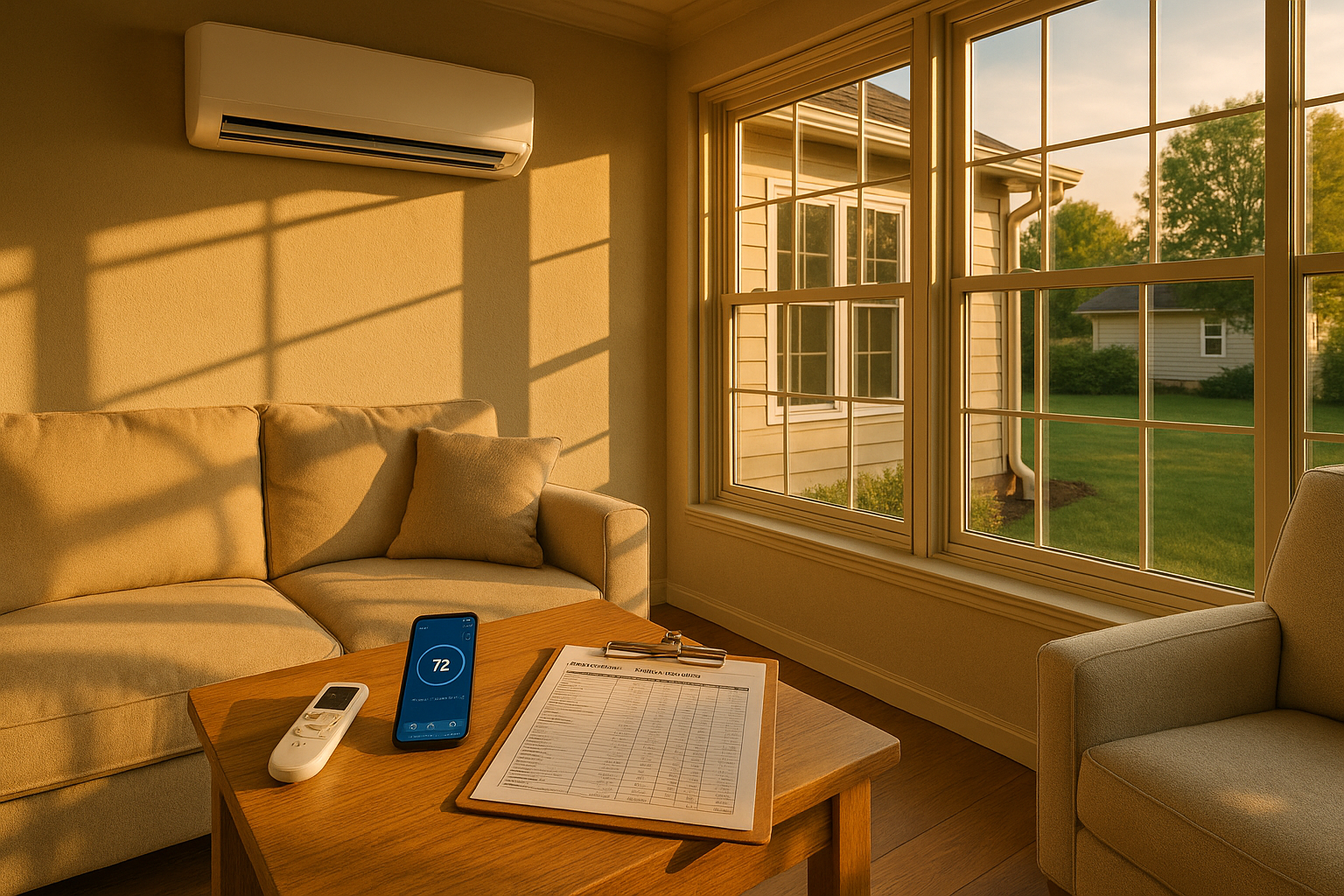
Nobody wants a giant plastic box ruining the look of their new sunroom or home office. Wall-mounted heads are the most common because they’re affordable and efficient, but if you’d rather not see the unit at all, ceiling cassettes tuck up into the joist space and just show a clean, flush vent. In a bonus room over the garage, a ceiling cassette keeps the floor clear and handles that dramatic temperature swing between floor and ceiling. For a sunroom, we usually mount the head on an interior wall, high enough that it doesn’t blast cold air directly on where you’ll be sitting. Line-set covers painted to match your trim hide the refrigerant lines, and a tidy condensate drain — either gravity-fed or with a small pump if you’re going up and over a foundation — keeps things neat. No one will even notice it after a week.
Outdoor Unit Placement: Snow, Sound, and Neighbors
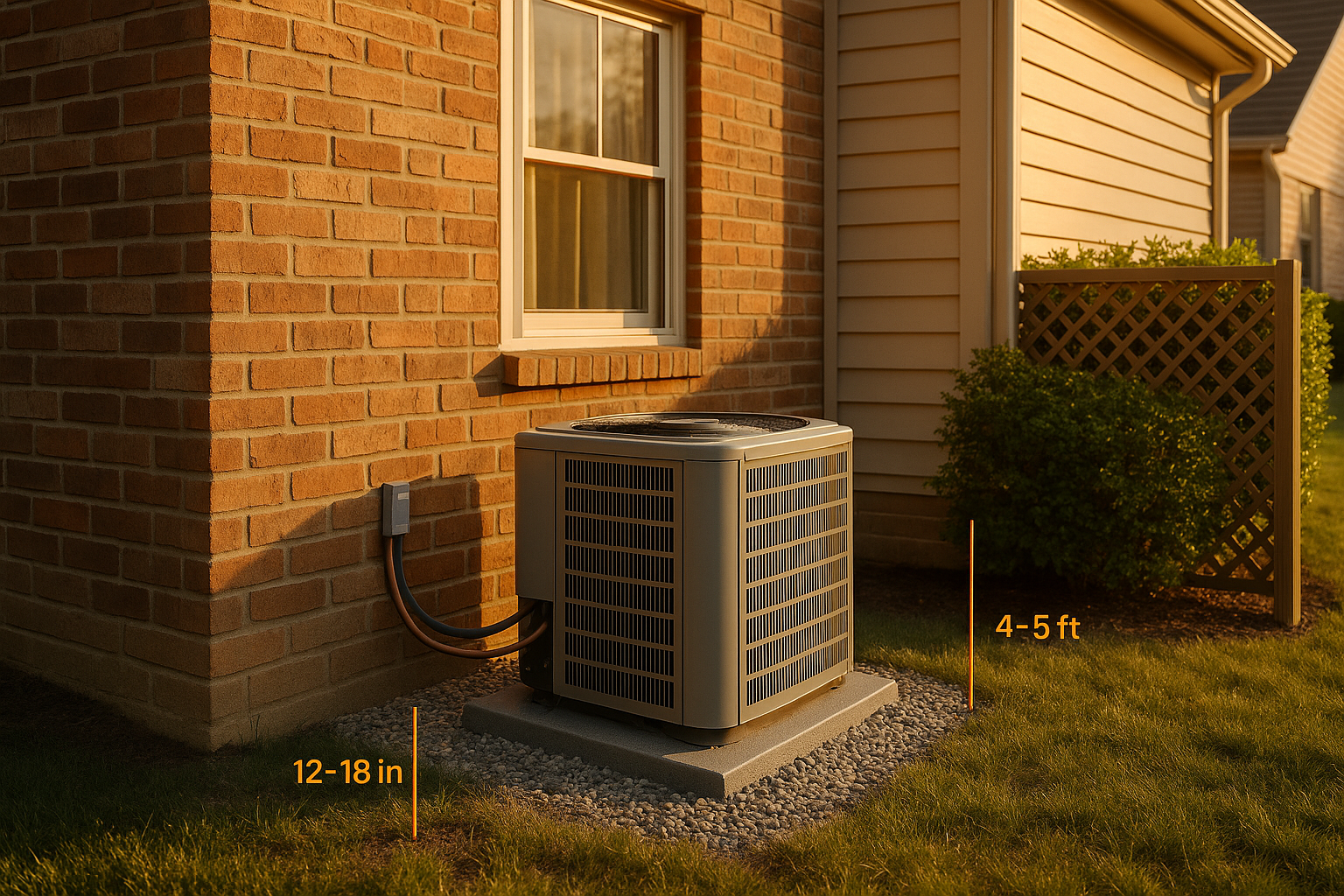
In Brownsburg and Hendricks County, snow drifts and ice are a thing. You’ve got to get the outdoor unit up off the ground — a wall bracket or a stand gets it above the typical snow line and keeps it clear of leaves and debris. We also pay attention to where the noise might travel: mount it away from bedroom windows, your patio, and the property line if you’ve got close neighbors. Modern mini-splits are really quiet — often under 50 decibels, which is quieter than a normal conversation — but placement still matters. And a vibration pad underneath kills any hum that might transfer inside.
Permits, Electrical, and the Install Itself
Every mini-split installation in Brownsburg needs a permit and inspection, which we handle start to finish. Electrical is usually a dedicated 240-volt circuit with an exterior disconnect box — not a big deal, but some older panels might need a small upgrade. The rest of the install goes fast: mounting the indoor and outdoor units, drilling a 3-inch hole for the line set and drain, connecting everything, and vacuum-testing the system. We’re in and out in under a day for most single-zone jobs, and we clean up thoroughly. Your new room will be conditioned before dinnertime.
Cost and What Drives It
A ductless mini-split for a typical room addition runs anywhere from $3,500 to $7,000 installed, depending on capacity, efficiency tier, indoor unit style, and how far the line set needs to run. Higher SEER2 ratings and cold-climate certifications push the price up a bit, but they pay back in comfort and lower utility bills — especially with Indiana’s weather swings. We can walk you through financing options that make the upfront cost easier, and there are sometimes federal tax credits for qualifying heat pumps, which we’ll confirm at the time of quoting. Best move: get a line-item quote so you can see exactly where your dollars are going.
Living With a Mini-Split
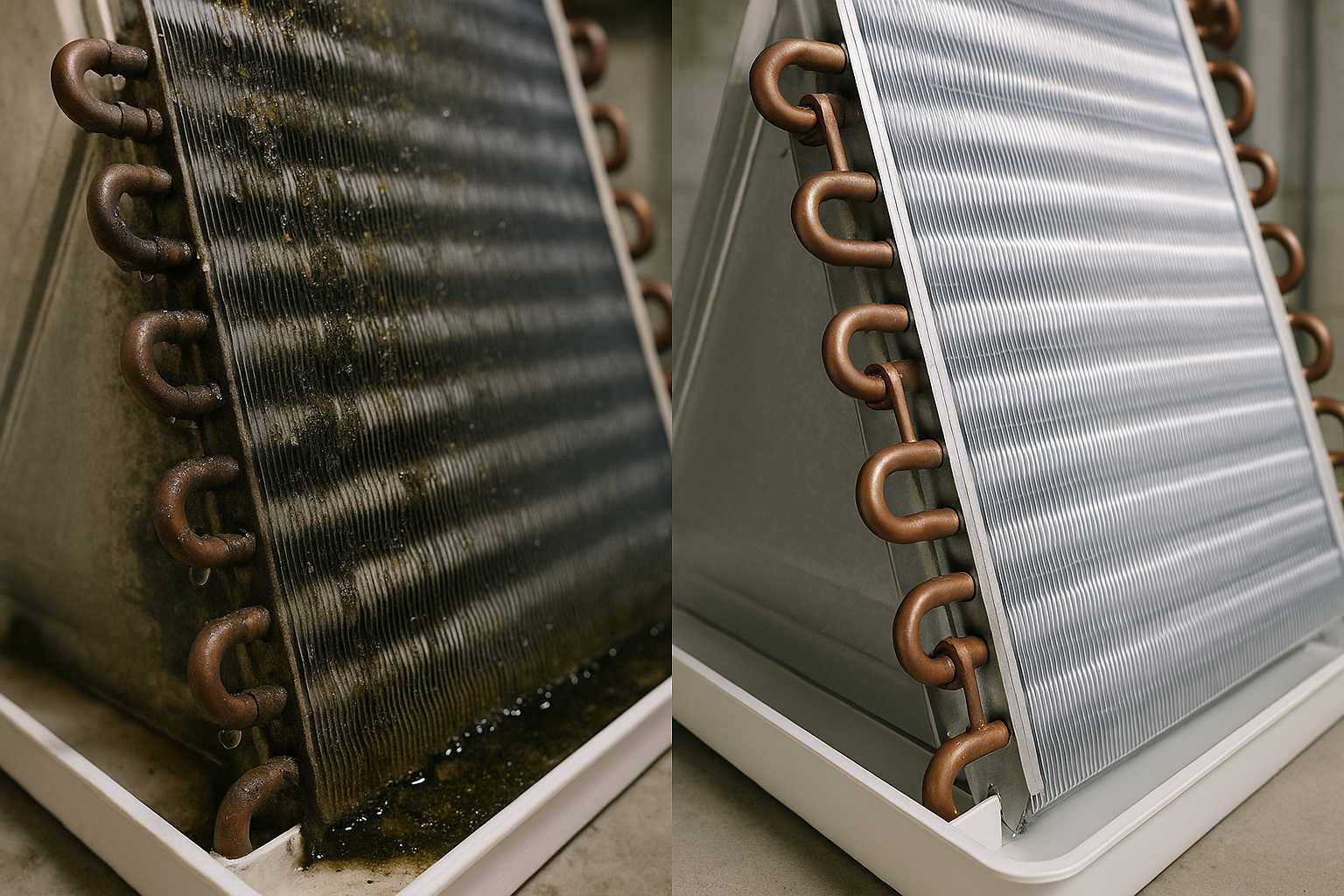
Once it’s in, maintenance is simple. Rinse the washable filter every couple of months, make sure the outdoor unit stays clear of snow and leaves, and schedule a yearly checkup to keep the efficiency up. Most units come with a handheld remote and can connect to Wi-Fi, so you control it from an app or even integrate it with a smart thermostat system. Dan in Brownsburg said his favorite thing is setting the sunroom to 68 degrees from his phone before he gets out of bed on a cold morning. No more dragging the space heater around.
Let’s See Your Space
If you’re planning a room addition — or already sitting in a space that’s never comfortable — the best first step is a quick site visit. We’ll check the room’s size, layout, and exposure, talk through indoor and outdoor placement options, and put together a clear, no-pressure quote for a mini-split for room addition that fits your home. Schedule your free assessment with HVACPros here — we’re in Brownsburg and all around the metro, and we’ll have your new room feeling like home in no time.
Ready for HVAC service or an upgrade?
NATE-certified techs, flat-rate diagnostics, and a free in-home assessment for any replacement — no pressure.