A buddy of mine in Broad Ripple learned the hard way about AC unit placement. He replaced his old condenser with a shiny new heat pump, and the installer dropped it right outside his bedroom window. It was the easiest spot for the line set, sure. But every summer night, that thing kicked on and sounded like a jet spooling up. His neighbor across the narrow side yard wasn't thrilled either. Six months later, he paid to have the whole unit moved to the other side of the house. That little mistake cost him a few grand and a lot of lost sleep.
Why AC Unit Placement Matters More Than You Think
Most homeowners don't think much about where the outdoor unit goes. As long as it's somewhere out back, right? Wrong. The spot you pick affects airflow, efficiency, noise, and how long the system lasts. It also decides whether the next tech has room to actually work on the thing when it breaks down.
In Indianapolis, we deal with humid summers, cottonwood fluff in late spring, heavy leaf fall in autumn, and freeze-thaw winters. All of that hits your outdoor unit. Put it in a low spot that collects water, and you'll be fighting rust and electrical gremlins. Tuck it too close to the house, and it'll recirculate hot air and work harder than it should. That means higher electric bills and a shorter life.
The Rules: Clearances, Codes, and Common Sense in Indianapolis
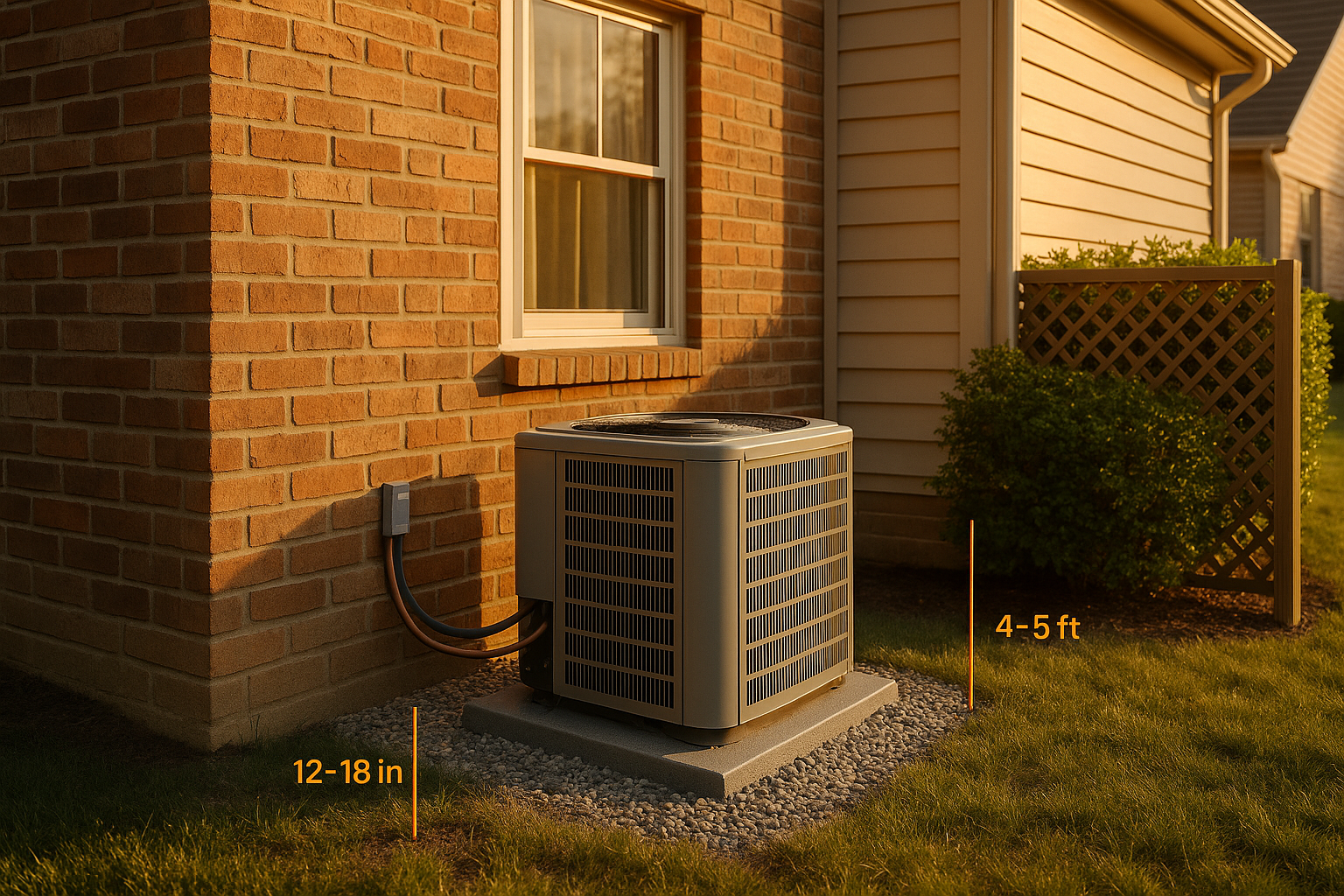
The manufacturer gives you minimum clearances for a reason. Most units need at least 12 to 18 inches of open space on the sides with the coil, and 4 to 5 feet of clearance above the fan discharge. That's not just a suggestion. If the hot air can't get away, the compressor runs hot and fails early.
Local code and utility rules add another layer. AES Indiana and Citizens Energy have their own clearance requirements for gas and electric equipment. For example, you can't stick an AC unit too close to a gas meter or an electrical panel. That's an instant fail on an inspection. In Marion County, moving or replacing an outdoor unit usually means pulling a permit. A good HVAC contractor handles that for you, but you should know it's part of the deal.
Older neighborhoods like Meridian-Kessler, Irvington, and parts of Broad Ripple have narrow side yards. That makes it tough to find a spot that meets clearances without turning your walkway into an obstacle course. Sometimes the unit has to go on the back wall near the alley, or up on a wall bracket if ground space is tight. More on that later.
Noise: The Neighbor Factor and Your Own Sanity
Heat pumps and AC condensers make noise. Newer units are quieter than the old ones, but they still hum. And that hum travels. If the unit sits between two houses with hard surfaces, the sound bounces around like a ping-pong ball. That's how you get an angry knock on your door at 10 p.m.
Keep the unit away from bedroom windows, home office windows, and any spot where you sit outside. A good rule of thumb is at least 10 feet from a window you open. More if you can. Also think about your neighbor's windows. A narrow side yard in Carmel or Zionsville might only be 8 feet wide. Putting a unit right there means your neighbor hears every cycle.
One homeowner in Fishers told me he never noticed his own AC until he started working from home. The unit was outside his new home office window, and the constant on-off cycling drove him nuts. He ended up moving the unit to the far side of the garage and running a longer line set. It cost more, but he said the silence was worth every penny. If you work from home, check out our guide on HVAC comfort for a home office in Indianapolis for more tips.
Shade, Sun, and Debris: Where the Unit Actually Lives Outdoors
A little shade is okay. A lot of shade is not. Light shading from a tree or the east side of the house can help the unit run slightly more efficient in summer. But dense plantings or an overhang that traps hot air around the unit will make it work harder. Never put a unit under a deck or a low overhang. The hot air needs a clear path up and out.
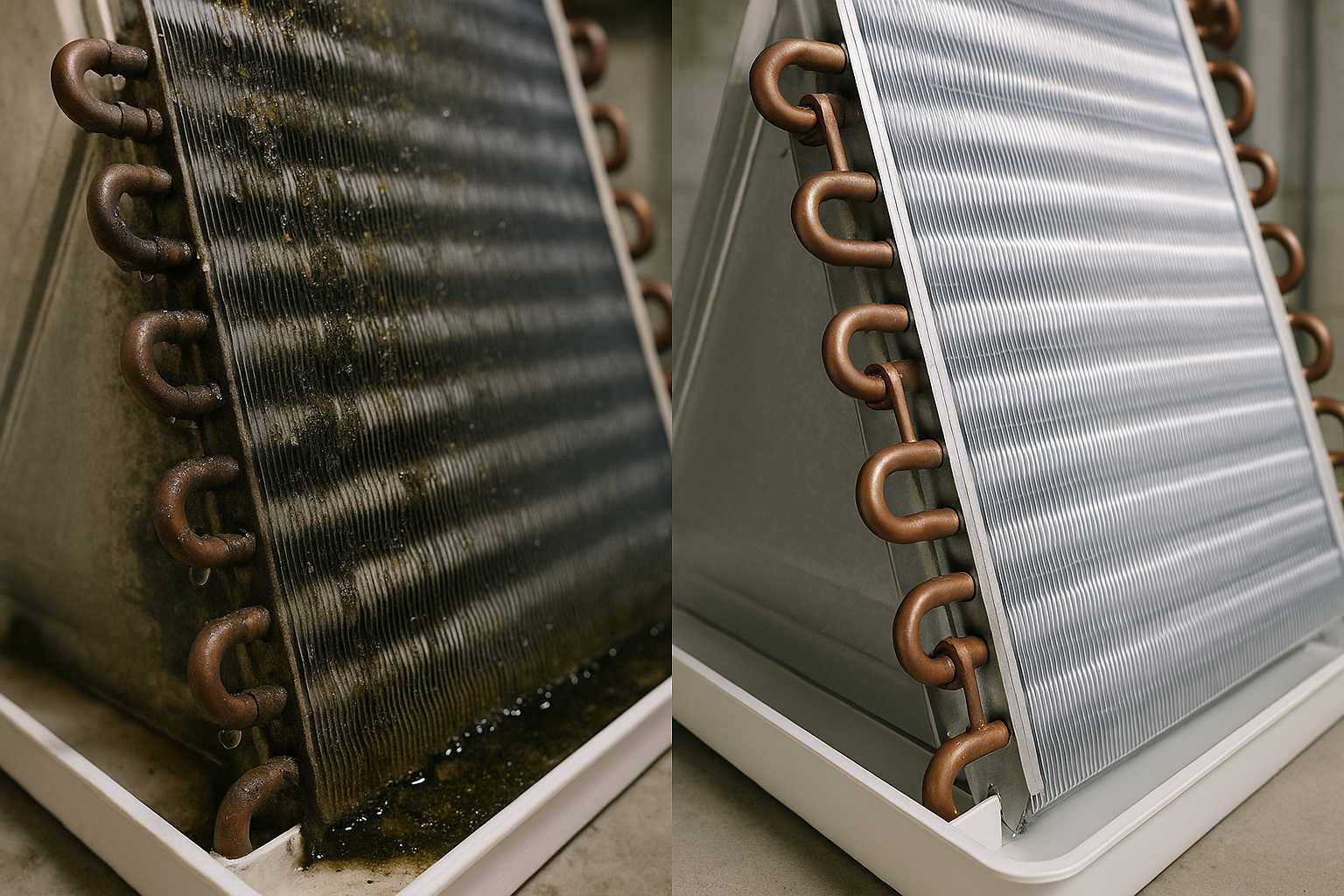
Cottonwood and maple leaves are the enemy in Indianapolis. They clog the coil fins and choke airflow. If your unit sits under a cottonwood tree, you'll be hosing off the coil every other week in June. Better to place the unit away from heavy tree cover or add a screen that blocks debris but still lets air move. A simple wire mesh cage works better than a solid fence.
Heat pumps have a special winter issue: defrost vapor. When the unit goes into defrost mode, it melts ice off the coil and blows out a cloud of steam. That vapor can re-freeze on a nearby walkway and create a slip hazard. Aim the unit's discharge away from sidewalks and steps. If you're curious about how heat pumps handle cold weather, our article on what a heat pump balance point is breaks it down.
Line Sets, Pads, and the Look: It's Not Just About the Box
The line set is the pair of copper pipes that carry refrigerant between the indoor and outdoor units. Shorter is better. Long runs reduce capacity and hurt efficiency. Try to keep the line set under 50 feet if possible. But don't sacrifice a good spot just to save 10 feet of pipe. A well-placed unit with a 40-foot line set will usually outperform a poorly placed unit with a 20-foot line set that's starved for air.
In Indianapolis, clay soil and freeze-thaw cycles will wreck a pad that's not prepped right. A concrete slab poured directly on topsoil will crack and shift within a few years. The best approach is a compacted gravel base with a composite pad on top. Composite pads don't crack like concrete, and they resist sinking. Some homeowners in Avon and Plainfield with newer construction have seen pads settle an inch or two because the builder didn't compact the backfill. That tilts the unit and puts stress on the refrigerant lines.
If you're in a historic district or a strict HOA, placement gets even more specific. Many HOAs around Indianapolis expect low-visibility placements with tasteful screening. That usually means a fence, hedge, or lattice panel. Just remember: any screen has to leave enough airflow clearance. A solid fence 6 inches from the coil is worse than no fence at all.
What a Pro Should Check Before You Sign Off
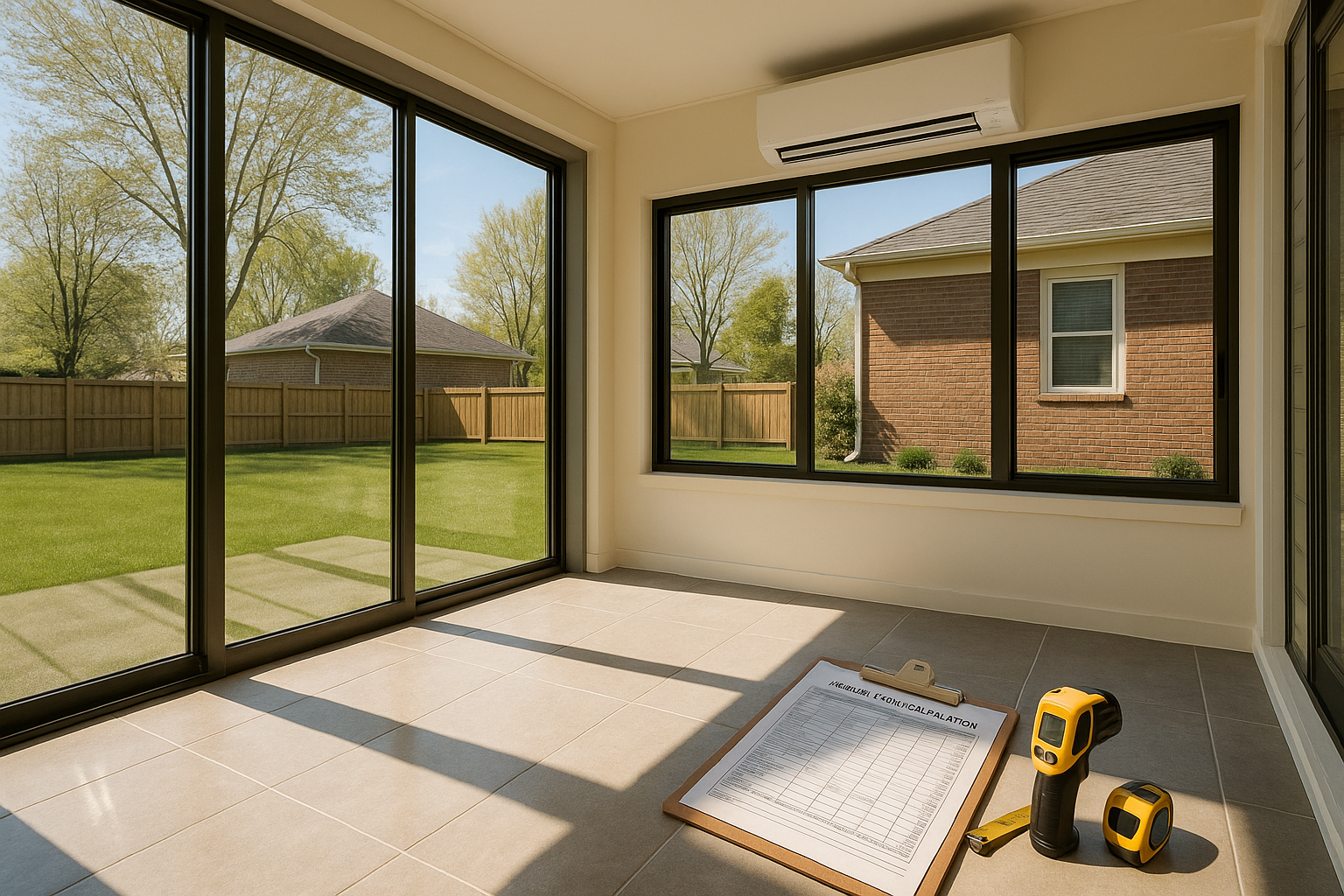
Before you agree to any AC unit placement, a good contractor should walk the property with you. They should check side clearances, overhead clearance, drainage, noise paths, utility clearances, and where the line set will run. They should take photos and measurements. They should talk about pad options, elevation for snow, and whether a wall bracket makes sense.
Roof mounting is rare for Indianapolis homes. The access is bad, the weather is rough, and most roofs aren't designed for the vibration. Wall brackets can work on sturdy masonry walls, but they need isolation pads and proper anchoring. In clay soil country, a ground-mounted unit on a well-built base is almost always the best choice.
Also think about long-term service. A tech needs at least 24 to 30 inches of clear space in front of the access panel, and overhead room to lift the fan motor out. If you have to crawl over shrubs or squeeze past a downspout to reach the unit, you'll pay more for every repair. Some companies won't even touch a unit that's buried in landscaping.
If you're still not sure where your AC should go, get an on-site assessment. At HVACPros, we'll walk your property, talk through your options, and give you a written scope with photos and measurements. We handle Marion County permits and work with utilities so you don't have to guess on clearances. No pressure, just straight answers.
Ready to get your AC unit placement right the first time? Schedule your free placement assessment here. We'll help you find a spot that keeps you cool, keeps the neighbors happy, and keeps the unit running strong for years. And while you're at it, check out our other HVAC guides for more practical tips on heating and cooling in central Indiana.
Ready for HVAC service or an upgrade?
NATE-certified techs, flat-rate diagnostics, and a free in-home assessment for any replacement — no pressure.