Last February, I was on a video call with a homeowner in Carmel. He was wearing a parka inside his own house. His office sits above the garage, and the central furnace just doesn't push enough warm air up there. By hour three of budget meetings, his fingers were numb. That office was costing him more than a space heater bill every month — it was costing him focus. Sound familiar? A lot of folks around Indianapolis have the same problem. Their home office heating and cooling is an afterthought. The rest of the house stays comfy, but that one room is either a sauna in July or an icebox in January.
Why That One Room Feels So Different
Most central HVAC systems were designed when the idea of a dedicated home office was rare. The ductwork was sized for bedrooms and living rooms, not a spare bedroom that now has two monitors, a laser printer, and a human body generating heat all day. Add an above-garage office or a finished attic and you've got a perfect storm. Those spaces sit outside the main thermal envelope. In summer, the sun beats on the roof and the room turns into a box that never dries out. In winter, the floor above the garage is basically a bridge over a cold void. That's why a space heater or a window AC never quite cuts it. And that's why a real home office heating and cooling upgrade starts with targeting that one room instead of cranking the whole house thermostat.
The Fix: A Ductless Mini-Split Sized Just for Your Home Office
A ductless mini split home office setup is basically a small heat pump that treats one room like its own little climate zone. There's an indoor unit on the wall or ceiling and an outdoor unit outside. They're connected by a skinny refrigerant line, not massive ducts. That means no tearing open walls, no reworking your existing furnace, and no reheating the rest of the house just to keep your office bearable. It's zoned heating and cooling in the purest sense. You set the temperature for that room, and the system only runs when that room needs it. For home office heating and cooling, it's the closest thing to a custom comfort button you can get without redoing all your ductwork.
Quiet matters when you're on back-to-back Zoom calls. Modern quiet mini split for office units run in the low 20s decibels — about the same as a whisper. Place the indoor head away from your desk mic and you'll forget it's there. And because the inverter compressor ramps up and down instead of kicking on and off, you don't get that sudden blast of noise or temperature swing.
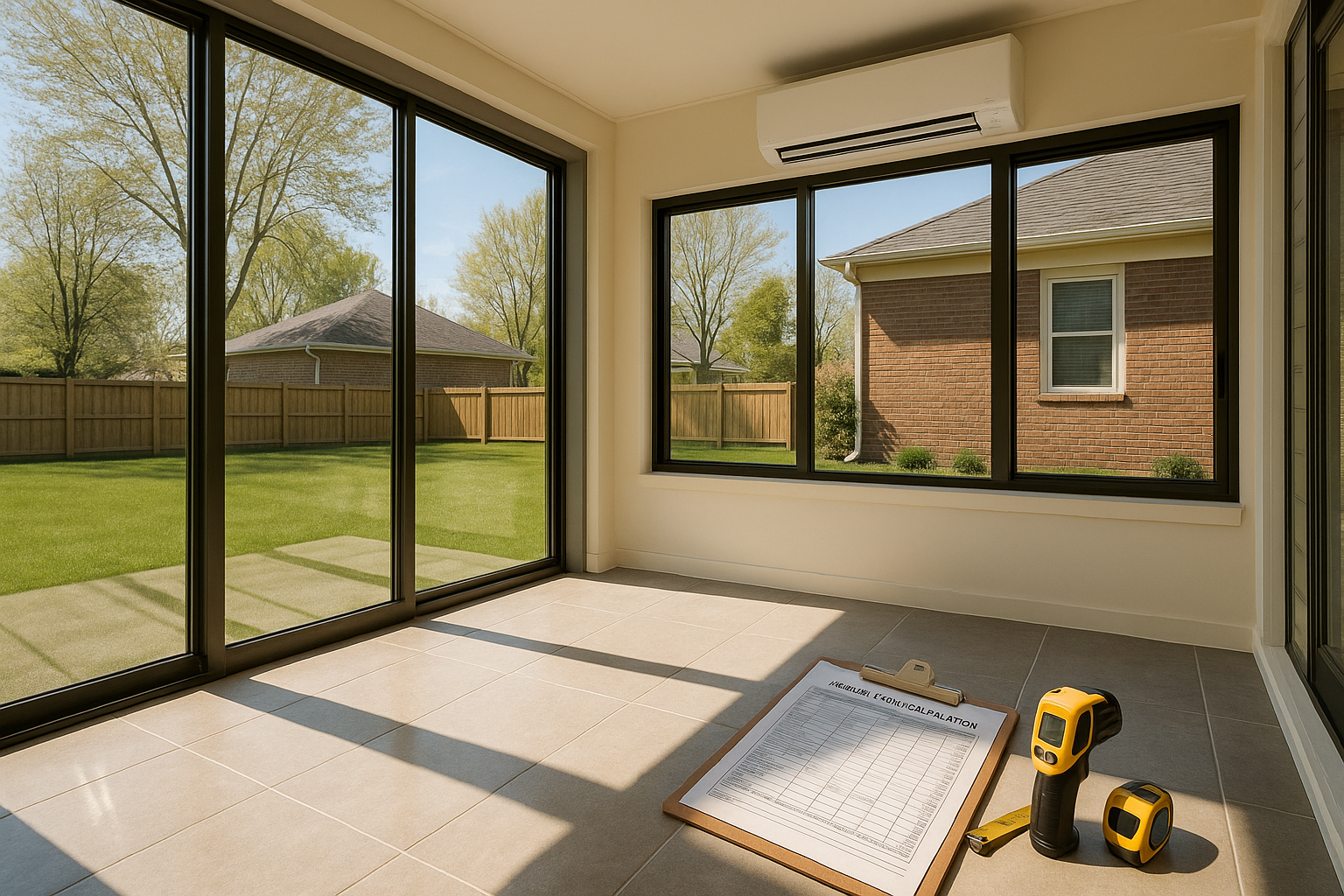
For sizing, don't just guess. BTU sizing for home office means looking at square footage, window area, insulation, and what kind of heat your equipment throws off. Most home offices in the 120 to 200 square foot range do well with a single-zone heat pump in the 6,000 to 9,000 BTU range — but if you have a wall of south-facing windows or a gaming rig, you might need a bump. Oversizing is worse than undersizing because the unit short cycles, which hurts humidity control and efficiency. In Indianapolis summers, humidity control Indianapolis is a big deal. A right-sized mini-split pulls moisture out of the air while it cools, so your office doesn't feel like a basement locker room.
Look for a cold-climate heat pump Indiana model if you plan to use it for heat all winter. These units are designed to keep producing heat even when the outdoor temperature drops into the teens or single digits. And pay attention to SEER2 and HSPF2 efficiency ratings. The higher the number, the less electricity you use for the same comfort. Federal tax credits and local utility rebates favor units with strong ratings, so it's worth checking before you buy.
But Can a Heat Pump Actually Keep Up in January?
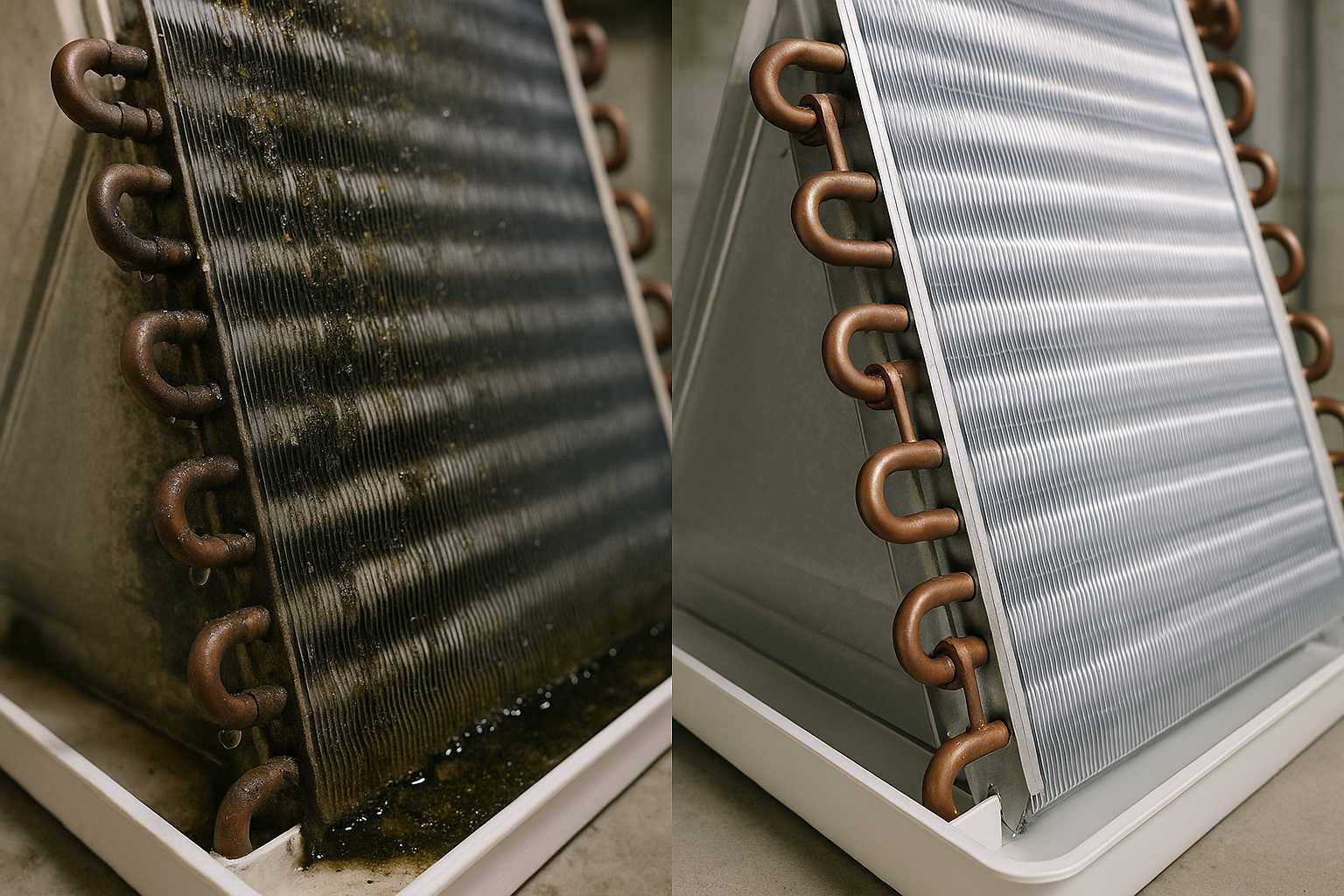
I get asked this all the time. Yes — if you pick the right one. Older heat pumps got a bad rap because they lost capacity when it got cold. A cold-climate heat pump Indiana model is built different. It has a beefier compressor and smarter defrost logic. When frost builds up on the outdoor coil, the unit briefly switches to cool mode to melt it, then goes right back to heating. That defrost cycle can feel weird if you're standing next to the outdoor unit, but inside you barely notice. If your system has an emergency heat setting, we cover what that actually does in another article. For extra peace of mind on those -5°F nights, you can keep your central furnace as backup. That's where knowing your utility matters — many Indy homes have Citizens Energy Group for natural gas, and using a dual-fuel setup can be cheaper than running electric resistance heat. We break down the gas vs electric heating cost Indiana math in another post if you want to see the numbers.
Installation Stuff Homeowners Worry About
Nobody wants an ugly box on the wall or exposed pipes snaking across the siding. Good mini split placement and noise planning solves that. Indoor heads can go high on a wall, flush on a low wall, or even recessed in the ceiling. The line set — that's the bundle of refrigerant lines and drain tube — can be hidden inside a paintable line-set cover and condensate system that blends with your exterior. Run it along the soffit or down a corner and most people won't even see it.
Electrical is another piece. A mini-split usually needs a dedicated 120V or 240V circuit from your panel. In older Indianapolis homes, especially those 1920s bungalows around Broad Ripple or Irvington, the panel might be full or outdated. That's not a dealbreaker, but it means the quote needs to include electrical work. And yes, mechanical permits Indianapolis are typically required for this kind of install. HVACPros handles the permit, the inspection, and the startup. You don't have to chase paperwork.
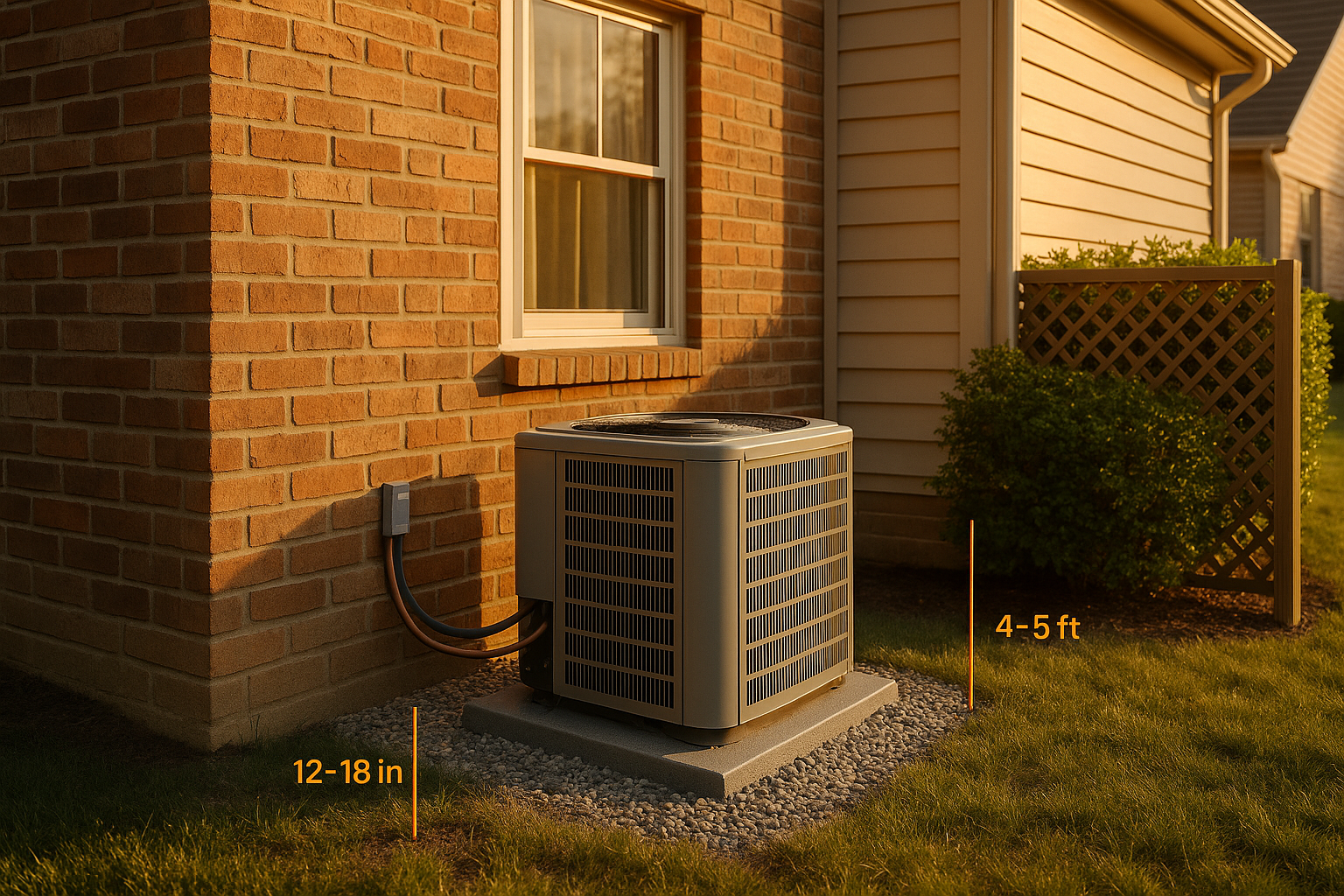
Outdoor unit placement matters on Indy's narrow lots. You want it off the ground on a stand or wall bracket so snow doesn't bury it. Leave clearance around the unit for airflow and for the defrost water to drain away. If you have an HOA, check their rules about where mechanical equipment can go — most allow heat pumps as long as they're not facing a neighbor's bedroom window. A little planning upfront keeps everyone happy.
For most single-zone home office projects, installation takes one day. The crew shows up in the morning, mounts the indoor head, runs the line set, places the outdoor unit, makes the electrical connections, vacuums the lines, checks for leaks, and fires it up. If your office needs air sealing or insulation first — say, an above-garage office heating upgrade where the floor is bare plywood over a cold garage — we'll tell you before we quote the mini-split. No point treating the symptom if the room leaks like a sieve. A proper home office HVAC upgrade starts with the envelope first, then the mechanicals.
What About Cost and Monthly Bills?
Installation cost Indianapolis for a single-zone mini-split in a home office usually lands somewhere between $4,500 and $8,000, depending on the equipment, electrical work, and how tricky the line run is. That's not pocket change. But compare it to running a space heater eight hours a day all winter. A 1,500-watt space heater at AES Indiana's residential rate costs about $0.20 an hour. Over a full heating season, that can add up to hundreds of dollars. A ductless heat pump moving the same heat will use maybe a third of that electricity. Add in the cooling and dehumidification during Indy's swampy summers, and the payback gets even better. There are also federal tax credits for qualifying heat pumps and sometimes AES Indiana rebates heat pump programs that change seasonally. We always check current incentives before we quote so you know the real out-of-pocket number.
Make Your Office the Easiest Room in the House
A mini-split with smart controls for mini split lets you set a schedule around your workday. Warm it up before you log on, cool it down before the afternoon sun hits your west-facing windows, switch to quiet mode during client calls, and turn it down when you clock out. That's energy-efficient heating and cooling without thinking about it. Some systems even have a dry mode that pulls extra humidity out without overcooling — perfect for those September days in Indiana when it's 75 and sticky.
Final thought: your home office is where you spend eight or more hours a day. It shouldn't be the most uncomfortable room in your house. If you're tired of wearing fingerless gloves in January or running a box fan in July, let's talk. HVACPros works in Indianapolis and all around — Carmel, Fishers, Zionsville, Westfield, Noblesville, Greenwood, Brownsburg, Avon, Plainfield. We'll come out, walk the room, measure the heat load, check your panel, and give you a written plan and quote. No pressure, no upselling. Just a clear answer on whether a ductless mini split is the right home office heating and cooling fix for you. Schedule your free in-home assessment here.
Ready for HVAC service or an upgrade?
NATE-certified techs, flat-rate diagnostics, and a free in-home assessment for any replacement — no pressure.