Last January, my neighbor in Carmel called me in a panic. His heat pump had been running nonstop, but his living room felt like a meat locker. The bill? Up 40% from December. When we checked the thermostat, the auxiliary heat was kicking in every time the outdoor temp dipped below 40°F. That’s a classic balance point mistake. His heat pump could still pull heat at 25°F, but nobody told the thermostat. So his backup strips were burning money.
That’s the heat pump balance point in action. Get it wrong, and you’ll pay for heat you didn’t need. Get it right, and you stay warm without the sticker shock.
What Is the Heat Pump Balance Point, Anyway?
The heat pump balance point is the outdoor temperature where your home’s heat loss exactly equals the heat pump’s heating output. Above that temperature, the heat pump keeps up on its own. Below it, the house needs a little help — from backup heat strips, a gas furnace, or both. Think of it like a runner’s pace. The heat pump can run a solid 10K in mild weather, but when the temperature drops and the wind picks up, it starts to fall behind. The balance point is where it needs a teammate.
Your house loses heat through walls, windows, and air leaks. That loss isn’t constant. It gets worse as it gets colder outside. Meanwhile, a heat pump’s ability to move heat also drops as the outdoor temperature falls. The two lines cross somewhere. That crossing is the thermal balance point.
Every heat pump has a spec sheet showing its COP — coefficient of performance — at different outdoor temperatures. A variable speed heat pump might still put out 80% of its rated capacity at 5°F, but an older single-stage unit might struggle below 25°F. If you’ve ever hit the emergency heat setting on your thermostat and watched your bill jump, you already know what happens when the balance point is set too high. (I explained that setting in another post.)
Thermal vs. Economic Balance Point: Two Numbers, Two Meanings
Most folks only hear about the thermal balance point. But there’s another number that matters more for your wallet: the economic balance point. The thermal balance point is where capacity meets load — a physical limit. The economic balance point is where the operating cost of running the heat pump equals the operating cost of running the backup heat. That’s not a fixed number; it changes with utility rates and equipment efficiency.
In Indianapolis, you probably pay around 12-14 cents per kWh from AES Indiana (or Duke Energy in the suburbs) and maybe $0.80 per therm for natural gas from Citizens Energy Group. If your heat pump has a COP of 3.0 at 30°F, you’re paying about 4 cents per 10,000 BTUs of heat. A 95% efficient gas furnace at 80 cents per therm costs about 8 cents per 10,000 BTUs. So the heat pump is cheaper down to a lower temperature — maybe 20°F. But if you have backup heat strips, they’re almost always the most expensive option at any temperature, because they have a COP of 1.0.
That’s why dual fuel systems (heat pump + gas furnace) often set the switchover point lower than you’d think. The economic balance point might be 10°F or 15°F, while the thermal balance point might be 25°F. If your thermostat is set to lock out the heat pump at 35°F, you’re leaving money on the table.
Why Your Indianapolis Home's Balance Point Isn't a One-Size-Fits-All Number
Indianapolis winters are a roller coaster. Average January highs sit in the mid-30s, but those cold snaps near zero? They happen. That means your balance point has to work across a wide range. A house in a 1950s brick ranch in Broad Ripple loses heat differently than a 2010s vinyl-sided two-story in Fishers. The older home likely has more air leaks, less insulation, and maybe ducts in a cold basement. All that increases heat loss at any given outdoor temperature, which pushes the thermal balance point higher.
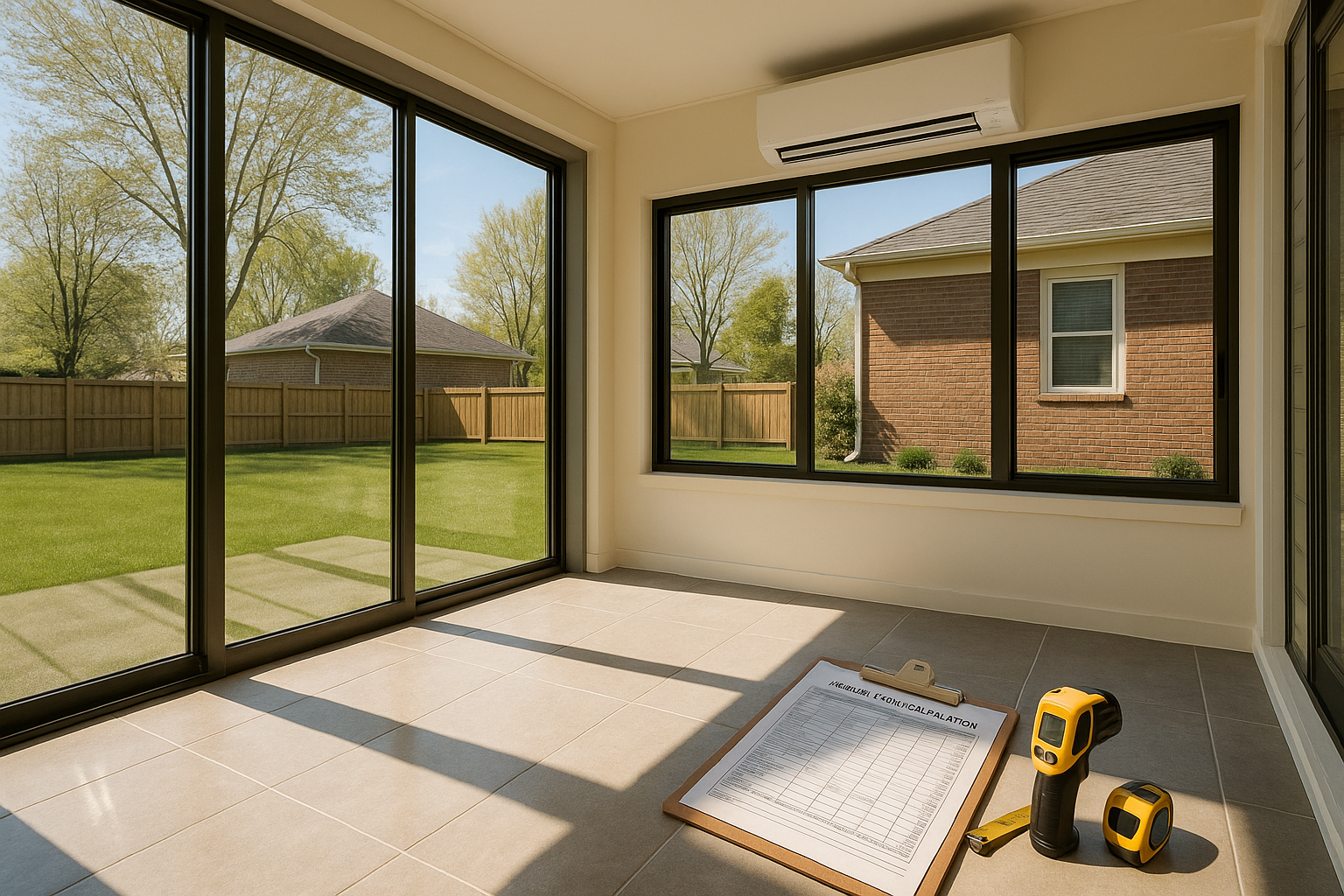
That’s why we never guess. We run a Manual J heat loss calculation for your exact house. That tells us how many BTUs the house loses at 5°F, 20°F, 32°F, and so on. Then we overlay the heat pump’s capacity curve. The difference between heat loss and capacity is where you get cold. If the house loses 30,000 BTUs per hour at 20°F and the heat pump only puts out 25,000 BTUs per hour at that temperature, you need 5,000 BTUs of backup heat. That’s the balance point.
We also look at duct quality. Leaky ducts in an unconditioned attic can waste 20-30% of the heat before it reaches the rooms. Sealing those ducts and adding insulation can lower the balance point by 5°F or more. I’ve seen a Westfield homeowner drop his aux heat runtime by half just by sealing the return plenum and adding a smart thermostat with an outdoor temperature sensor. And speaking of smart thermostats, setting up schedules for Indiana’s shoulder seasons matters too. I talked about when to switch from AC to heat here.
Dual Fuel or All-Electric? Where to Set the Lockouts
If you have a dual fuel system — heat pump outside, gas furnace inside — you have two settings to worry about: the heat pump lockout temperature and the furnace lock-in temperature. The heat pump lockout is the outdoor temperature below which you force the heat pump to stop and the furnace to take over. That should be near your economic balance point, not the thermal one. For many Indianapolis homes with a natural gas furnace backup, that’s often between 15°F and 25°F, but we fine-tune it after we see actual runtime data.
Set it too high, and you’ll burn gas when the heat pump would have been cheaper. Set it too low, and the heat pump may run constantly and struggle to keep up. A variable speed heat pump can often handle temps well below 20°F, so you can push the lockout lower. But a single-stage unit might need to switch over at 30°F to avoid short cycling and defrost hassles.
All-electric homes are different. You don’t have a furnace, so you set an aux heat lockout temperature. That’s the outdoor temperature below which the backup heat strips are allowed to come on. Above that, the heat pump runs alone. You want that lockout as low as comfort allows, because heat strips are expensive. Many newer cold climate heat pumps can hold the house at 10°F or even lower without strips, but you need the right sizing and a good thermostat that stages the strips. If you set the aux lockout at 35°F, your strips will run on cold nights and your bill will show it.
Getting Your Balance Point Right Without Going Nuts
Here’s the good news: you don’t have to become an HVAC engineer. Our team at HVACPros does the heavy lifting. We start with a Manual J heat loss calculation, then we pull the manufacturer’s performance data for your specific heat pump model. We plot heat loss vs capacity for Indianapolis weather, including those brutal 0°F nights. Then we program your thermostat with the right lockouts and staging.
We also check airflow. A heat pump blowing cooler air than a furnace can feel drafty if the ducts are undersized or the blower speed is wrong. We might recommend duct sealing, insulation, or a variable speed air handler. That can make the same balance point feel much warmer, because the air is moving slower and steadier.
One thing homeowners forget: the balance point isn’t a set-it-and-forget-it number. Utility rates change. You might add insulation or replace windows. Your heat pump’s performance can degrade slightly as it ages. That’s why we recommend checking your lockouts every couple of years, or after any major home efficiency upgrade. A quick tweak can save you real money. I broke down the numbers for gas vs electric heating in Indianapolis in another post — it’s worth a read if you’re deciding between dual fuel and all-electric.
Ready to Stop Guessing? Let's Find Your Balance Point
If you live in Indianapolis, Carmel, Fishers, Zionsville, Westfield, Noblesville, Greenwood, Brownsburg, Avon, or Plainfield, and you’re thinking about a heat pump conversion or dual fuel setup, don’t leave the balance point to chance. A wrong setting can cost you hundreds over a winter. We’ll come out, run the load calculation, check your ducts, and give you a clear, itemized quote with the right equipment and thermostat programming. No pressure, no jargon. Just a plan that keeps you warm and your bill in check.
Book a visit online or call us. We’ll walk through your current setup, your comfort complaints, and what you want to spend. Then we’ll show you exactly where your balance point should be and why. The first step is simple: reach out and we’ll take it from there.
Ready for HVAC service or an upgrade?
NATE-certified techs, flat-rate diagnostics, and a free in-home assessment for any replacement — no pressure.