Last March I got a call from a homeowner in Fishers. She called her sunroom 'the pretty prison.' All that glass facing south made the room bake in July, but in January she could see her breath. She'd tried a space heater. Then a window AC. Then a portable unit with a hose out the window. Nothing worked. Sound familiar? If you've got a sunroom or three-season room in the Indianapolis area, you already know the challenge. The room looks gorgeous nine months out of the year. But when you actually want to use it? It's too hot, too cold, or too drafty. That's where proper sunroom heating cooling planning comes in.
Why Sunrooms Are So Hard to Keep Comfortable
Your main house has insulation, normal windows, and an HVAC system designed for the space. A sunroom? It's a glass box. Even with decent windows, the glazing area is huge. In winter, heat pours out through every pane. In summer, the sun turns it into a greenhouse. And because the room sits on a slab or over a crawlspace, the floor is often cold in shoulder seasons.
Indianapolis winters drop into the single digits, and our summer humidity is brutal. A south or west-facing sunroom in Carmel or Greenwood gets hammered by afternoon sun. A north-facing one in Zionsville might stay chilly all winter. That's why a one-size-fits-all solution rarely works.
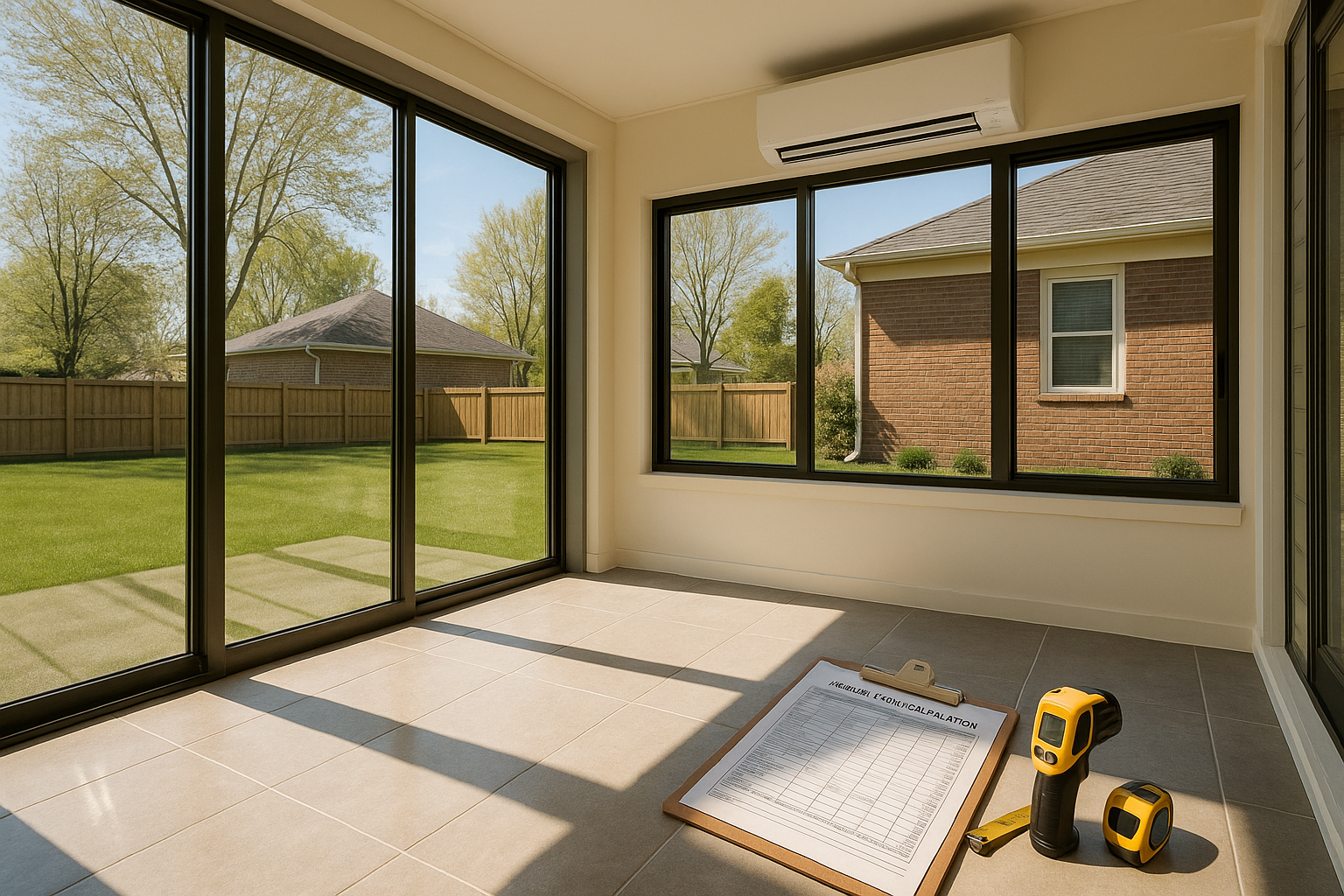
That's why we start every sunroom project with a Manual J load calculation. It's not a guess. We measure the glass U-factor, low-e coatings, orientation, floor type, and air leakage. Then we know exactly how many BTUs the room needs. Oversize a unit and it short cycles, leaving the room clammy. Undersize it and you're back to layering up. The load calc tells us the truth.
The Ductless Mini-Split Fix (and Why It Beats Extending Ducts)
Most homeowners ask: can't I just tap into my existing ductwork? Sometimes you can. But in a sunroom, that's often a losing game. The main system wasn't sized for that extra glass. And running ducts through a crawlspace or across the house is invasive, expensive, and rarely delivers the kind of airflow a sunroom needs. Ductless mini splits solve the problem differently. They zone the room. One outdoor unit connects to one indoor unit, and that indoor unit heats or cools only the sunroom. No duct leaks, no fighting the rest of the house.
For Indianapolis winters, you need a cold-climate heat pump. Look for an inverter-driven unit with published capacity at 5°F. That means when the temperature drops near zero, the mini split still puts out meaningful heat. Not all heat pumps do that. Some lose half their capacity by 20°F. That's why we specify models with strong HSPF2 ratings and a balance point that makes sense for central Indiana. If you're curious about what that means, we wrote a whole article on what a heat pump balance point is.
And no, you don't have to stare at a bulky box on the wall. You've got choices. A low-profile wall-mounted unit is the most common — it's about the size of a small suitcase and sits high on the wall, moving air quietly. A ceiling cassette tucks into the ceiling and blends with the roofline. If you've got a knee wall, a floor console sits low and pushes heat along the floor first. Each option has a different look and feel, and the placement matters for comfort. In a sunroom with lots of glass, the wall mount often works best because you can point it away from the seating area and let the air circulate naturally.
And the noise? Modern inverter mini splits are whisper quiet. Indoors, you'll barely notice it running. Outdoors, the unit hums along around 50 decibels, which is quieter than a normal conversation. You can sit on the patio right next to it and still hear the birds.
Installation Details That Matter for Indianapolis Homes
This is where hiring a local pro who knows Marion County and the surrounding areas pays off. Sunroom heating cooling isn't just about picking a unit. It's about how it's installed.
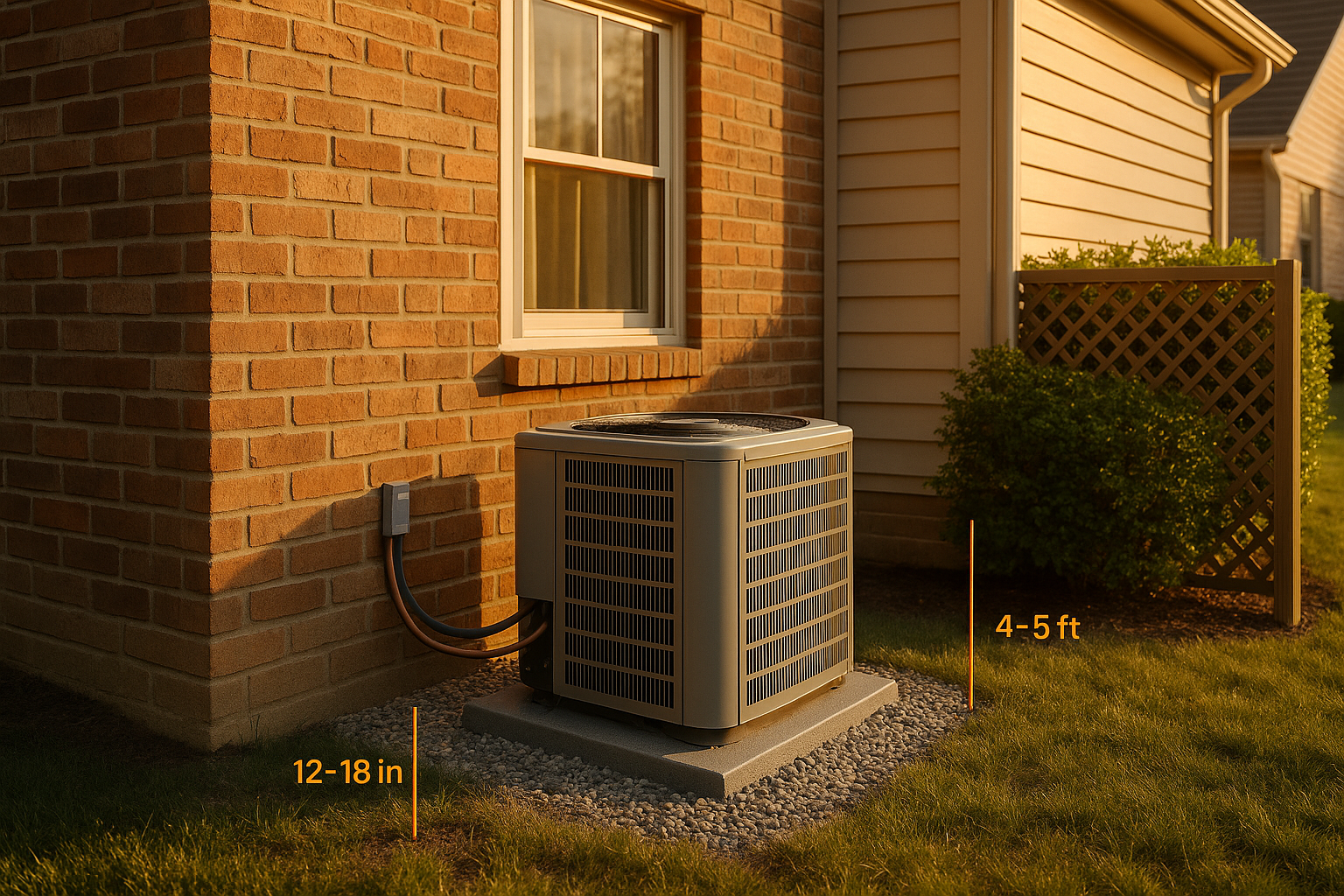
Outdoor unit placement matters in our winters. The unit should sit on a stand 12 to 18 inches above grade so drifting snow doesn't bury it. We avoid placing it under a roofline where gutter ice can fall on it. And we keep clearances so the unit can breathe.
That copper line set running between the units? We hide it. On brick homes in Irvington or Meridian-Kessler, a color-matched line-hide cover blends right in. On siding in Brownsburg or Avon, we run it tight to the wall and paint it if needed. The goal is a clean install that doesn't scream 'afterthought.'
Condensate drainage matters year-round. In summer, the unit pulls moisture out of the air. In winter, you don't want that drip line freezing. We prefer gravity drains when possible, and we add heat tape and a condensate pump if the outlet might freeze.
You need a dedicated 240V circuit for a mini split. If your panel is full or far from the sunroom, we'll coordinate a licensed electrician. Yes, permits are required in Indianapolis and most nearby towns. We handle that paperwork, so you don't have to.
Comfort, Cost, and What to Actually Expect
Let's talk money. A mini split isn't the cheapest option upfront. But when you compare it to running a space heater all winter or a window AC all summer, the operating cost is usually much lower. Inverter heat pumps modulate, so they sip electricity instead of blasting on and off. That's a big deal when you're heating a glass room. And in summer, the same unit dehumidifies, which helps with that sticky feeling and window condensation. If you've got allergies, the washable filters on the indoor unit catch pollen and dust, which is a bonus during Indiana's spring allergy season.
Those little electric space heaters? They cost a fortune to run and they don't move air. A mini split moves air gently, warming the whole room, not just the spot next to the heater. If you want to compare costs directly, we've got a post on gas vs electric heating cost in Indiana.
Here's the honest answer about cold snaps: yes, a properly sized cold-climate mini split will heat your sunroom when it's 5°F outside. It won't blast hot air like a gas furnace. The air coming out will be around 100°F, which feels warm to the touch. But if your sunroom loses a lot of heat through old single-pane glass, you'll still feel cool near the windows. That's physics. We can address that with better glass, window coverings, or even a small supplemental heat source. But for most three-season room upgrades, the mini split handles the worst of winter just fine. If you're worried about those polar vortex days, you can read our post about emergency heat settings on heat pumps.
Getting Yours Planned Properly
You don't have to guess. The best sunroom heating cooling solutions start with a real assessment. At HVACPros, we come out, measure the room, check the orientation, look at the electrical panel, and talk about how you actually use the space. Then we give you a written quote with options. No pressure, no mystery. Most single-zone installs are done in a day. We handle the permit, the line set routing, the condensate drain, and the electrical coordination. And we leave the place cleaner than we found it.
If you're tired of a sunroom that's only comfortable two weeks a year, let's fix that. Fill out the quote form and we'll schedule a time to come out. You can also browse our other blog posts for more local HVAC insights. But if you're ready to make your sunroom the best room in the house, start here.
Ready for HVAC service or an upgrade?
NATE-certified techs, flat-rate diagnostics, and a free in-home assessment for any replacement — no pressure.