Dave, my neighbor over in Irvington, had one of those nights last January. The kind where the furnace quits right when the temperature drops to six degrees, and you’re huddled in blankets wondering if a space heater can save your pipes. He’d been thinking about swapping his old gas furnace for a heat pump for a while—partly for the AC efficiency, partly because his buddy in Carmel kept bragging about his utility bills. But the big hang-up? The upfront cost. "I just can’t make the numbers work," he told me, flipping through a pile of rebate flyers that might as well have been written in Greek.
Dave’s not alone. A lot of folks in Indianapolis, Fishers, Zionsville, Westfield, and the rest of the metro area are eyeing a heat pump conversion in 2026. They hear whispers about federal tax credits, state rebates, and utility giveaways, but it’s a tangled mess of acronyms and fine print. The good news is, the money’s real—and if you know where to look, you can knock thousands off the price of a cold-climate system that handles an Indiana winter just fine. Here’s how to actually grab those savings without losing your mind.
What’s Actually Available for Indiana Homeowners in 2026?
First off, let’s kill the rumor that rebates are some kind of bait-and-switch. The federal government has been backing high-efficiency HVAC through tax credits for a while now, and state-run programs are slowly rolling out. Combined with utility rebates from folks like AES Indiana, Duke Energy, and NIPSCO, you’ve got a real shot at cutting your project cost by 30% or more. But you’ve got to line things up right.
Federal Tax Credits: 25C and 25D
The big one most people know about is the 25C tax credit. As of 2026, you can claim a chunk of the cost for a qualifying heat pump installation on your federal taxes—think along the lines of up to $2,000 for a heat pump, plus more for stuff like insulation or a heat pump water heater if you bundle it in. The exact numbers can shift year to year, so always check the current cap before you buy. But the idea is solid: you install an ENERGY STAR–certified cold-climate heat pump (the kind that meets slick SEER2 and HSPF2 ratings), and next tax season, you file IRS Form 5695 and get a nice credit. You don’t need to itemize, either; it’s a direct credit against what you owe.
For geothermal, you’ve got the 25D credit, which gives you a percentage back on the whole system—often 30%—with no upper limit. If you’ve got the land in places like Brownsburg or Avon, ground-source can be a dream. The 25D is per project, so you can pair it with certain rebates as long as you follow the stacking rules.
State-Run Rebates: HOMES and HEEHRA
Now, Indiana’s still working on launching its share of the Inflation Reduction Act money. The two big programs are HOMES and HEEHRA. HOMES rebates are based on how much energy you save: the more efficient your new system, the bigger the check. HEEHRA is income-based and can slash upfront costs at the point of sale if your household income is below a certain threshold. In 2026, the Indiana Office of Energy Development is probably the one running these, but funding and availability can be wonky. Some states have the portals open, some don’t. If Indiana pulls the trigger, you could see rebates of several thousand dollars, sometimes taken right off the contractor’s quote. HVACPros keeps tabs on this stuff, so we’ll tell you if the money’s live when we put your plan together.
Utility Rebates from Your Power Company
This is where it gets local. If you’re in Indianapolis and most of Marion County, your electric is probably AES Indiana. They’ve offered rebates for high-efficiency heat pumps—sometimes a few hundred bucks back for a cold-climate unit that meets their technical specs. Up in Carmel, Fishers, Noblesville, Duke Energy might be your provider, and they’ve run similar programs with varying payout tiers. Over in parts of northern Indiana, NIPSCO plays the same game. Even CenterPoint Energy has been known to kick in for heat pump conversions. The trick is that these utility programs change annually. What paid out $600 last year might be $400 this year, or the qualifying model list might tighten. We keep an eye on AES, Duke, NIPSCO, and CenterPoint so you don’t have to. And yeah, you can usually stack a utility rebate with a federal tax credit, as long as the utility doesn’t specifically forbid it. Just read the fine print—or let us do it.
“But Will a Heat Pump Really Work in an Indy Winter?”
That’s the question I get from half the homeowners in Meridian-Kessler and Southport. We’ve all felt those single-digit mornings where the wind slices through your coat. The old-school heat pumps from the ’90s deserved their bad rap—they’d blow lukewarm air and fall behind when it got really cold. But modern cold-climate heat pumps are a different animal. I’ve stood next to one running at 2 °F in Broad Ripple, and it was pumping out air hot enough to warm a house without the backup strips even kicking in.
Cold-Climate and Dual-Fuel: Your Safety Net
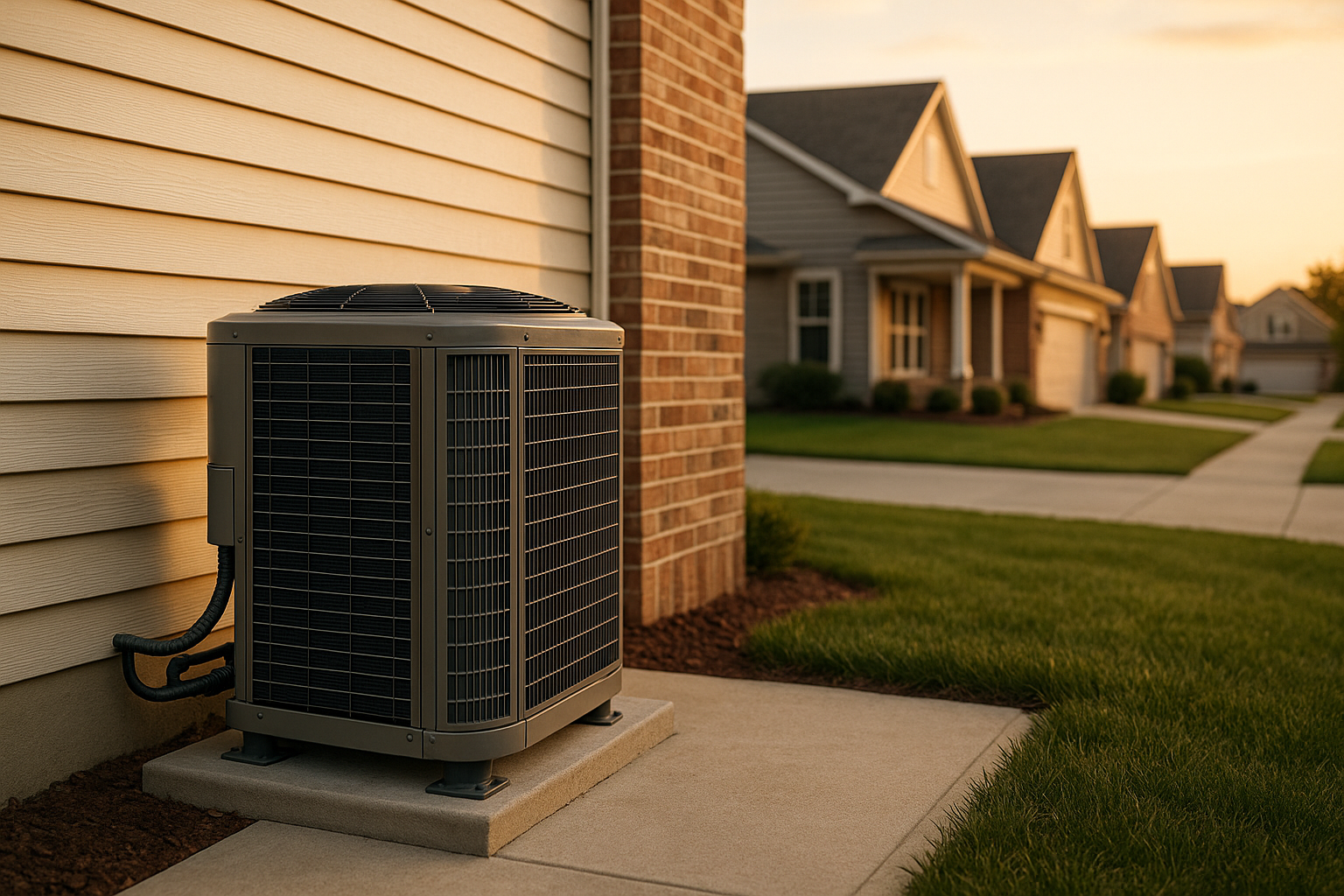
To hit the rebate sweet spot, you want a unit rated for cold climates—look for HSPF2 values in the 9+ range and a SEER2 of at least 15. These systems use inverter-driven compressors that ramp up and down, so they really sip power in typical weather and still deliver in a deep freeze. If the idea of going all-electric makes you nervous, a dual-fuel (hybrid) setup might be your jam. You keep your existing gas furnace as backup, but the heat pump does the heavy lifting until the temperature dips into the teens. Then the furnace takes over. That way you still get the rebates on the heat pump portion and you don’t lose that cozy blast of gas heat when it’s five below. And yes, dual-fuel systems qualify for most incentives as long as the heat pump itself meets the efficiency benchmarks. We install a lot of these in places like Zionsville and Westfield where folks want the best of both worlds. (Check out our guide on heat pump cold-weather performance for more real-world numbers.)
The Paperwork and Requirements Nobody Tells You About
Here’s where things get real. You can’t just slap in any heat pump and expect the government or AES Indiana to cut you a check. There’s a paper trail, and if you fudge it, you’ll be left holding the bag.
The AHRI Certificate and Your Equipment List
Every qualifying system needs an AHRI certificate—that’s a document showing your outdoor unit, indoor coil, and air handler (or furnace) are a matched set that hit the right efficiency numbers. Your contractor should give you this. You also need a detailed invoice that spells out labor, materials, model numbers, and serial numbers. If you’re claiming the 25C credit, you’ll need those numbers for Form 5695. Miss one, and the IRS can bounce your claim. For utility rebates, you’ll often upload the AHRI cert and invoice through their portal.
Permits, Inspections, and the City of Indianapolis
In Indy and most surrounding towns, a heat pump conversion means pulling a mechanical permit. The city inspector will check that the unit’s installed right, the electrical disconnect is proper, and the condensate drain isn’t going to flood your basement. That inspection record is sometimes required by rebate programs—they want to know a pro did the work. Older homes in Irvington or Broad Ripple might have 100-amp panels that can’t handle a big heat pump without an upgrade. That’s another $2,000–$3,000 people don’t plan for. A good contractor (ahem) will scope your panel early and tell you if you need a new circuit or a full panel swap. And don’t forget your ductwork—leaky, undersized ducts can kill efficiency and disqualify you from performance-based HOMES rebates. Sealing and modifying ducts might be part of the deal. (If your ducts are ancient, take a peek at whether duct cleaning is worth it.)
Can You Stack All These Rebates?
Usually, yes, but the order matters. A typical scenario: You get a point-of-sale HEEHRA rebate (if your income qualifies) that drops the contractor’s price. Then you claim a 25C tax credit on the remaining cost. On top of that, you might mail in a utility rebate and get a check a few months later. Some state programs don’t allow stacking with utility rebates, so we check the rules for your specific zip code. The key is having all your paperwork lined up before you file anything.
Let’s Make It Actually Easy
I’m not gonna lie—the rebate landscape is a moving target. But here’s the thing: you don’t need to become an expert. When you call HVACPros, we start with a planning session. Not a pushy sales pitch, just a look at your house, your current system, and what you’re trying to solve (loud AC? gas bills? uneven temps?). We check the panel, measure the ducts, and pick a heat pump that’s on the rebate-eligible lists for both the feds and your local utility. Then we give you a line-item quote that shows the rebates we expect you to qualify for, so you can see the real bottom line. We handle the permit, the install, and the commissioning tests. Afterward, we hand you a packet with everything needed for your tax filing and utility application.
Too many homeowners in Greenwood and Brownsburg have gotten burned by buying a system that wasn’t properly sized or didn’t meet the fine-print requirements—then the rebate gets denied. We’d rather do it right the first time.
If you’re even a little curious whether a 2026 heat pump makes sense for your home, let’s talk. No obligation. Head over to our quick quote page and tell us a bit about your place. We’ll walk you through what’s possible and—crucially—what you’ll actually pay after all those rebates and credits hit. Because Dave? He finally pulled the trigger. His new dual-fuel system handled that snowstorm back in February like a champ, and he’s already planning a little vacation with the money he’s saving on gas.
Ready for HVAC service or an upgrade?
NATE-certified techs, flat-rate diagnostics, and a free in-home assessment for any replacement — no pressure.