I got a call last fall from a guy off Saratoga Drive. He’d just bought a 90s colonial and every time the furnace kicked on, his wife’s allergies went haywire. Dust devils dancing in the afternoon sun, a faint musty smell—the whole package. He’d already gotten one of those $99 whole-house mailers but was smart enough to be suspicious. “Man, is air duct cleaning worth it or just another upsell?” I told him what I’ll tell you: it depends. Not the fuzzy, politician answer you want, but the only honest one.
Here’s the thing—air ducts don’t need cleaning like carpets do. There’s no magic schedule. For a lot of Plainfield homes, it’s a solid investment. For others, it’s a waste. Let’s walk through when it makes sense, when it doesn’t, and what a real pro looks at before even booking the truck.
When Is Air Duct Cleaning Actually Worth It?
After a renovation, hands down. Drywall dust, sawdust, insulation bits—they don’t just settle on the floor. They get pulled into the return grilles and coat the inside of your ductwork. I’ve seen brand-new homes in Avon subdivisions where the trunk lines were half-choked with construction debris because the builder ran the HVAC before final cleanup. If you’ve just had floors refinished, kitchen ripped out, or drywall work done, cleaning is worth it.
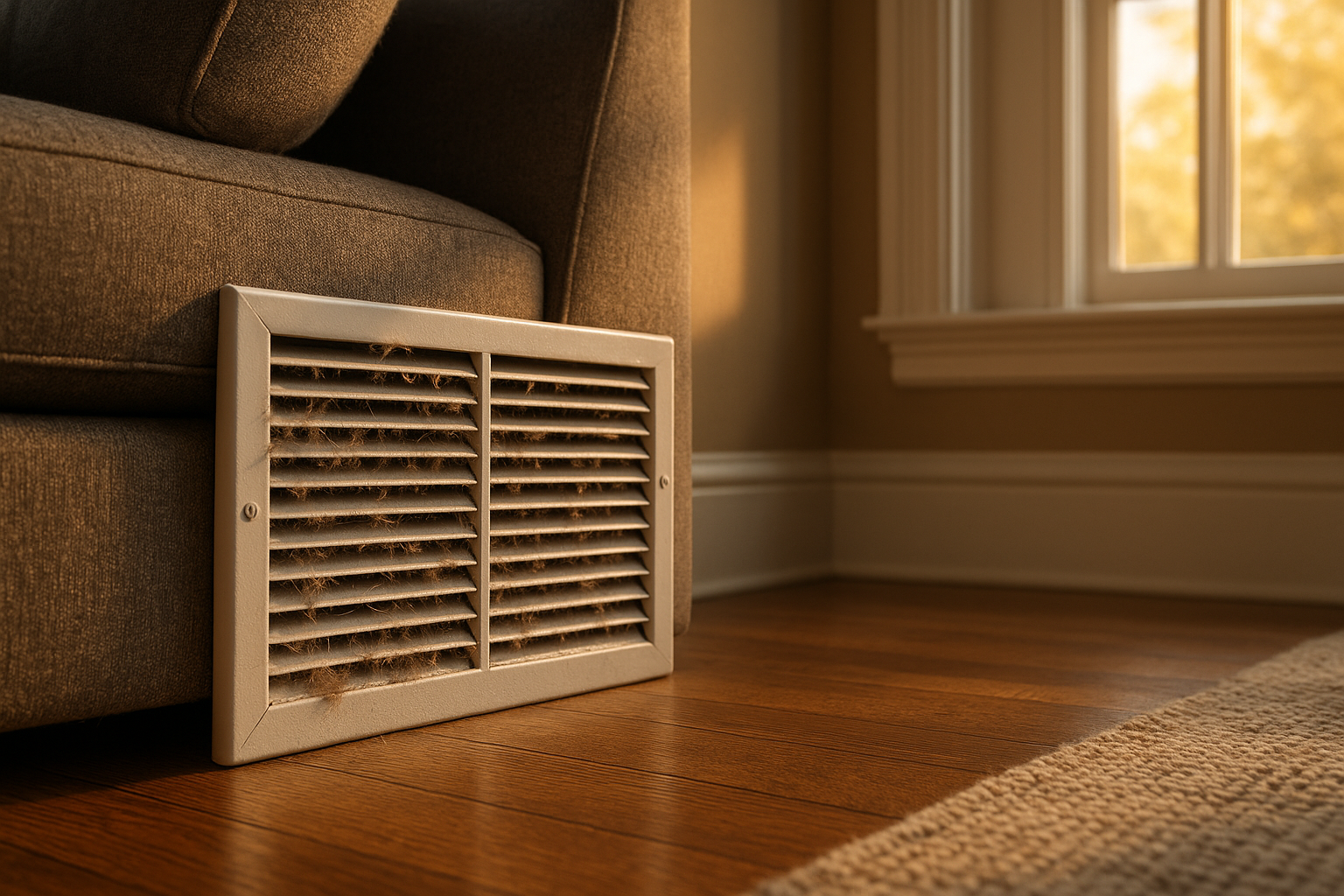
Visible stuff blowing out of the registers is another dead giveaway. You shouldn’t see puffball colonies sailing into your living room when the system starts up. That’s not normal dust—that’s stored-up crud. Rodent or insect evidence? Yeah, that’s a clean-it-yesterday situation. Same if a musty odor comes only from the vents, especially after humid spells. Could be microbial grot in a cool, dark duct run—pretty common in crawlspaces around here.
If airflow feels weak even with a new filter, sometimes heavy buildup in the return or supply trunks is the culprit. But don’t jump there first—a clogged blower or collapsed flex duct can cause the same symptom. That’s why we’ll camera-scope before recommending anything. Kind of like an HVAC colonoscopy. Not the most charming image, but it tells the truth.
When It’s Probably Not the Magic Fix
If the dust problem is just “the house gets dusty fast,” cleaning the ducts is usually a band-aid. The real causes hide elsewhere. Leaky return ducts suck attic or crawlspace air into the system—fiberglass particles, insulation dust, you name it. In older neighborhoods around Plainfield, return panning (where the builders just used wall cavities as return chases) can pull dust straight from inside the stud bays. Sealing those up will do more long-term good than a cleaning.
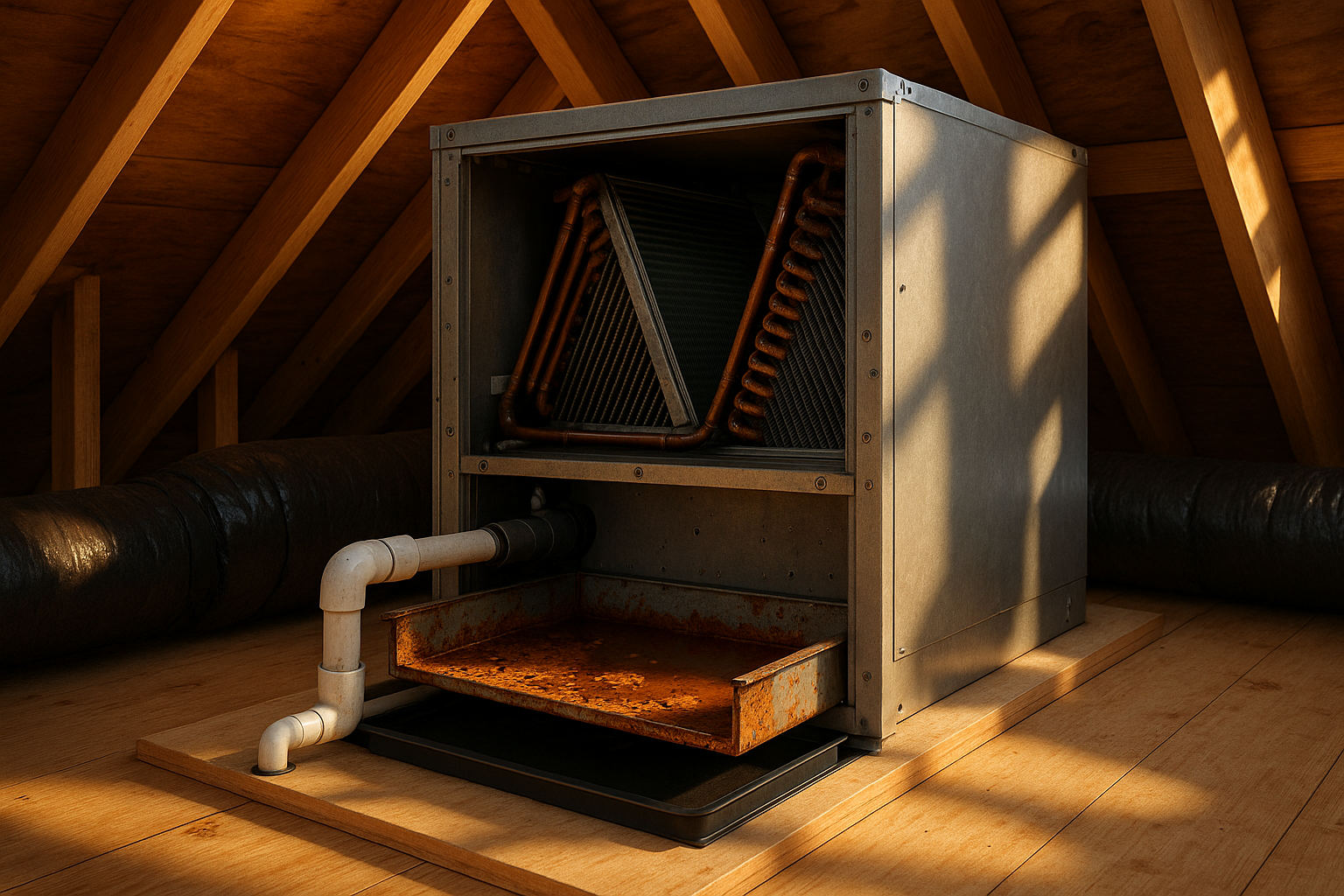
Another quiet culprit: a filter that doesn’t fit tight. I’ve walked into homes in Brownsburg that had a MERV 13 filter just rattling around in a slot meant for a 1-inch. Air sneaks right past. Upgrading to a well-sealed filter cabinet—like a media housing that actually grips the filter—can drastically drop the dust load. And here’s one a lot of folks miss: the blower wheel and evaporator coil. If those are caked with gunk, no amount of duct scrubbing will stop the dirty-sock smell or the sneezing. We see that all the time with furnace retrofits where the new furnace goes on an old, dirty coil.
Will it lower your energy bills? Not usually. Unless the ducts were so plugged that the blower was straining, the savings are negligible. And “will air duct cleaning help my allergies?” It can reduce the immediate trigger load if the ducts are actually the source, but if you’ve got a whole-home air quality issue, focus on better filtration, humidity control, and fixing leaks.
What a Proper Duct Cleaning Should Look Like in Plainfield
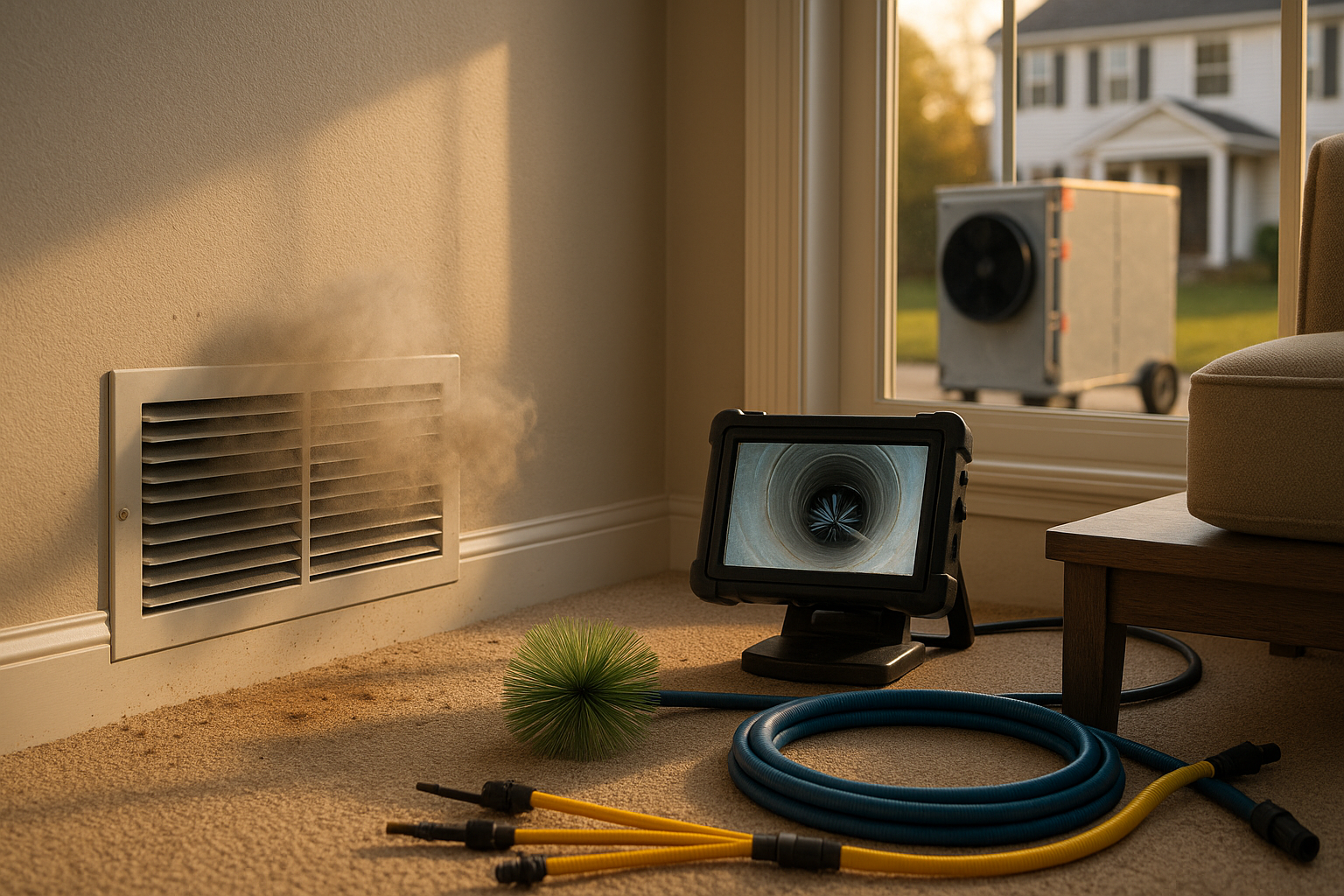
Skip the shop-vac-and-brush guys. Real source-removal duct cleaning uses a big negative-air machine—basically a giant HEPA vacuum—connected to the ductwork so the crud gets pulled out of the house, not just stirred around. They’ll agitate the walls of the ducts with rotary brushes or air whips, clean the supply and return trunks, all the branches, the registers, and the return plenum. The blower and coil should be protected (or cleaned separately if they’re filthy). Afterward, you should get before and after photos of the interior. Not “trust me, it’s clean.”
In a typical 2,000-square-foot Plainfield house, this takes 3 to 6 hours. You’ll need to clear access to the registers and the mechanical room. Pets? Lock ’em up. The equipment is noisy and the hoses are snakey—definitely not a golden retriever playground.
Cost? For most homes around here, $450 to $900 is the honest range. If you’ve got two systems, zoned setups, or a sprawling McMansion in Fishers, expect $800 to $1,200+. Those $99 offers? They’re bait. They’ll find “mold” on the first register and try to upsell you into a $2,000 fogging package. Run.
Flex ducts need a gentler touch—too aggressive and you’ll tear the inner liner. Internally lined ductboard is common in some ’80s and ’90s construction. It should only be cleaned with soft-bristle brushes; otherwise you risk breaking the insulation and blowing fiberglass into the air. If you’ve got old insulation that looks like it could be asbestos (pre-1970s), stop everything and call a specialist. Disturbing that is a health nope.
The Local Angle: Indiana Weather and Your Ducts
Plainfield sits in a sweet spot for duct nastiness. Spring pollen? Relentless. Fall harvest dust? The air gets so thick you could write your name on a patio table. That stuff loads up your return plenum. Then summer hits with that classic Midwest humidity. Basement mechanical rooms—especially in split-levels off Bradford Road—can stay a brisk 58° while outside is 90° and soup-thick. That cool surface inside the ductwork can condense moisture and you get microbial pinwheels blooming in the dark. Managing humidity between 30–50% goes a long way. A stand-alone dehumidifier in the basement or a whole-home model can make cleaning results last longer.
New construction in areas like the Clear Creek subdivision means fine drywall dust suspended in the air for months. If your home was built in the last few years and nobody cleaned the ducts after you moved in, you’re probably living with builder’s leftovers. And I-70 road dust? That finds its way into leaky return cans in garages or utility rooms. We’ve done testing where the return side is pulling 10–15% of its air from an unsealed chase in the garage. That’s car exhaust dust and pollen that your filter never sees.
So, How Do You Decide?
Start with an inspection. A good HVAC tech will pull a few registers, peek with a camera scope, and show you exactly what’s in there before recommending anything. We’ve gone to homes in Zionsville where the homeowner was convinced they had mold, and it turned out to be candle soot. Saved them a thousand bucks.
Ask yourself: “Did something specific happen?” Construction, rodents, water incident, visible debris—then yes, cleaning’s often the right call. If it’s just a creeping suspicion because you saw a TikTok, pause. If dust is the main complaint, look at filtration and duct sealing first. Upgrading to a sealed MERV 13 filter system might solve 90% of the problem for a fraction of the long-term cost.
A lot of folks ask, “How often should I clean my ducts?” As-needed, not on a schedule. Many homes go 7–10 years without needing it. Others, never. After a remodel, do it once and then seal up returns so you’re not repeating the issue.
And don’t confuse dryer vent cleaning with air duct cleaning—different animals. Dryer vents should be done annually (lint fires are real), but that doesn’t touch your HVAC ductwork.
Avoiding the Scams and Low-Ball Offers
A legit NADCA-aligned company will give you a written scope that lists how many registers, which trunks, and what method they’ll use. They’ll show proof of insurance and won’t hesitate to share photos. Red flags: no mention of protecting the coil, chemical fogging pushed as “standard sanitizing” (that stuff can linger and irritate lungs), refusal to scope before quoting, and any price that seems too good to be true.
We did an evaluation in Carmel where the homeowner had a stack of three $99 coupons from different companies. We scoped the system and found nothing but a light dust film—totally normal. They cancelled the cleaning and instead we sealed panned returns and upgraded their filter cabinet. Total cost was less than the “UV light and disinfectant” upsell they would have gotten hit with. That’s the kind of honest assessment you want.
Alternatives That Might Make More Sense
If we inspect and the ducts are not in bad shape, we’ll often recommend duct sealing instead. This is especially true for homes with duct runs through unconditioned attics or crawlspaces—common in many Plainfield ranches. Sealing and insulating those ducts can improve comfort, reduce dust, and actually make a dent in energy use. In some cases, HVAC maintenance plans include a duct inspection and coil cleaning, which keeps the system breathing clean without a full cleaning.
Another high-ROI move: fixing return duct leaks. If your return is pulling dusty air from the garage or wall cavities, no amount of cleaning will fix the dirt. Upgrading to a high-efficiency filter in a properly sealed cabinet is often the real hero. We’ve even recommended whole-home air purifiers for severe allergy sufferers in Noblesville—talk to someone who understands both ductwork and the whole system.
Sometimes, the answer isn’t duct cleaning at all—it’s replacing flex duct runs that have sagged and collected condensation over time. Or addressing water intrusion in the crawlspace that’s feeding microbial growth. A quick check under the house can be a bigger value than a cleaning.
Getting Straight Answers About Your Ducts
Plainfield homes are solid, but they each have their own quirks. We won’t sell you a service you don’t need. If we can save you money with a filter upgrade or some targeted sealing, we will. If you do need a cleaning, we’ll show you exactly why, and you’ll get before-and-after proof.
If you’re tired of guessing and just want a real look inside your ductwork, hit the link below. We’ll schedule a no-pressure ductwork evaluation, scope what’s going on, and give you honest options—clean, seal, or something else entirely. Because is air duct cleaning worth it? Around here, that answer starts with what’s really inside your vents.
Get your ductwork checked out by a local pro
Ready for HVAC service or an upgrade?
NATE-certified techs, flat-rate diagnostics, and a free in-home assessment for any replacement — no pressure.