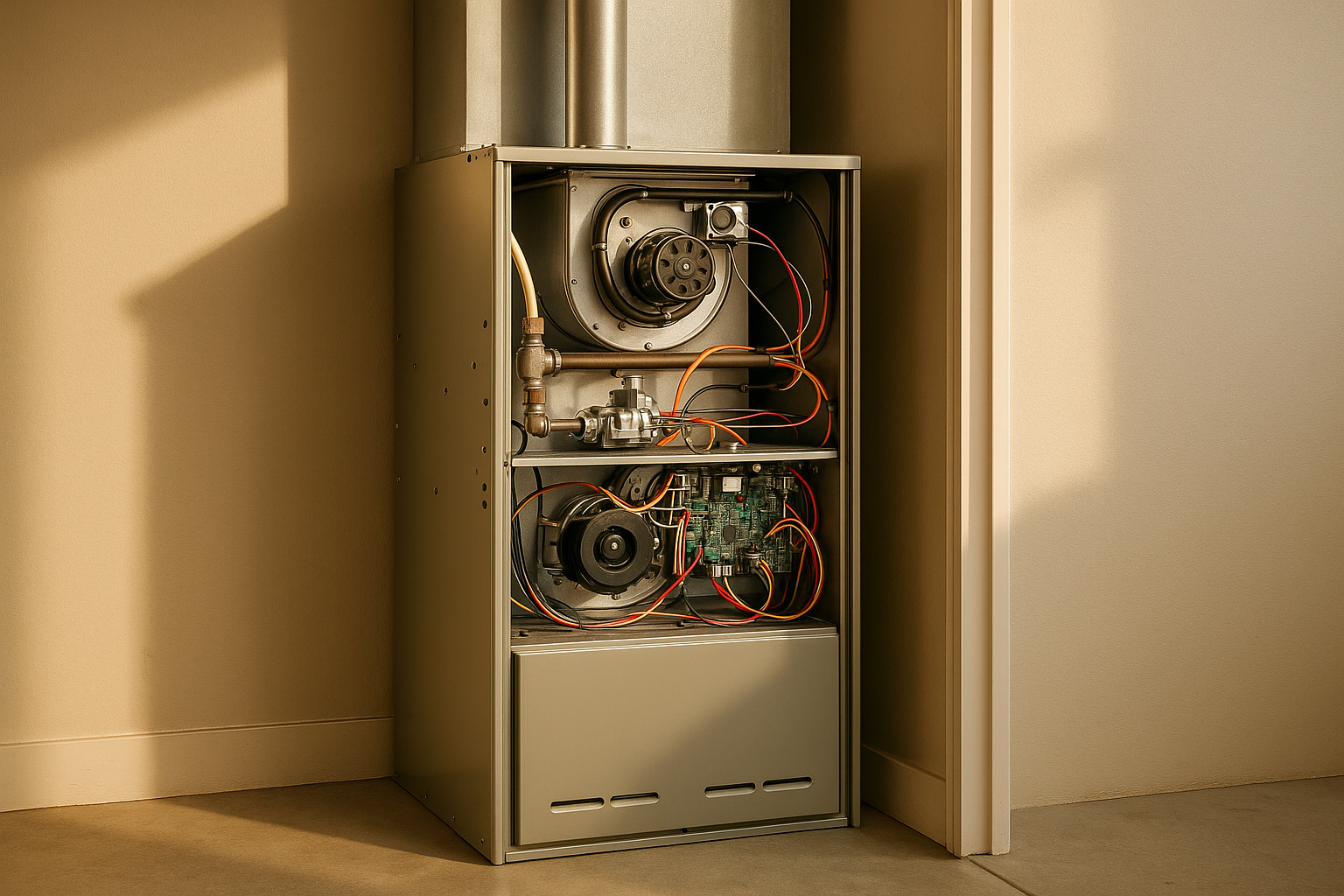
Last spring I got a call from a homeowner in Broad Ripple. Her furnace kept short cycling, and the AC coil had ice on it. She'd just switched to a MERV 13 filter — the kind that promises to catch every speck. Her 20-year-old furnace with a skinny 1-inch filter slot couldn't pull enough air through the dense pleats. The blower was straining like a runner breathing through a cocktail straw. The fix wasn't a new furnace. It was a smarter filter choice. If you're shopping for furnace filters, you need a plain-English merv rating guide. Not just a bigger number.
What is MERV and why should you care?
MERV stands for Minimum Efficiency Reporting Value. It's a number from 1 to 16 that tells you how well a filter grabs particles from 0.3 to 10 microns. A micron is tiny — a human hair is about 70 microns wide. The higher the MERV, the finer the particles it catches. But here's the rub: the denser the filter, the more resistance it adds to your system. Think of a screen door versus a blanket. Air moves easy through the screen, but bugs get through. The blanket stops everything, but you can't breathe through it. Your furnace has to pull all the air in your house through that filter, so balance matters.
What the numbers actually catch (MERV 8 vs 11 vs 13)
- MERV 6 to 8: dust, lint, pet hair. Good for basic protection.
- MERV 9 to 11: pollen, ragweed, mold spores, fine dust, and a lot of pet dander. This is the sweet spot for most Indianapolis homes.
- MERV 12 to 13: very fine particles like smoke residue, bacteria carriers, and tiny aerosols. Can help if you have allergies, asthma, or live near a wildfire smoke zone. But they're restrictive.
- MERV 14 and up: hospital-grade stuff. Not for typical home systems.
HEPA is a different standard entirely. True HEPA filters catch 99.97% of particles down to 0.3 microns. But you can't usually stick a HEPA filter in your furnace return. The pressure drop would be brutal. If you need HEPA-level cleaning, you'd use a separate bypass unit or a room purifier.
Why higher MERV can hurt your Indianapolis furnace
Many homes in Meridian-Kessler, Irvington, and Broad Ripple have older ductwork and undersized returns. Those systems were built for cheap fiberglass filters, not dense MERV 13 pleats. When you upgrade the filter without checking static pressure, you can drop airflow. That leads to frozen AC coils, short cycling, and higher heating bills. If you've dealt with uneven room temps, that's often airflow related. We wrote a whole post on hvac airflow balancing and uneven rooms if you want to dig deeper. That's merv rating guide 101: check airflow before you check the filter number.
1-inch vs 4-inch media filters
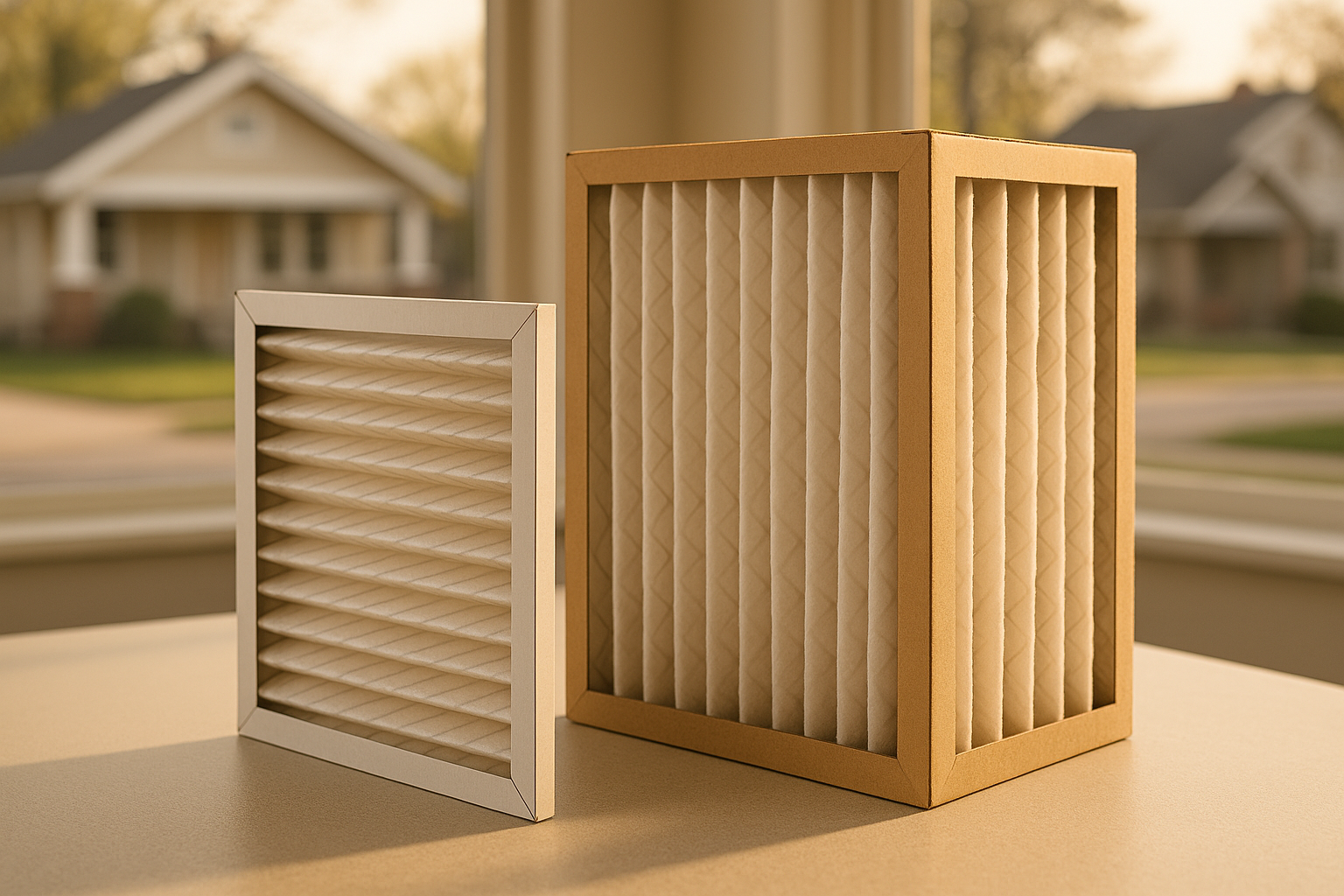
A 1-inch filter has about 2 square feet of material. A 4-inch media filter has maybe 8 to 10 square feet. More surface area means the air has more places to pass through, so you get better filtration with less pressure drop. That's why many newer homes in Geist, Westfield, and Franklin Township already have deep media cabinets. If your furnace only takes a 1-inch filter, you can often have a contractor add a media cabinet. It's not as expensive as you think, and it lets you run MERV 11 or 13 without choking the system. When you look at a merv rating guide, you'll see that MERV 13 sounds great on paper. But a 4-inch MERV 11 can clean just as well in real life while lasting longer. Change a 1-inch filter every 60 to 90 days. A 4-inch media filter can go 6 to 12 months.
Allergies, pollen, and Indy seasons
Indianapolis is rough on sinuses. Spring brings tree and grass pollen. Late summer and fall mean ragweed. Fall leaf mold and harvest dust from surrounding farmland. Winter means dry air and more dust inside because the house is closed up. Summer humidity can make dust mites and mold grow. If you or someone in your home has allergies or asthma, a MERV 11 or 13 filter can help. But only if your system can handle it. A 4-inch MERV 11 is often a better choice than a 1-inch MERV 13 for allergy sufferers because it catches almost as much without the airflow penalty. The best furnace filter for allergies isn't always the highest number — it's the highest MERV your system can support without sweating. If you've got a dog or cat, dander is a big trigger. MERV 11 handles most pet dander fine. You don't need a MERV 13 for Fido. That's the honest merv rating guide most big-box stores won't give you.
How to pick the right filter without guessing
- Check your filter size and thickness.
- Look at your furnace manual (or the sticker on the unit) for max recommended MERV.
- If you want MERV 11 or higher, consider a 4-inch media cabinet.
- During heavy pollen, wildfire smoke, or renovation dust, change filters more often.
If you're not sure how to change filters safely or when to leave it to a pro, our guide on hvac maintenance DIY vs professional explains what's easy and what's risky.
If you live in Indianapolis, Carmel, Fishers, Zionsville, Westfield, Noblesville, Greenwood, Brownsburg, Avon, or Plainfield, we'll measure your static pressure and tell you exactly which MERV rating your system can handle. No guesswork. No upsell. Just a filter that cleans the air without killing your blower. You can book an IAQ and airflow check here.
Ready for HVAC service or an upgrade?
NATE-certified techs, flat-rate diagnostics, and a free in-home assessment for any replacement — no pressure.