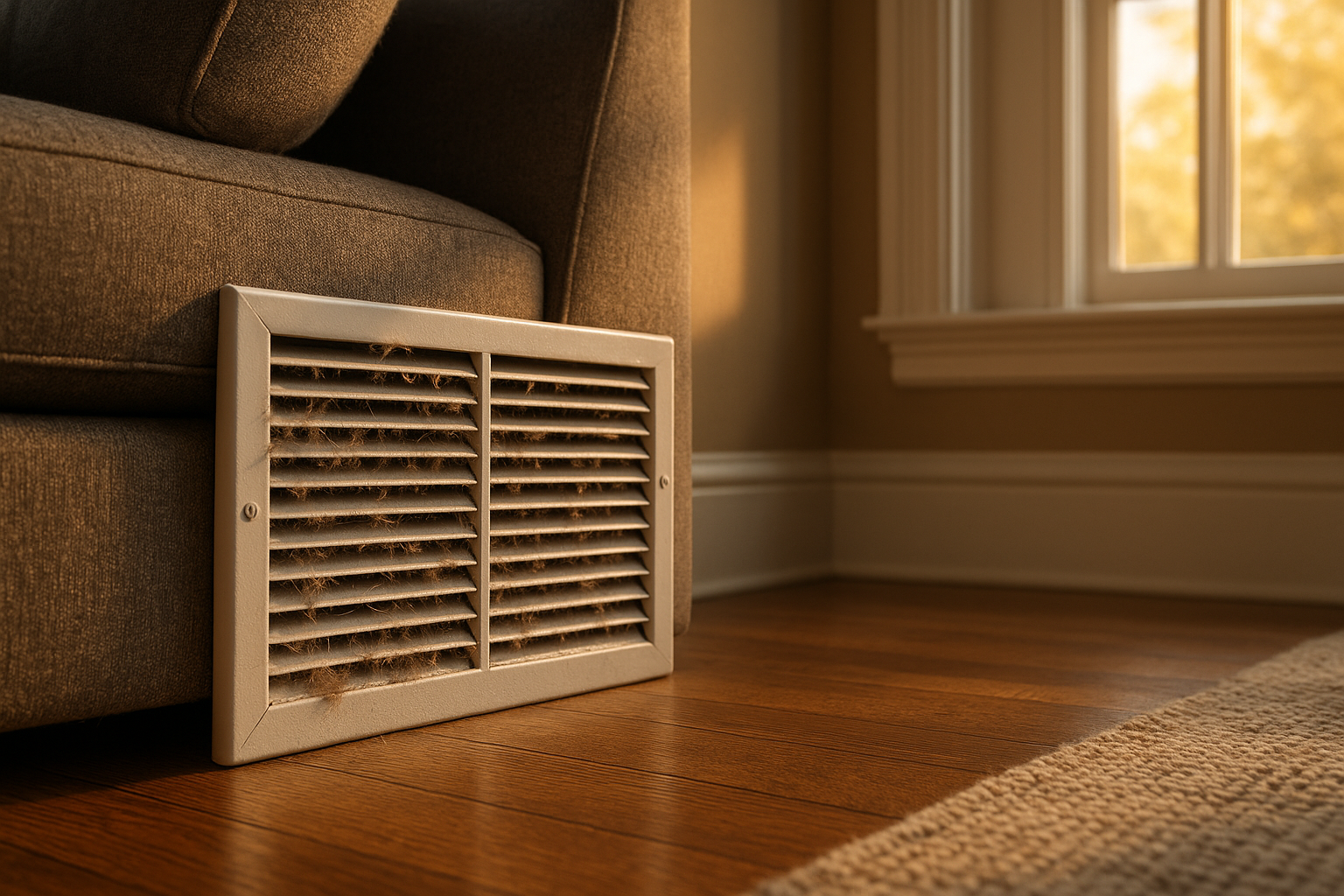
Last spring, my neighbor Dave — lives over in Westfield — fired up his AC on that first muggy 85-degree day in May, expecting cool relief. Instead, he got a lukewarm breeze and a breaker that kept tripping. Turned out the outdoor condenser was choked with last fall’s leaves and spring’s cottonwood fluff (you know, that white fuzzy stuff that coats everything in Carmel), and a corroded capacitor gave up. A simple spring AC tune-up would’ve caught both. Instead, he sweated through the weekend waiting for a repair, and that repair bill stung a lot more than a routine checkup ever would — and around here, AC repair costs add up fast.
But what actually goes into a proper AC tune-up? And why is spring the right time around here? Let’s walk through it — no fluff, just the stuff that matters for your home in Carmel, Fishers, Zionsville, or wherever you are in the North Indy burbs.
Why a Spring Tune-Up Actually Matters Here
Winter in Indiana isn’t just cold — it’s messy. Your AC sits outside through snow, ice, and those late-February thaws that leave everything damp. By the time April rolls around, your condenser might be hiding a layer of crud you can’t see. Add in Carmel’s famous spring pollen clouds (oak, maple, grass — you name it) and the cottonwood fluff that drifts through neighborhoods like snowfall, and your AC’s coil and filter are begging for a cleaning before you ever hit “cool.”
Then come the spring storms. Thunderstorms whip through Hamilton County, scattering twigs and leaves into the unit. A lightning strike or power surge can fry a capacitor or contactor just enough that it limps along until the first 90-degree day, when it finally quits. That’s why we see so many emergency calls in June — homeowners hit the switch, the AC can’t hack it, and now they’re on a week-long waitlist while the humidity climbs.
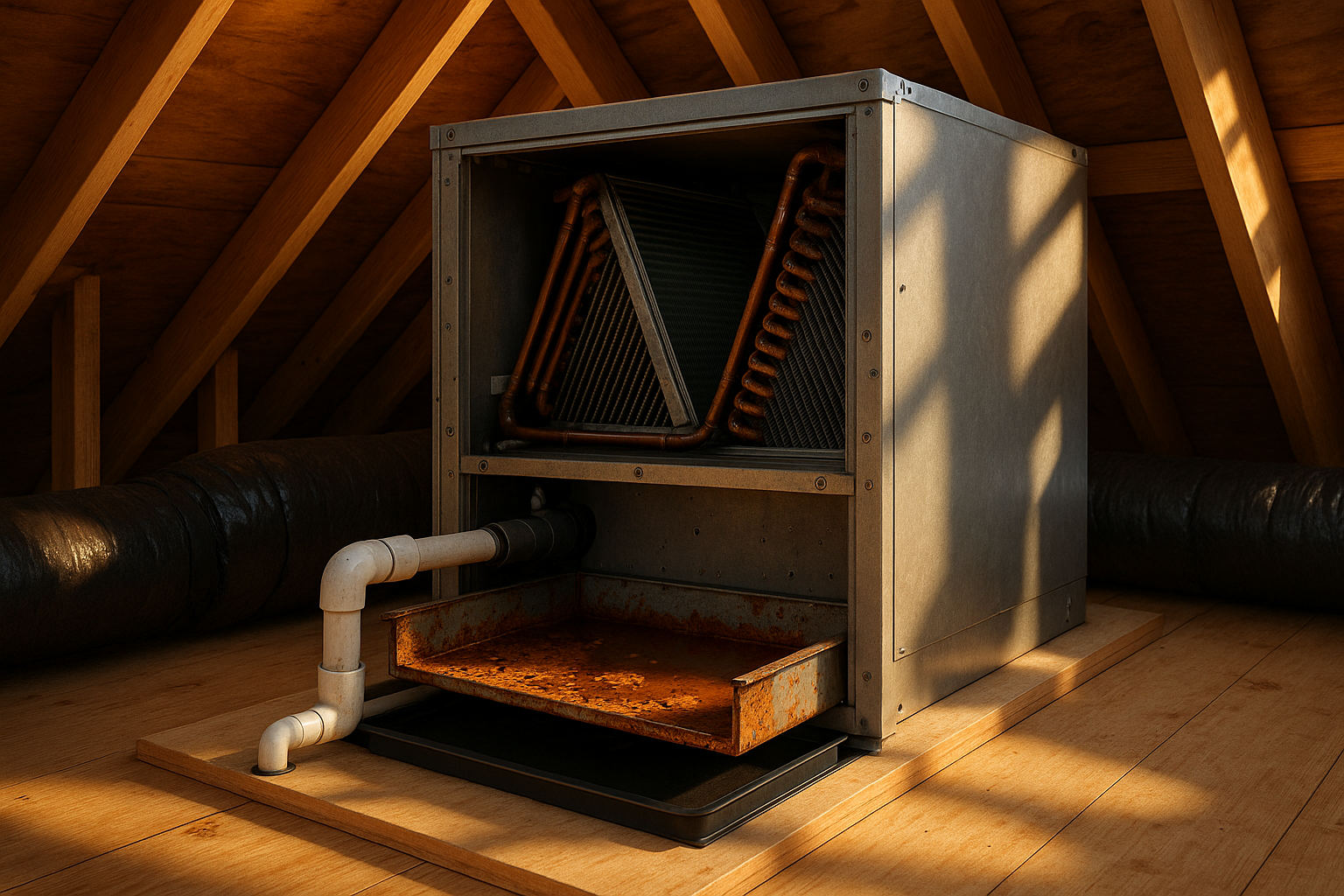
A pro spring AC maintenance checklist catches that stuff early. Plus, our summers here are sticky. If your condensate drain is partially clogged from last year’s gunk, a humid spring can push it over the edge — water backs up, the float switch trips (if you’re lucky, and you have one), or worse, you get a wet ceiling. True story: a customer in Zionsville ignored a gurgling sound from their attic unit. Two weeks later, the pan overflowed and stained their hallway ceiling. A $89 drain flush would’ve prevented a $1,200 drywall fix.
If you’re in an older home (we see lots of these in Carmel’s Arts & Design District and around Broad Ripple), your ductwork might already be slightly undersized. Add a dirty blower wheel or a clogged filter, and your system’s static pressure spikes — ruining efficiency and blower motors. That’s something only a pro with a manometer can measure. So yeah, a quick “spray the coil” DIY job isn’t the same.
What’s Actually on a Pro’s Spring AC Tune-Up Checklist
When you book a spring AC tune-up, here’s what a real checklist looks like — the kind our techs run through every visit. No gimmicks, just the steps that keep your system alive.
Inside Your Home: Air Handler & Furnace
- Filter check. Your tech will pull the filter and check its size and MERV rating. For allergy season, a MERV 8-13 is usually the sweet spot — it traps pollen without choking airflow. But if your home has high static pressure already, a 1-inch MERV 13 can be too restrictive. We’ve seen filters sucked into the duct (really). We’ll recommend the right balance. In peak pollen, plan to swap that filter every 30-45 days.
- Blower wheel and housing. Pop the panel, inspect the blower wheel for dirt buildup (even a thin layer can drop airflow 10-15%). Clean and check balance. A wobbling blower will wear out the motor bearings.
- Electrical tightness. Loose connections cause arcing, overheating, and part failures. We tighten every terminal, test capacitors (they weaken over time, especially after Indiana’s freeze-thaw cycles), and check contactors for pitting or burnout. If the capacitor is reading low, we catch it before it leaves you sweating.
- Thermostat calibration. Your thermostat might say 72, but if it’s off by 3 degrees, you’re either uncomfortable or wasting energy. We’ll verify temperature accuracy and make sure your schedule is set right for cooling season. If you’ve got a smart stat, we’ll confirm it’s connected and sensors are reporting.
- Evaporator coil (indoor coil). If access allows, we inspect the coil for dust, mold, or frost patterns. A dirty coil cuts efficiency and can freeze up. We clean with no-rinse foaming cleaners (not that harsh spray from the hardware store). We also check the drain pan and flush the condensate line with nitrogen or a shop vac. Then we test the float switch — fill the pan with water and make sure the switch cuts power before it overflows. In attic units like you’ll find in many Fishers and Noblesville two-story homes, this step is non-negotiable.
Outside at the Condenser
- Clear the zone. We pull off any leaves, twigs, and that cottonwood blanket. We’ll check that shrubs or bushes haven’t grown too close — you need at least 2 feet of clearance on all sides and 5 feet above. In neighborhoods with tight landscaping (I’m looking at you, Carmel’s Woodfield and West Clay), condensers get starved for air.
- Coil cleaning. Kill power, remove the fan guard, and carefully clean the outdoor coil from the inside out using a gentle spray — never a pressure washer (that bends fins into a solid sheet). We use coil-safe cleaners that break down biological gunk and pollen residue. After it’s clean and dry, we straighten any bent fins with a fin comb.
- Fan and motor. Spin the blade by hand — listen for dry bearings. Check for cracks or imbalance. Lube the motor if it has oil ports. Inspect the cabinet for rust or missing bolts, and check the line set insulation that runs back to the house. Squirrels and weather can tear that up.
- Pad level. If the concrete or plastic pad has sunk over winter, the unit vibrates, stressing the refrigerant lines. We can shim it level.
Refrigerant & System Performance
This is where the real wizardry happens. All that cleaning means nothing if your refrigerant charge is off or your system can’t deliver cold air.
- Superheat and subcooling. We connect gauges and temperature sensors to measure superheat (for fixed-orifice metering devices) or subcooling (for TXV systems). These readings tell us if the charge is right, without just hooking up a pressure gauge and guessing. If numbers are off, there’s a leak, a restriction, or a component failing. “Topping off” refrigerant isn’t a normal maintenance item — if you’re low, you’ve got a hole. And R-410A isn’t cheap.
- Temperature split. With the system running stable, we measure the supply air temp (coming out of the vents) and the return air temp (going back to the unit). On a properly working AC, you should see a difference of about 15–20°F. Less than 15, and you’re not really dehumidifying. More than 20, and you might be freezing the coil. Either way, it’s a clue that something’s off.
- Cycle check and noise. We cycle the unit a few times, listen for hard starts, hissing, or clanking. We check for short-cycling (which can be a bad thermostat, oversized unit, or low refrigerant) and note any hot/cold spots in the house that suggest duct leakage.
That’s a real air conditioner tune-up steps list — not just a glance and a sticker. And it’s why a pro tune-up takes 60–90 minutes, not 15.
What You Can DIY (and What You Really Shouldn’t)
I get it — YouTube makes everything look easy. And honestly, some stuff you can handle yourself:
- Change your filter regularly. Write the date on it with a Sharpie.
- Clear grass clippings, leaves, and cottonwood fluff from around the condenser every couple weeks during spring.
- Gently rinse the outside of the condenser with a garden hose (no spray nozzle, just a trickle) if you see it getting dirty. Keep the water pressure low and shoot straight on — don’t blast at an angle and fold the fins.
But please, don’t: - Open the electrical panel unless you know what you’re doing. 240 volts is no joke. - Try to clean the evaporator coil yourself — you need the right chemicals and you can easily tear the insulation or kink a drain pan. - Add refrigerant. That requires EPA certification, and overcharging is just as bad as undercharging.
I had a guy in Brownsburg who watched a video on cleaning condenser coils. He bought a coil cleaner at a big-box store, but it was too acidic and ate through the protective coating. Then he used a pressure washer and flattened half the fins. His AC worked worse than before, and he ended up paying us to replace the coil. A professional tune-up would have cost him a fraction.
Allergies, Filters, and Breathing Easy
Carmel spring hits different if you’ve got allergies. Everything’s yellow by mid-April, and you can taste the pollen if you leave the windows open. Your AC is actually your best air purifier — if you run the fan on “auto” and have the right filter. That’s why we talk about filters so much during a spring AC maintenance checklist.
A decent MERV 11 pleated filter will catch oak and grass pollen while still letting your system breathe. If someone in the house has severe allergies or asthma, a MERV 13 might help, but have a pro check your static pressure first. In many newer tight homes (like those in Westfield’s Centennial), the ductwork is sized for lower resistance. A thick filter can drop airflow below 350 CFM per ton, which risks freezing the coil.
If cottonwood is brutal that year, some people install a simple screen around the condenser — just make sure it doesn’t block airflow. And remember, that outdoor coil still needs to reject heat, so keep the screen a foot away and clean it when it loads up with fluff.
One more thing: if you see dust billowing from your vents when the fan kicks on, or you can smell stale air, you might have duct leaks sucking in attic or crawlspace air. That’s a conversation worth having — sealing ducts improves both air quality and efficiency.
Is a Maintenance Plan Worth the Money?
I won’t dance around it: we offer a maintenance plan. But I’ll tell you why it makes sense, and you can decide.
If you buy a new car, you still change the oil. Your AC is a mechanical system with moving parts, electrical connections, and refrigerant under pressure. It runs for hundreds of hours each season. Skipping regular care is like never opening the hood — something will eventually fail, usually at the worst time.
Our maintenance plan includes two visits a year (spring cooling check and fall heating check). You get priority scheduling — so when that June heat wave hits and we’ve got 40 calls ahead of you, your name is near the top. You also get a discount on any repairs and a predictable schedule. If your system is still under manufacturer warranty, many require documented professional maintenance to keep coverage valid. So if a compressor fails in year 4, they’ll ask for service records.
And it’s not about upselling you stuff. A good tech will tell you what’s wearing out and give you options. We’re not in the business of scaring people into replacements. But if your 18-year-old AC has a failing compressor and a leaking coil, we’ll let you know so you can plan ahead — maybe explore AC installation options on your own timeline.
Ready to Book? Here’s the Smart Move
Book your spring tune-up now — March through early May is the sweet spot. By late May, our schedule fills up with folks who waited until the first hot snap. Don’t be Dave.
We work all over Carmel, Fishers, Noblesville, Westfield, Zionsville, Greenwood, and the rest of the metro. Our techs show up on time, clean up after themselves, and won’t leave you with a mess of pollen and grass clippings around the unit. (Yeah, we wear booties and drop cloths when we’re indoors.)
If you’re tired of stressing every cooling season, grab a maintenance plan and sleep easier. Hit that quote form to get on the calendar. Or check out our Carmel HVAC contractor page to see what other homeowners are saying.
Stay cool out there — Indiana summer is coming.
Ready for HVAC service or an upgrade?
NATE-certified techs, flat-rate diagnostics, and a free in-home assessment for any replacement — no pressure.