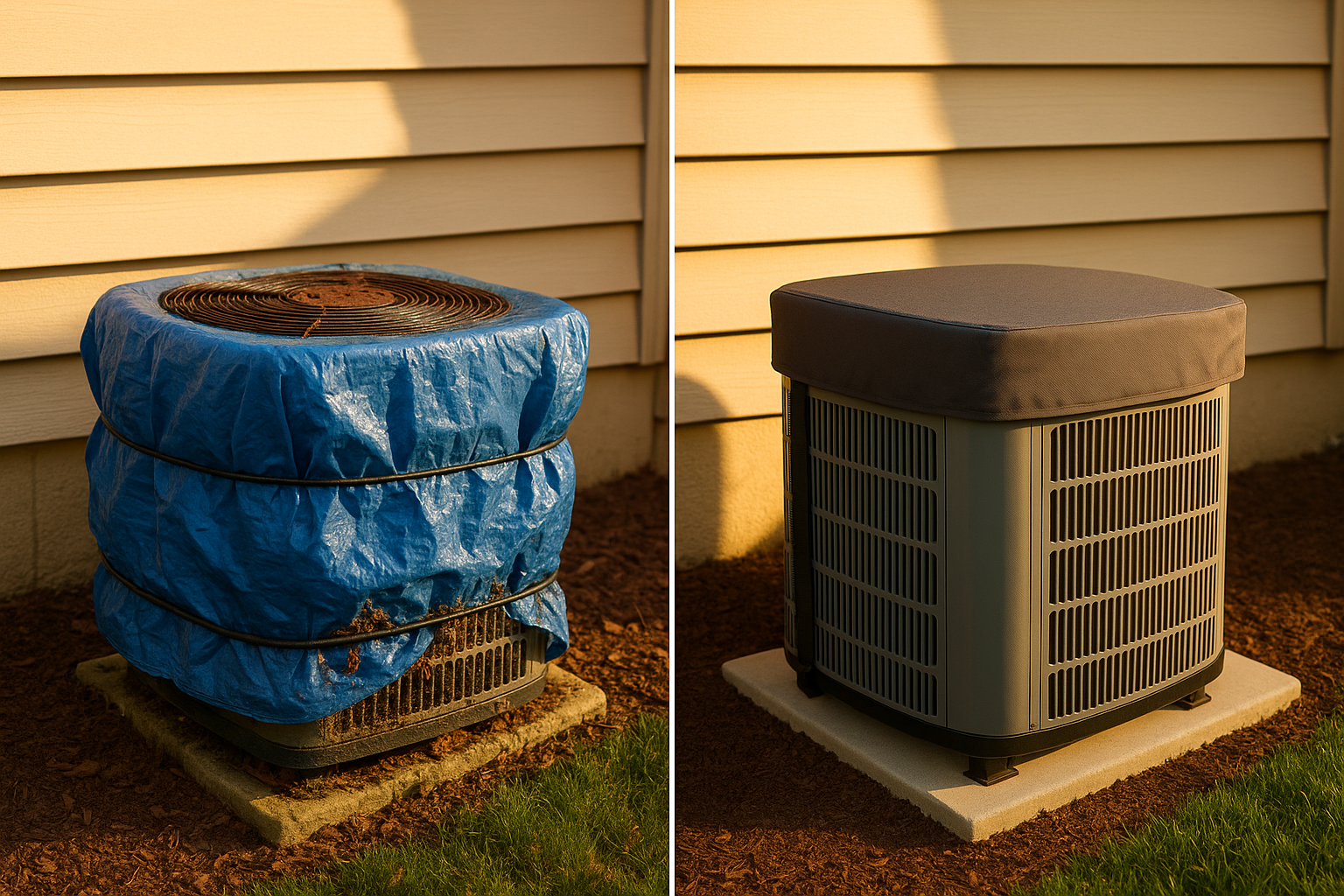
Last fall, my neighbor Rob in Broad Ripple wrapped his AC condenser in a blue plastic tarp, cinched it tight with bungees, and said, 'There. That'll keep it dry.' In April, he pulled off the tarp and found a mouse nest the size of a softball inside the fan cage, plus a rusted top grille where condensation had sat for months. He looked at me like I'd told him his favorite team lost. 'I thought I was protecting it,' he said. That's the thing about covering your AC unit for winter in Indianapolis — the most obvious move is usually the worst one.
So, should you cover AC unit winter? The short answer: yes, but only with a breathable, top-only cover. Not a full wrap. Not a plastic tarp. Here's why and how to do it right.
Why a Full Wrap Is Worse Than Snow
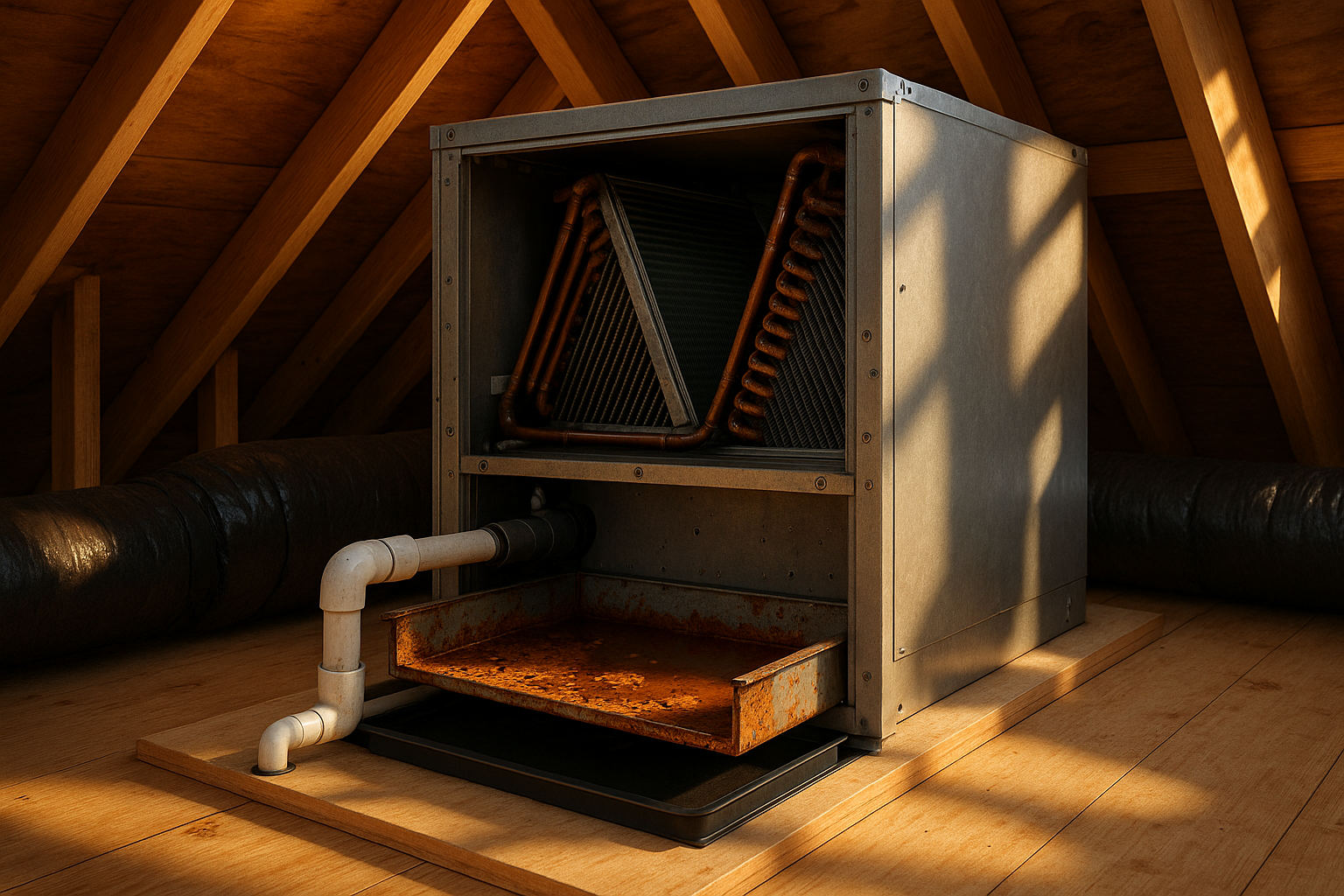
Indianapolis winters throw freeze-thaw cycles, wind-driven leaves, and the occasional ice storm. Your outdoor condenser is built to handle snow, rain, and ice. It's not built to handle trapped moisture. When you seal a unit with a tight vinyl or plastic wrap, condensation gets trapped inside. That moisture never dries, and over a few months it rusts metal parts, corrodes electrical connections, and feeds mold. So if you cover AC unit winter with a full wrap, you're making the most common and most damaging mistake. Then spring comes, you fire up the AC, and the smell of mildew blows through your vents.
The other problem with a full cover is rodents. Field mice and chipmunks around Carmel, Fishers, and Zionsville are looking for a dark, warm spot to nest all winter. A tight cover over the sides makes a perfect critter condo. Once they chew through wires or insulation, you're not just cleaning leaves — you're calling for an HVAC emergency service.
The Right Way: Top-Only, Breathable Cover
So what should you use? A breathable AC cover that sits on top of the unit only. It shields the fan grille from maple seeds, oak leaves, and cottonwood fluff (the culprits that clog condenser fins come spring). The sides stay open, so air moves through and any moisture that does sneak in dries out. This is what most manufacturer guidelines for AC covers actually recommend: no full wraps, no airtight materials.
When you look for a cover air conditioner in winter Indianapolis, you want something made of woven polyester or similar fabric that lets moisture escape. Not vinyl. Not plastic. And make sure it has straps or clips to keep it from blowing into your neighbor's yard during a January wind gust.
Before you put that cover on, take a few steps. First, shut off power to the unit at the outdoor disconnect switch — but only if you have a straight AC system, not a heat pump. Turning off the AC breaker for winter is a smart move because it prevents the fan from accidentally kicking on if a warm snap confuses the thermostat. Leave it off until spring, then flip it back 24 hours before you plan to run the AC. That gives the crankcase heater (if your unit has one) time to warm the oil so you don't damage the compressor.
Heat Pumps: Cover Them and You'll Break Something
If you've got a heat pump, stop reading this section and go outside to look. Does your outdoor unit run in the winter when the heat is on? If yes, then no cover ever. A heat pump works year-round — it pulls heat from the outside air even when it's 20 degrees. Covering it means blocking airflow and risking a frozen coil or a fried compressor. So, can you cover a heat pump in winter? Absolutely not. Leave it completely uncovered and clear of snow, leaves, and ice.
Most homes in Indianapolis and the surrounding suburbs (Greenwood, Brownsburg, Avon, Plainfield) have a gas furnace from Citizens Energy Group and an electric AC from AES Indiana. That means the outdoor unit is idle all winter, so covering it for debris control makes sense. But if you're not sure what kind of system you have, check the thermostat — if it says 'heat pump' or you see a 'emergency heat' setting, skip the cover and call a pro for winter prep instead.
Critters, Rust, and Other Things That Actually Ruin Your AC
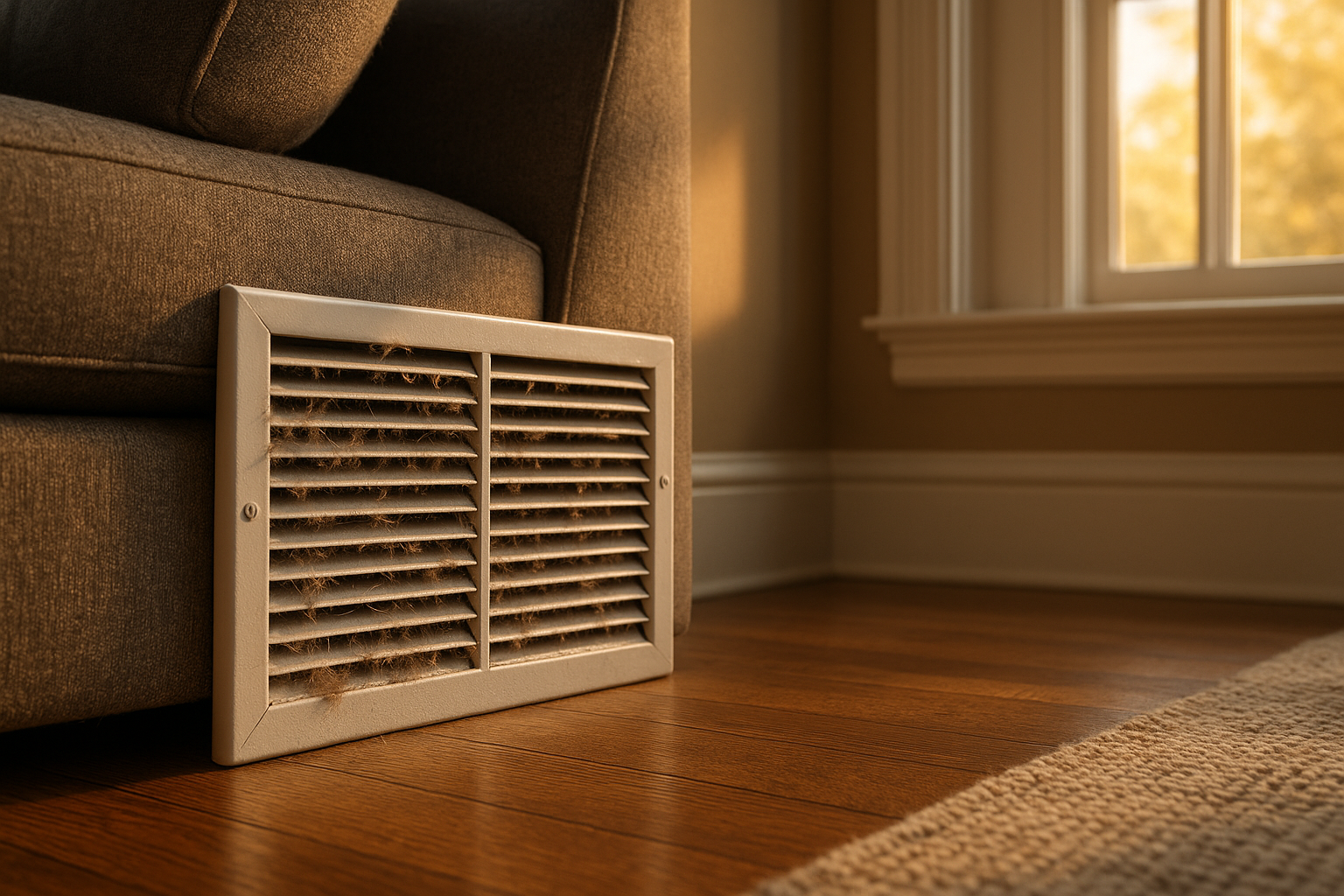
Rodents under AC cover are a real problem, but you can avoid inviting them. Don't create a sealed box that traps body heat and blocks escape routes. A top-only cover leaves the sides open, so mice and chipmunks are less likely to set up house. Also, clear away any mulch, leaves, or grass clippings from the base of the unit before covering. Keep at least 12 inches of open space on all sides. If you see droppings or chewed wires in the spring, that's a sign to call a pro before you run the system.
Snow and ice on the AC condenser are generally fine. These units are rated for outdoor exposure. Heavy snow piled higher than the top grille? You can gently brush it off with a soft broom, but don't bang on the coils or use a metal shovel. Ice glazing from freezing rain might look scary, but it usually melts harmlessly. The real damage comes from trapping that meltwater against the metal with a non-breathable cover.
Indianapolis Winter Prep: A Simple 5-Step Checklist
Here's the order I'd follow if you want to winterize AC unit Indianapolis style:
- Wait until the leaves stop falling — usually late October or early November in Hamilton and Boone counties.
- Rinse the condenser coil with a garden hose (low pressure) and let it dry completely. Here's how to clean it properly.
- Clear vegetation and debris from around the pad. Make sure the pad still drains well so melted snow doesn't pool at the base.
- If you have a straight AC system, install a breathable top-only cover. This is the 'cover AC unit winter' step — top only, sides open.
- Turn off the AC breaker at the outdoor disconnect. Leave it off all winter, then turn it back on 24 hours before you need cooling.
And that's it. Five steps, maybe 30 minutes. If you'd rather not mess with hoses and ladders in November, HVACPros can handle the end-of-season shutdown for you. We'll clean the condenser, pick the right cover, and flip the breaker. Then we'll put you on our spring startup list so you're not running the AC with last fall's leaves still packed in the fins. Get a quote for end-of-season service here — seriously, it's easier than arguing with a tarp in the wind.
Ready for HVAC service or an upgrade?
NATE-certified techs, flat-rate diagnostics, and a free in-home assessment for any replacement — no pressure.