Last January, my neighbor sent me a late-night text: “My furnace is acting nuts. It runs for maybe five minutes, shuts off, then fires up again ten minutes later. The house never gets warm.” He’d already swapped the air filter and cranked up the thermostat, but the thing kept doing it. Sound familiar? That’s called short cycling—and it’s not just annoying. It chews through gas, beats up your equipment, and can even point to a safety problem you don’t want to ignore.
Here in Avon and around the Indianapolis area, our winters throw everything at your furnace: sudden cold snaps, drifting snow, and a whole lot of drywall dust from nearby construction that clogs things up faster than you’d think. So let’s walk through what causes a furnace to short cycle, what you can safely check yourself, and when it’s time to get a pro on the phone—without anybody pressuring you into a new unit you don’t need.
What’s Short Cycling, and Why Should You Care?
A furnace that short cycles starts and stops way more than it should. Instead of a steady 10- to 15-minute run during a cold snap, it kicks on, heats the air for a couple minutes, and then shuts down—sometimes before the house even comes close to the temperature you set. Then the thermostat calls for heat again, and the whole loop repeats. It’s like your car engine stalling at every red light; it’s not designed for that kind of stop-and-go, and it’s going to shorten the life of the whole system. Worse, that constant on-off cycle can hide a failing heat exchanger or a venting blockage that could send carbon monoxide into your home.
So yeah, you should care. But the good news? A lot of furnace short cycling causes are simple to spot and fix.
The Most Common Culprits Behind Furnace Short Cycling
Let’s break down the usual suspects—from stuff you can see to stuff that takes a trained eye.
Airflow Problems: Filters, Vents, and Ducts
Most of the time, the furnace is just suffocating. If air can’t move through the system fast enough, the heat exchanger gets too hot and a limit switch trips to shut everything down for safety. Your furnace turns on, heats up, overheats, and shuts off. Then it cools, resets, and tries again. That’s classic furnace short cycling.
The biggest offender? A clogged air filter. You’d be surprised how many homeowners grab the “ultra-allergen” or “HEPA-style” pleated filters thinking more filtration is better. But those super-restrictive filters choke off airflow in most residential duct systems. Stick with a basic MERV 8 filter and change it monthly—especially if you’ve got construction dust floating around Avon neighborhoods like new builds in Clarendon Square.
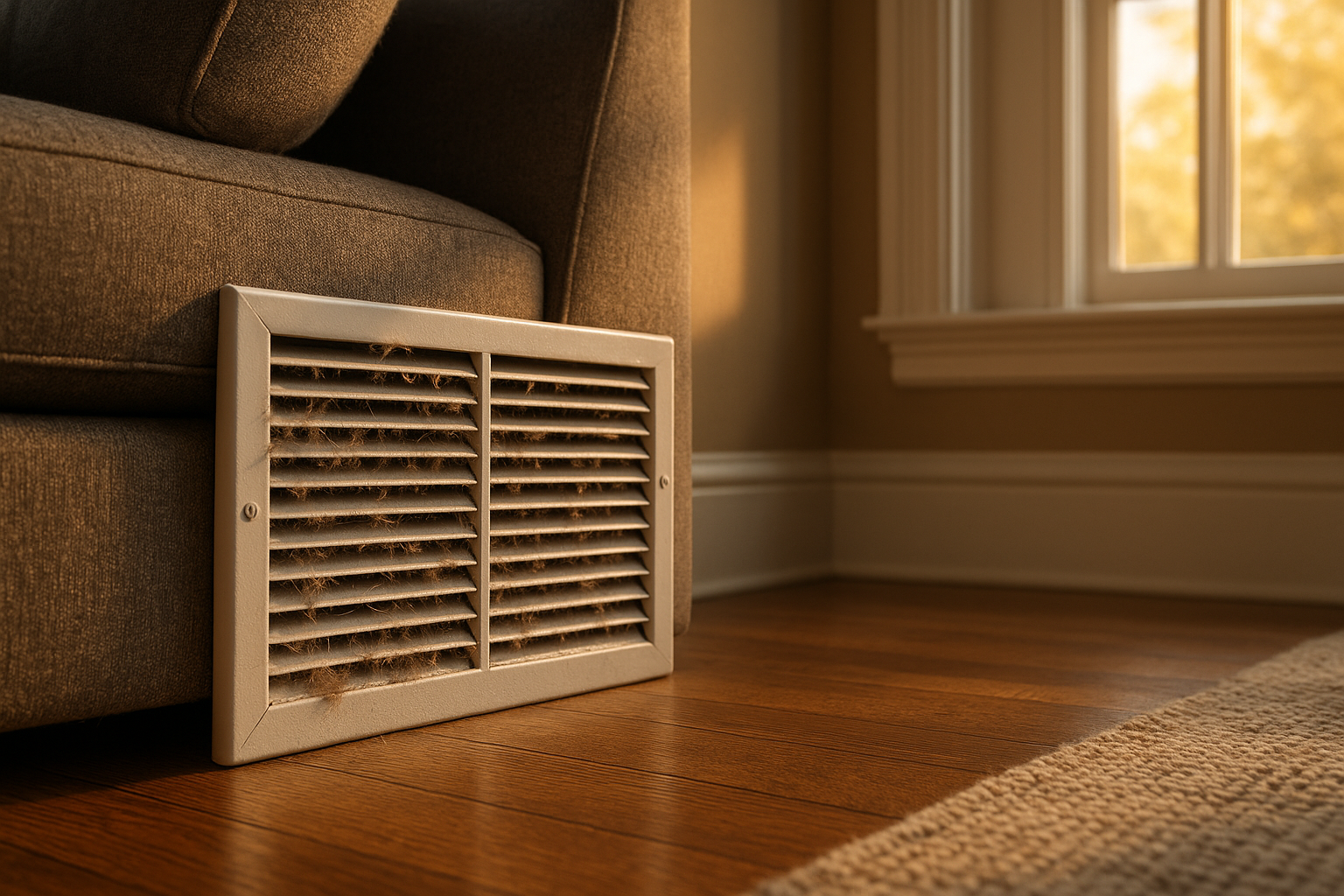
But it’s not just the filter. Closed supply vents, a blocked return air grille (maybe you pushed a sofa against it), or ductwork that’s undersized or collapsed can create high static pressure. That’s like trying to breathe through a coffee stirrer. Older homes with finished basements often have return ducts that are just too small for the space. If your furnace sounds loud or you hear a whistling noise from the vents, chances are the airflow is off. We’ve seen folks in Brownsburg and Plainfield deal with this after a basement renovation—they added square footage but never upsized the returns. If that sounds familiar, you might want to peek at our ductwork replacement signs article.
Flame Sensor and Thermostat Troubles
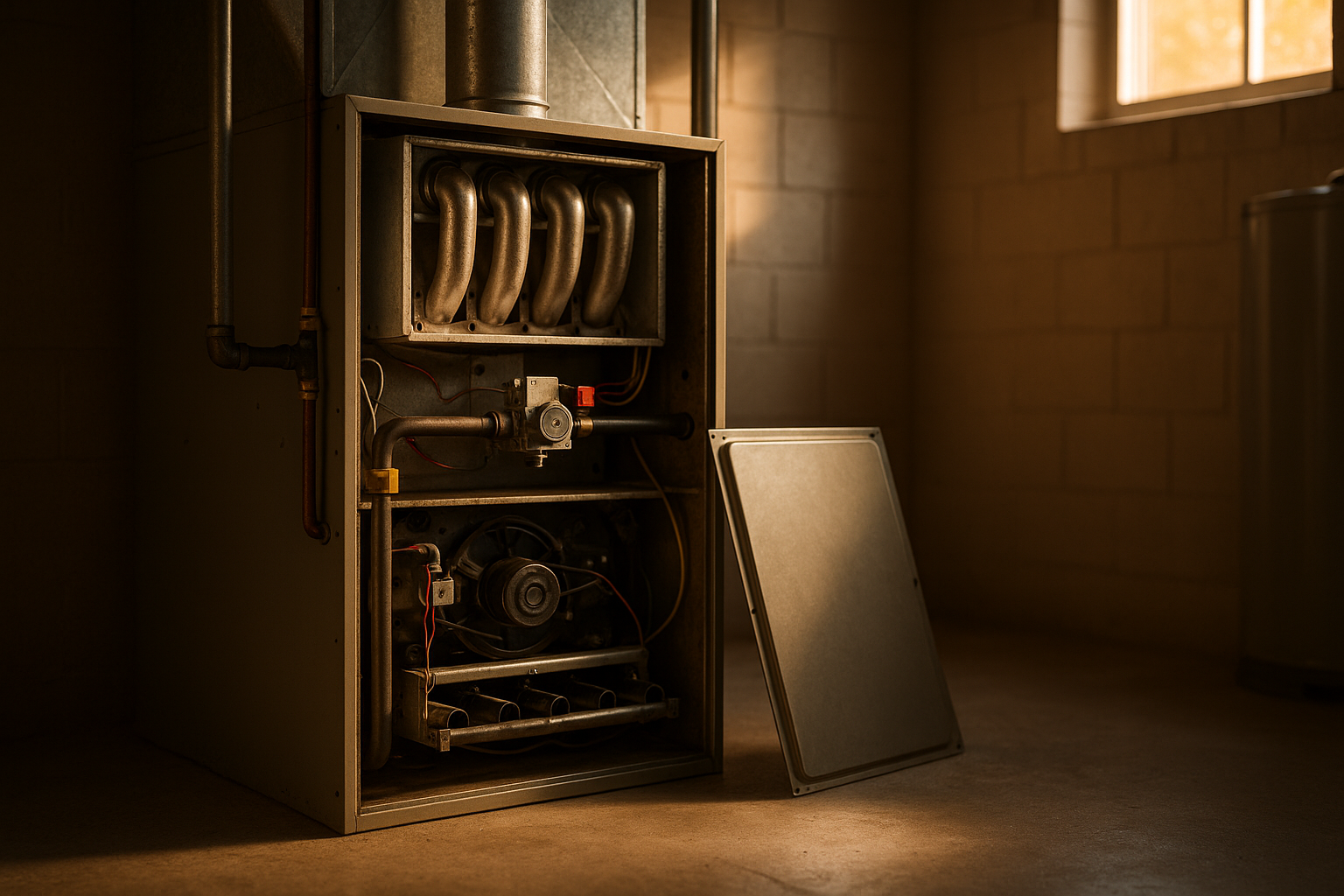
Sometimes the furnace starts, but the flame sensor can’t tell that the burner is lit, so it cuts the gas—and the cycle dies. A dirty flame sensor looks like a metal rod covered in soot or white chalky deposits. It’s a simple fix for a pro, but I would not recommend poking at it yourself unless you know exactly what you’re doing; you can break the ceramic insulator.
Your thermostat can be a troublemaker, too. If it’s mounted in a sunny hallway, right above a supply register, or on a drafty exterior wall, it’s reading the wrong temperature. That can make your furnace turn on and off over and over. Even a new thermostat—yes, even a fancy smart thermostat—can cause short cycling if the settings are off. Some have a default “cycles per hour” that’s too aggressive for an Indiana winter. We’ve helped Noblesville homeowners tweak those settings after a DIY install. (We wrote a whole smart thermostat buyer’s guide if you’re curious.)
Venting and Combustion Air Blockages
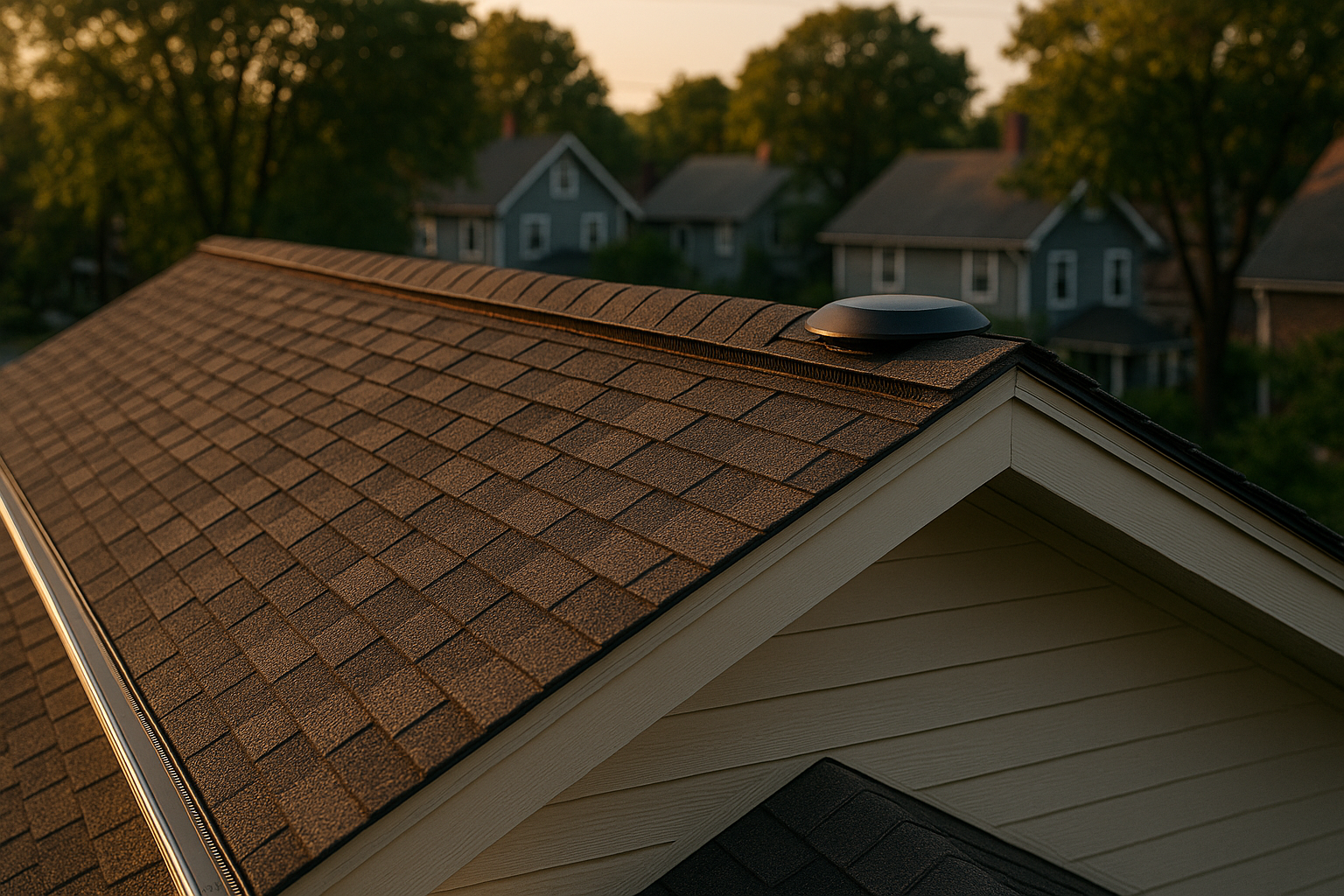
This one is especially relevant after a snowstorm. High-efficiency furnaces have a white PVC intake and exhaust pipe that pokes out the side of your house. If drifting snow—the kind we get from lake-influenced winds off Lake Michigan—buries those pipes, your furnace can’t get fresh air for combustion or can’t vent out exhaust. It’ll try to start, then a pressure switch senses a problem and shuts it down. Repeatedly. The same thing happens in autumn with leaves or an old bird’s nest. I’ve seen an older furnace in Zionsville with a flue pipe completely blocked by a squirrel’s winter acorn stash. The furnace would fire, the rollout switch tripped, and it’d lock out for an hour.
If you smell a whiff of gas or something like plastic burning when the furnace tries to start, that’s a venting red flag. Do not keep resetting it.
Condensate Drainage Woes (High-Efficiency Furnaces)
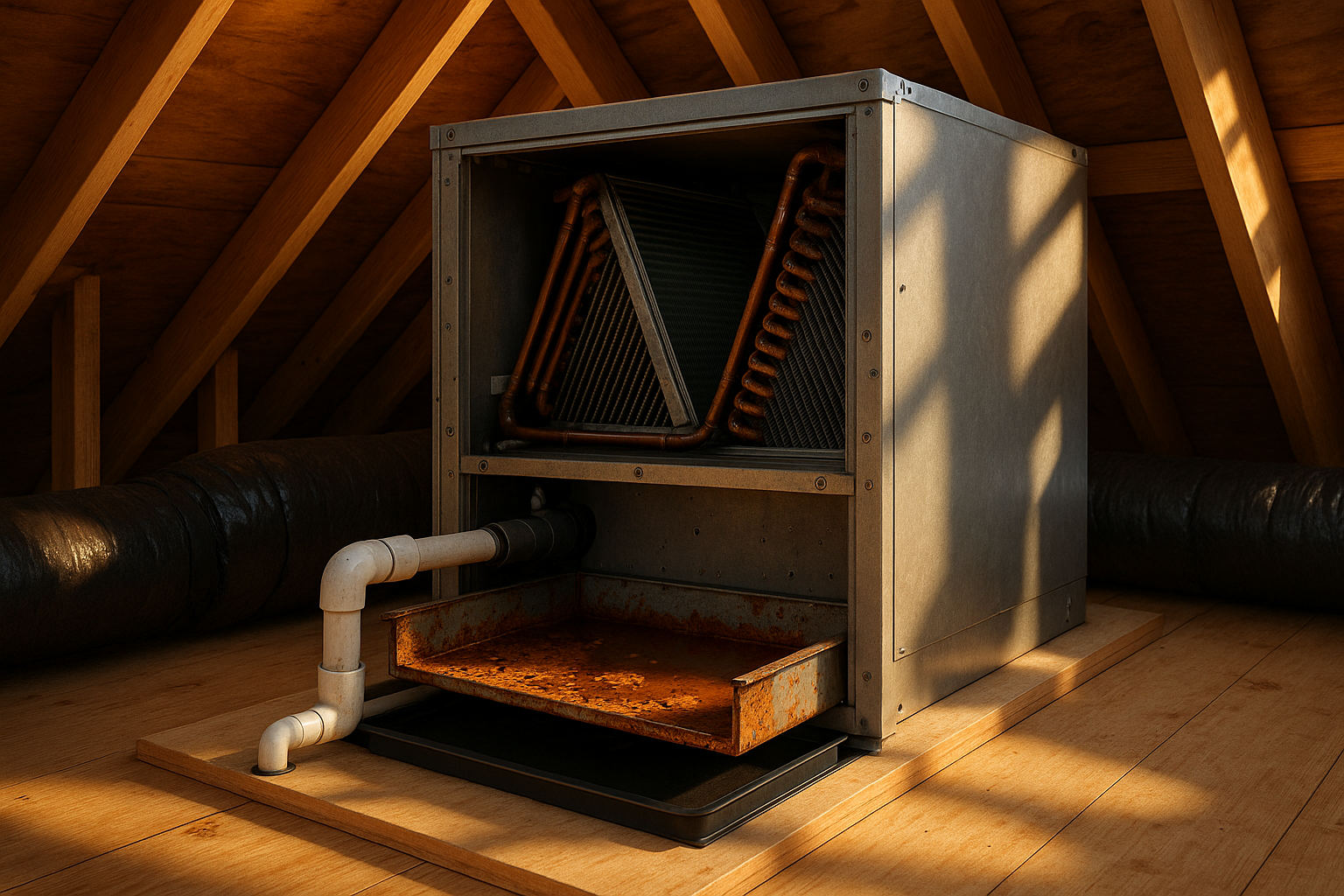
Condensing furnaces—anything over 90% efficiency—produce water as a byproduct. That water has to drain through a little trap and tubing. If the condensate trap clogs with gunk or the drain line freezes, the furnace will sense a backed-up drain and stop the burner to prevent water spilling inside the cabinet. Here in Avon and across the metro, freeze–thaw cycles can turn that ½-inch clear tubing into an ice plug overnight, especially if it’s routed through an unconditioned crawlspace or near a cold basement wall. We’ve also seen the little condensate pump fail (the thing that pumps water up to a sink drain), and suddenly your furnace is off because a float switch tripped.
Oversized Furnace Syndrome
This one is harder to spot from your breaker panel, but it’s a biggie. If a furnace is too big for the house, it blasts the place with heat in five minutes, shuts off, and then the house cools down just as fast. It’s like heating a bathroom with a jet engine. The unit never runs long enough to circulate air properly, so you get hot and cold spots. We sometimes see this in older Avon neighborhoods like Stratford where a previous owner may have slapped in a bargain-priced unit that was whatever the installer had on the truck. Sadly, the only real fix for an oversized furnace is replacement—but you should only go that route after a thorough load calculation proves it’s necessary.
What You Can Check Right Now (Without Calling Anyone)
Before you pick up the phone, here are a few safe DIY moves that actually solve a lot of short-cycling calls:
- Replace the filter with a standard MERV 5–8 pleated filter. If you’ve been using a super-thick “allergy” filter, just take it out temporarily and see if the cycles normalize. Don’t run the furnace long-term without any filter, but a quick test with no filter won’t hurt.
- Walk around and open all supply vents. Check that furniture isn’t blocking return grilles. You’d be amazed how often a kid’s bean bag chair is the culprit.
- Pop fresh batteries in the thermostat and look at its location. Is it in direct sunlight or right above a vent? Even a new thermostat can have a loose wire; take the face off (after turning off power at the breaker!) and make sure the connections are tight.
- Go outside and check the white PVC pipes: clear away any snow, ice, leaves, or spider webs. Don’t punch something sharp into them—just use your hand or a brush.
- If it’s a high-efficiency unit, find the condensate drain line and see if water is pooling or the tubing is kinked. A simple zip tie can often secure it away from a freezing draft.
And please—don’t just keep resetting the furnace thinking it’ll “sort itself out.” That limit switch is tripping for a reason. Bypassing a safety is never a good idea.
When It’s Time to Call a Pro
If you’ve done the filter, opened the vents, cleared the pipes outside, and the furnace is still behaving like a yo-yo, it’s time to bring in someone with manometers and voltmeters. Other signs you need a pro ASAP: you smell something like burning wires or gas, you see water on the floor around the furnace, the burner lights then immediately goes out, or you hear a loud bang or a rattling sound from inside the unit.
I know that calling for emergency furnace repair sounds expensive and stressful. And yeah, some companies in town will use a no-heat call as an opportunity to scare you into a new system. That’s not how we work at HVACPros. We come out, diagnose the problem, and give you a clear, written plan—usually with a couple of options. No pressure, no hidden fees. You just get the facts so you can decide.
How We Diagnose Your Furnace at HVACPros
When we pull up to a short-cycling furnace in Avon or Greenwood, we start with a full system check. We measure static pressure to see how hard the blower is working, comb through the burner and flue passages, test every safety switch (flame sensor, limit, pressure), check gas pressure, and make sure the thermostat is actually talking to the unit. Often it’s two or three little things combined—a borderline flame sensor plus a dirty filter and a return duct that’s a little too small. We lay it all out on a scope sheet with prices, so you’re never guessing what it’ll cost.
Keeping It from Happening Again
An ounce of prevention is worth a pound of cold toes. Here’s what works for our neighbors in Avon and the north-side suburbs:
- Swap filters like clockwork: every 30–90 days, less if you’re near construction or have pets.
- Get an annual furnace tune-up in early fall, before the first hard freeze. (Our maintenance plan covers a full cleaning and inspection, and spring/winter check-ins.)
- After a big snow event, go outside and make sure the vents are clear. It takes 30 seconds.
- If you’re planning a renovation, have a pro look at the ductwork. Adding a big sunny room in Fishers or finishing an old basement in Zionsville can throw off the airflow balance.
Most short-cycling problems are fixable without a furnace replacement. But if your unit is 15+ years old, chronically oversized, or has a cracked heat exchanger, we’ll tell you honestly and walk you through the pros, cons, and real costs—not a hard sell. We’ve got a whole guide on furnace replacement costs in Carmel if you want to read up beforehand.
If your furnace’s short cycling is driving you up the wall, don’t tough it out. Get in touch for a no-nonsense diagnostic at our quick quote page. We serve Avon and the whole Indy metro with straight talk and honest work. While you’re at it, feel free to dig through our other home comfort tips—we cover everything from air quality to AC not cooling.
Ready for HVAC service or an upgrade?
NATE-certified techs, flat-rate diagnostics, and a free in-home assessment for any replacement — no pressure.