Last January, my buddy in Broad Ripple called me in a panic. His furnace was running, but cold blew from the vents. His family was freezing. He was scared something was seriously broken—and honestly, not sure what to do. Sound familiar? That kind of no-heat nightmare hits Indianapolis homes hard. This guide walks you through the steps to troubleshoot, and when it's time to call a pro. If you're sitting in a chilly house right now, take a deep breath. We'll get through this together.
Safety First. Always.
Before you lift a finger, there's one rule you can't ignore: your family's safety. If you smell gas at any point—that rotten-egg smell—or you hear popping or buzzing from the furnace, or worst of all, your carbon monoxide detector starts screaming, stop. Get everyone out of the house. If you can safely reach the gas shutoff near the furnace (it's usually a lever on the black pipe), turn it perpendicular to the pipe. Then call Citizens Energy Group right away, followed by a licensed HVAC tech. Don't go back inside until a pro says it's safe. CO poisoning is silent and deadly—it's not worth the risk. HVACPros takes emergency calls for situations like these, even in the middle of a snowstorm.
Quick Checks You Can Try Right Now
If there's no gas smell and no CO alarm, chances are it's something simple. Let's run through the things you can easily check yourself. Many no-heat calls turn out to be one of these culprits.
Thermostat settings and batteries
Your thermostat is the brain of the system. Make sure it's set to “Heat” mode, the fan is set to “Auto” (not “On”—that just runs the blower continuously), and the temperature setpoint is at least 3 to 5 degrees above the room temperature. If the screen is blank, pop in fresh batteries. Even if your thermostat is hardwired, a dead backup battery can mess things up. In older Indianapolis homes, sometimes the wiring behind the thermostat is finicky—I've seen wires come loose. If you're comfortable, take off the faceplate and check, but if not, call a pro.
Power switch and breaker
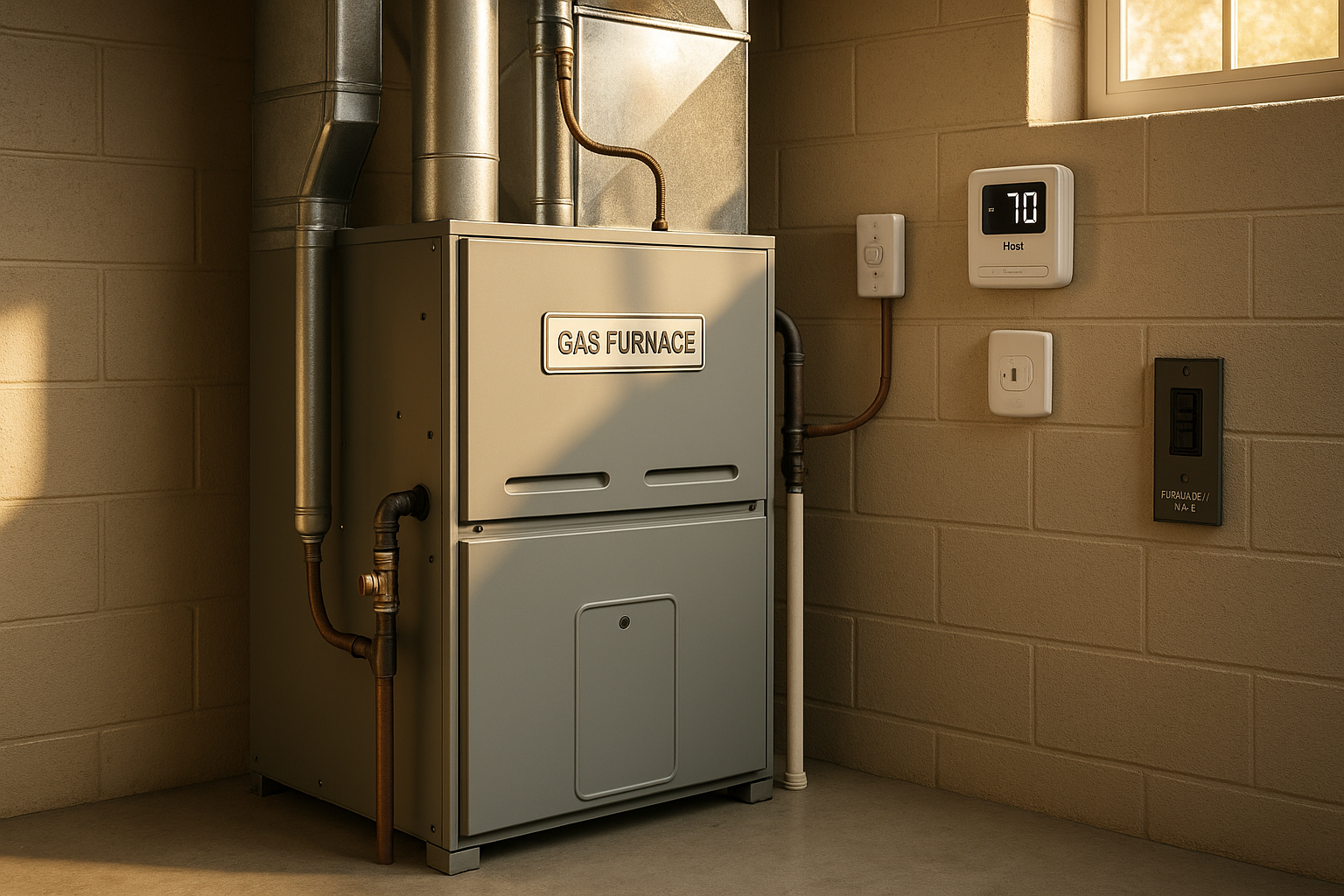
Your furnace has a power switch that looks exactly like a regular light switch. It's often mounted on the side of the furnace or nearby wall. Make sure it's flipped up (On). Someone might have accidentally bumped it off—it happens. Next, head to your electrical panel and find the breaker labeled “furnace” or “HVAC.” If it's tripped, reset it once. If it trips again immediately, there's a short or overload, and you'll need a technician. Don't keep flipping it back on; you could cause damage or a fire hazard.
Air filter: the silent killer
A dirty air filter is the most common reason a furnace stops heating. When the filter is clogged with dust and pet hair, airflow gets restricted. The furnace overheats, and a safety switch (called a limit switch) trips to shut off the burners. It'll run the blower to cool things down, but you get no heat. Check your filter—usually found in a slot near the return duct or at the furnace itself. If it's gray and fuzzy, replace it with a new one. Make sure you use the right size and the arrow on the filter frame points toward the furnace (that's the airflow direction). In the middle of an Indiana winter, change that filter every 1 to 2 months. A clean filter can solve the problem instantly.
Blocked supply vents and return grilles
Walk around your home and check that all the supply registers (the ones that blow air out) and return grilles (the ones that suck air in) are open and not blocked by furniture, rugs, or curtains. Many older homes in neighborhoods like Meridian-Kessler or Irvington have undersized return ducts, so even partial blockage can starve the furnace for air. This causes short cycling—where the furnace turns on and off rapidly—or a tripped limit switch. Clear the path, and your system might start behaving again.
High-efficiency furnace? Check outside.
If your furnace is a newer high-efficiency model (90%+ AFUE), it vents through white PVC pipes that go out a sidewall or up through the roof. After a heavy Indy snowstorm or freezing rain, those pipes can get blocked. Snow drifts, ice caps, even leaves or a bird's nest can choke off the combustion air intake or exhaust. Go outside and take a look—carefully. If the intake pipe is packed with snow, clear it gently. You'll often find this issue in newer subdivisions around Carmel, Avon, and Brownsburg, where tight construction and drifting snow work together. Once the blockage is gone, the furnace should fire right up.
Condensate drain and pump
High-efficiency furnaces also produce condensation, so they have a drain line and often a small pump (like a little box on the floor). If that drain line freezes or gets clogged, water backs up into the pump reservoir. When the reservoir is full, a safety float switch shuts down the furnace to prevent a flood. Check the pump—unplug it and empty the water if it's full. Make sure the rubber tubing isn't kinked. In unheated basements or garages common in older Indy homes, these lines can freeze solid. Pouring a little warm water over the line (not the electrical parts) can thaw it, but insulating the line afterward is a smarter long-term fix.
Take a peek at the furnace error code
Most furnaces have a small sight glass on the front panel where a little light blinks. When the furnace fails to start, it usually flashes a code—like three blinks, pause, three blinks. There should be a chart on the inside of the panel or in the manual that tells you what that code means. Write it down (or take a video with your phone). When you call HVACPros, that code helps our tech zero in on the problem before they even ring the doorbell.
When Your Furnace Runs But Blows Cold Air
So you hear the blower going, but the air coming out is lukewarm or straight-up cold. That's a different problem. The furnace might be trying to light but failing.
Pilot light out? (Older furnaces)
If you have an older standing-pilot furnace—common in pre-1990 homes you'll find in Broad Ripple or near downtown Indy—the pilot may have gone out. Follow the lighting instructions on the furnace. Usually it involves turning the gas knob to “Pilot,” holding it down, and clicking the igniter or using a long match. If you smell any gas, stop and call a pro. Relighting a pilot isn't hard, but if it won't stay lit, the thermocouple might be bad. That's a cheap fix for a tech, but not something most folks should DIY.
Dirty flame sensor or failed igniter
In newer furnaces with electronic ignition, a common culprit is a dirty flame sensor. The sensor is a thin metal rod that sits in the burner flame. It's supposed to prove the flame is on, but if it gets coated with carbon or dust, it can't sense the flame and the furnace shuts off the gas after a few seconds. A quick cleaning with fine sandpaper or steel wool can fix it, but you have to be careful not to damage the insulator. If you're not comfortable taking off the furnace panel—don't. Let a pro handle it. Other possibilities: a bad hot surface igniter (that orange-glowing element), or the gas valve is stuck closed. These are all jobs for an experienced tech. Messing with gas components is not a DIY project.
Limit switch tripped repeatedly
We mentioned the limit switch earlier. If it trips once because of a dirty filter, replacing the filter might solve it. But if it trips over and over, there could be a deeper airflow issue—like undersized ducts, too many closed vents, or a failing blower motor. A technician can measure temperatures and static pressure to find the root cause. HVACPros uses a thorough diagnostic process, so you're not just slapping on a new switch when the real problem is blocked ductwork.
Knowing When to Call a Pro
Okay, you've tried the easy stuff and the house is still cold. Or you've seen a code that says “flame failure” or “pressure switch stuck open.” That's your cue to call in a licensed HVAC technician. Here are situations where DIY troubleshooting should end: - You smell gas or burning plastic. - The furnace makes banging, screeching, or rattling noises. - There's water pooling around the unit. - The breaker trips again after one reset. - Your carbon monoxide alarm goes off (even sporadically). - The furnace short cycles constantly, or it runs for less than a minute and shuts down. - It's just plain dead—no lights, no fan.
If you manage rental properties, you've got extra worries—tenant safety, liability, and documentation. We get that. HVACPros provides clear written reports and photos so you know exactly what was done, and we coordinate with you before any major repairs. No surprises.
How HVACPros Handles Your “Furnace Not Heating” Call
When you reach out to us—whether you're in Indianapolis, Westfield, or Greenwood—we'll dispatch a tech who knows Indiana furnaces like the back of their hand. We start with a full diagnostic. Not just a quick guess. We'll check what you've already checked, plus the stuff you can't easily see: gas pressure, voltage, combustion analysis, static pressure. We'll explain everything in plain language, give you a clear estimate upfront, and use only quality parts. We're not here to upsell you; we're here to get your heat running reliably. And yes, we come out in nasty weather—that's when you need us most. If your furnace is too old or the repair cost doesn't make sense, we'll tell you honestly and help you weigh replacement options.
If you're in Carmel, Avon, Brownsburg, or any of the surrounding metro communities, we're just a short drive away. We know the local building quirks and common issues. And we answer our phones live—so you can talk to a real person.
Keep Your Furnace Humming All Winter
Once we get your heat back on, a little prevention goes a long way. Sign up for a seasonal tune-up in the fall—it catches small issues before they leave you freezing in January. Change your filter every 1-3 months (more if you have pets or allergies). After every big snow, walk outside and clear those intake/exhaust pipes. If your condensate line runs through an unheated space, wrap it with heat tape or pipe insulation. And for peace of mind, make sure you have working CO detectors on every level of the house, especially near bedrooms. Test them monthly.
In communities like Zionsville and Noblesville, where new-construction homes are sealed up tight, ventilation and combustion air are critical. Our techs can check that your furnace is breathing properly so it doesn't trip pressure switches. These small details prevent those frantic, cold-morning calls.
If your furnace leaves you shivering this winter, don't wait. Request a quote online or give HVACPros a call. We'll roll out same-day, diagnose the problem, and get your home warm again. No gimmicks, no pressure—just reliable furnace repair from folks who understand Indiana winters. Because we live here too.
Ready for HVAC service or an upgrade?
NATE-certified techs, flat-rate diagnostics, and a free in-home assessment for any replacement — no pressure.