Last fall, my buddy in Broad Ripple ignored the first cold snap checklist for his furnace. He figured the system had made it through last winter fine, so why mess with it? Then on Halloween night, a cold front rolled in and his furnace clicked on and off three times before dying. The house dropped to 58 degrees by morning. Turned out a maple leaf had worked its way into the high-efficiency intake pipe outside and tripped the pressure switch. A simple visual check on a Saturday afternoon would have saved him a $250 emergency call. That's what this furnace checklist fall is really about: avoiding the midnight scramble when Indianapolis finally gets its first hard freeze.
Set the Thermostat to Heat Before You Actually Need It
I tell every homeowner I know this: don't wait until the house is actually cold to test your furnace. Switch the thermostat from cool to heat, set it a couple degrees above the room temp, and listen. You should hear the inducer motor start, then the burners light, then warm air coming out of the registers within a minute or two. If you get cool air only, or the system cycles on and off quickly, something's off. Short cycling can be a dirty flame sensor, an overheating limit switch, or a blocked return vent. Start simple. Check the filter and make sure no furniture is blocking returns. If the flame sensor is the culprit, you'll see repeated ignition attempts and then a shutdown. That's not a DIY fix for most folks. Here's a good guide on flame sensor symptoms if you want to understand what's happening.
The 20-Minute Saturday Chore: Filters, Vents, and Outside Pipes
This part of the furnace checklist fall covers the do-it-yourself basics. Change the filter. That's the single biggest thing for airflow and energy bills. A dirty filter from late-summer ragweed season makes the blower work harder and can cause overheating. For most Indianapolis homes, a MERV 8–11 pleated filter is fine. Set a reminder on your phone for every 30–60 days during heating months.
Then walk around the house. Make sure every return vent has at least a foot of clearance. I've seen homeowners in Fishers and Carmel shove a couch right up against a return and then wonder why the back bedrooms are cold. That blocked return can drop airflow enough to cause short cycling. Don't let it happen now. This article on blocked return air vents breaks down the math.
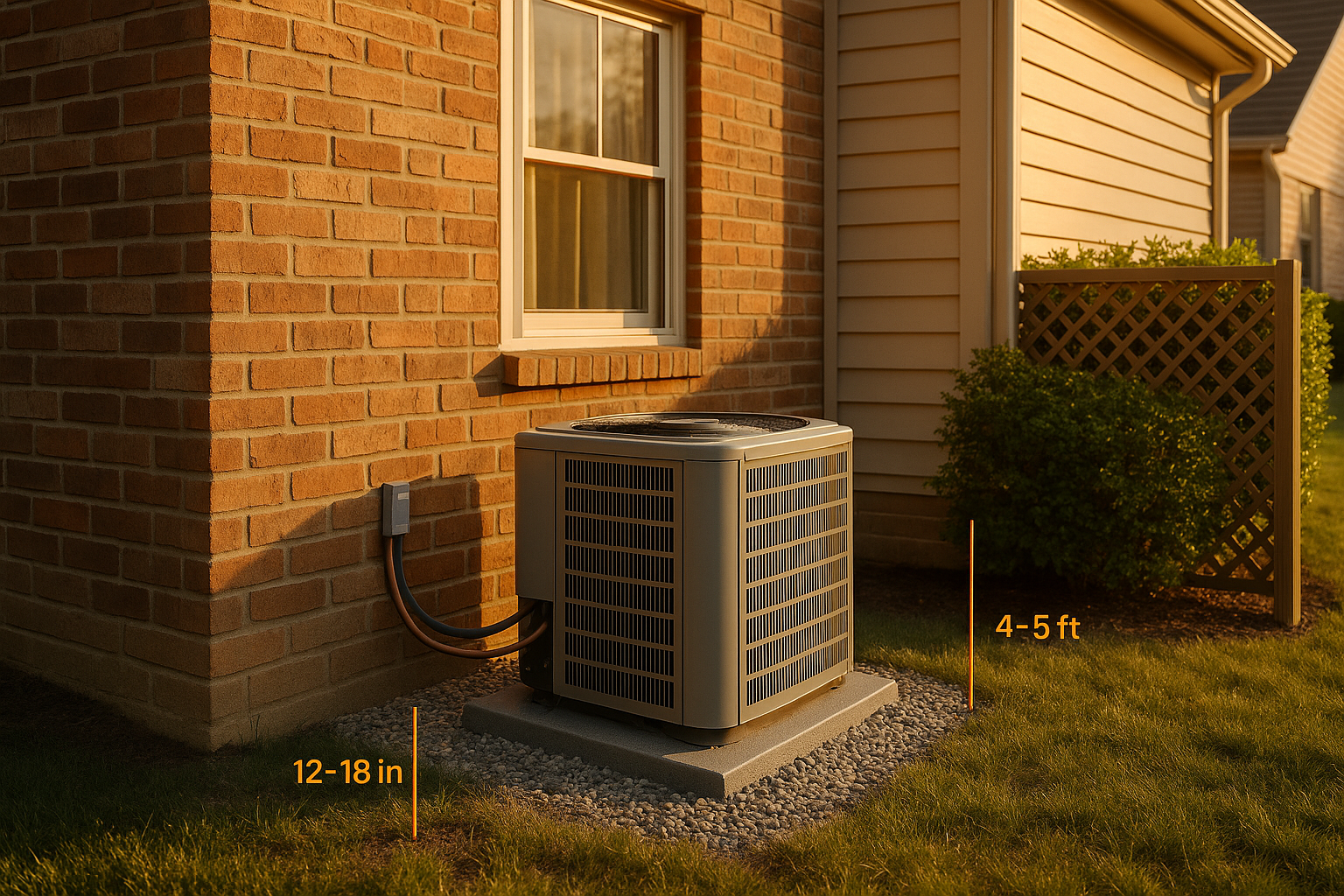
After that, go outside. High-efficiency furnaces (90% or more) have those white PVC pipes sticking out of the side of the house. Leaves, nests, and even kids' toys find their way in. Clear anything around them. While you're out there, peek at the furnace exhaust. A little steam on a cold morning is normal. But if it looks like a smoke machine, something's wrong.
Back inside, if you have a high-efficiency furnace, check the condensate drain. That's the little plastic tube or pipe that carries water away. Algae loves to grow in there and clog it. A clog can make the furnace shut down because the pressure switch thinks the drain is blocked. Pour a cup of white vinegar down the drain line once in the fall to keep it clear. It's cheap insurance. If you have a whole-home humidifier, replace the pad and flip the damper to winter mode.
Safety First: Detectors, Odors, and That First Dusty Smell
Before you get too deep into the season, test your carbon monoxide detectors. Gas furnaces produce CO, and a cracked heat exchanger can leak it into the house. Put a CO detector near the mechanical room and one near the bedrooms. Replace batteries if they're more than six months old. If the detector is older than seven years, replace the whole unit. It's not just a furnace checklist fall item—it's a keep-your-family-alive item.
Now, about that smell when you fire up the furnace for the first time. A dusty, slightly burnt smell is normal. Dust settled on the heat exchanger over the summer and now it's burning off. That should go away after an hour or two. But a persistent burning odor, or anything that smells like gas, means shut it down and call a pro immediately. Don't flip switches, don't unplug things, just get out and call from outside if you smell gas.
Look around the furnace itself. Keep the area clear for three feet in every direction. No paint cans, no boxes of old Christmas decorations, no gasoline can for the mower. The blower door needs to be on tight. And the shutoff switch should be easy to reach—if something goes wrong, you don't want to be fumbling behind a shelf. In older Indianapolis homes, especially around Meridian-Kessler and Irvington, mechanical spaces are tight. That makes the clear-zone rule even more important.
The DIY vs. Pro Line and the Timing for Indy
Here's the truth: the furnace checklist fall items above are mostly visual and preventative. You can change a filter, clear a vent, test a thermostat, and replace detector batteries. But you should not open the burner compartment, clean a flame sensor with sandpaper, or mess with gas valves unless you're licensed and trained. Even something like a noisy inducer motor—if you hear a rattle or squeal on startup, that's a bearing or wheel issue that needs a tech. The inducer pulls exhaust gases out of the furnace. When it fails, the furnace won't run at all. This article on inducer motor noise and cost tells you what to listen for.
Timing matters in Indianapolis. The first hard freeze usually hits in late October or November. But by mid-October, the HVAC companies are already booked solid because everyone waits until it's actually cold. I've heard techs say they get 40 calls on the first morning under 35 degrees. Don't be one of those people. Schedule a professional furnace tune-up in late September or early October. A good tune-up includes checking the heat exchanger for cracks, testing combustion safety, cleaning the flame sensor, lubricating the blower motor, and measuring gas pressure. The scope should be clear upfront. Ask what's included. If a company can't tell you, move on.
In Carmel, Fishers, Greenwood, and all over the Indy metro, a fall tune-up usually runs between $90 and $160 depending on the system and age. It's cheaper than an emergency call when the furnace dies during a Colts home game weekend. Plus, many manufacturers require annual maintenance to keep the warranty valid. Here's a breakdown of furnace tune-up costs in Indianapolis.
The Bottom Line: A Little Work Now Beats a Cold Snap Later
I get it—your furnace worked last winter. So why bother? Because furnaces don't usually fail when you expect them to. They fail on the coldest night of the year when every HVAC company in Indianapolis has a two-day backlog. The point of this furnace checklist fall isn't to make you an expert. It's to catch the simple stuff—the blocked pipe, the clogged filter, the dead CO detector—before it becomes a $500 repair at 2 a.m.
If you'd rather have a pro walk through everything, that's smart too. HVACPros serves Indianapolis and the surrounding areas like Zionsville, Westfield, Noblesville, Brownsburg, Avon, and Plainfield. We're not about selling you stuff you don't need. We'll give you an honest assessment, tell you what you can do yourself, and fix what actually needs fixing. Get a quote for a fall furnace tune-up or a diagnostic visit. It takes two minutes, and you'll know the scope before we show up.
Ready for HVAC service or an upgrade?
NATE-certified techs, flat-rate diagnostics, and a free in-home assessment for any replacement — no pressure.